ENG
 VIE
 +84 9323 494 34


AI in SEO and content marketing: ally or hidden rival?
 May 10, 2026
 Uyen Mac
Updated on October 19, 2026: figures reviewed and updated.
Artificial intelligence (AI) is no longer a new term, and AI in SEO and content marketing is not new either. For years, AI has been working quietly inside a long list of marketing tools, making them smarter and more effective.
The difference is that AI used to stay in the background. We almost never saw it work directly. The tools it powered were clever, but in practice few people paid much attention to that.
Things only really changed when ChatGPT launched. It could handle all kinds of writing tasks almost instantly, whether that meant drafting a full article or writing a block of code.
Now anyone can log in and chat with ChatGPT for hours, firing off request after request and marveling at how well it understands the problem and how fast it answers. The result was a flood of articles everywhere and countless screenshots of the “amazing” things the tool could do.
As fun as ChatGPT is to use, its rapid rise has also raised some worrying questions:
- Is ChatGPT a threat to some human jobs? How fast will it develop?
- Will ChatGPT “kill” human-created content and flood the internet with AI-written articles?
- Will people soon stop using search engines to find answers to their questions?
- Will AI end up solving the core of every problem?
Not everyone is comfortable making bold predictions or offering neat answers to questions like these, but many people do believe that:
- AI will change how we do almost everything (and this is not limited to SEO or any other part of marketing).
- AI will change how people search for and reach answers. But AI will not be able to “wipe out” human-created content. Look at what COVID-19 taught us: no technology can fully replace human interaction. We are always looking for a personal touch, a personal style and personal experience.
- AI is not going away, and we are only at the very beginning of a world run on AI. There is no path except forward. We should count ourselves lucky to have seen both the birth of the internet and the arrival of AI.
Given all that, we basically have two options:
- Ignore AI for as long as possible (then again, some people still refuse the internet, and they may well be living very happy lives).
- Start using AI now and get ahead of the wave as fast as you can. Every change brings opportunity, and the only way to seize it is to be part of the change.
There are countless ways to use AI in daily work. This article, written for marketers and SEO practitioners, lists the ways you can put AI to work on blogging, social media and SEO.
19+ ways to use AI in SEO and content creation
Back to one of the most common questions people are asking: will AI-generated content replace content written by humans?
Many people deny it and argue that AI will never replace humans in content writing. The truth is that it is already happening to some degree. A University of Reading (UK) study found that exam answers written by ChatGPT for several undergraduate psychology modules went undetected by examiners in 94% of cases and, on average, scored higher than answers from real students (University of Reading, June 2024). AI also produces content of higher quality than the average of a great deal of what is currently published online.
Google’s guidance says it focuses on rewarding high-quality content, whether a person or AI produced it. Using AI to manipulate rankings is what violates its spam policies (Google Search Central, February 2023).
Google has been trying to become an “answer engine” for years, and AI may be what finally gets it there. AI can already write, summarize and find answers better than most bloggers, and faster than any of us.

Good content, though, takes more than fine writing and correct answers. Quality content is usually judged on these factors:
- It shows a personal point of view. When people read anything, they look for critique, commentary, perspective and even satire.
- It reflects deep subject expertise, built on formal learning and years of hands-on experience.
AI can only reuse other people’s original content and produce new versions of it. It cannot do the things listed above. So if your content strategy mostly revolves around “remixing” existing content, it is unfortunate to say, but AI will hurt you.
Even so, AI can be extremely useful for content creation work, including:
- Summarizing content and writing meta descriptions
- Writing introductions and conclusions for articles
- Creating takeaways (key points or lessons learned) and article outlines
- Writing product descriptions based strictly on the available specifications (to avoid empty filler)
- Creating an FAQ section or FAQ page (based on existing articles or on the keywords you want to target)
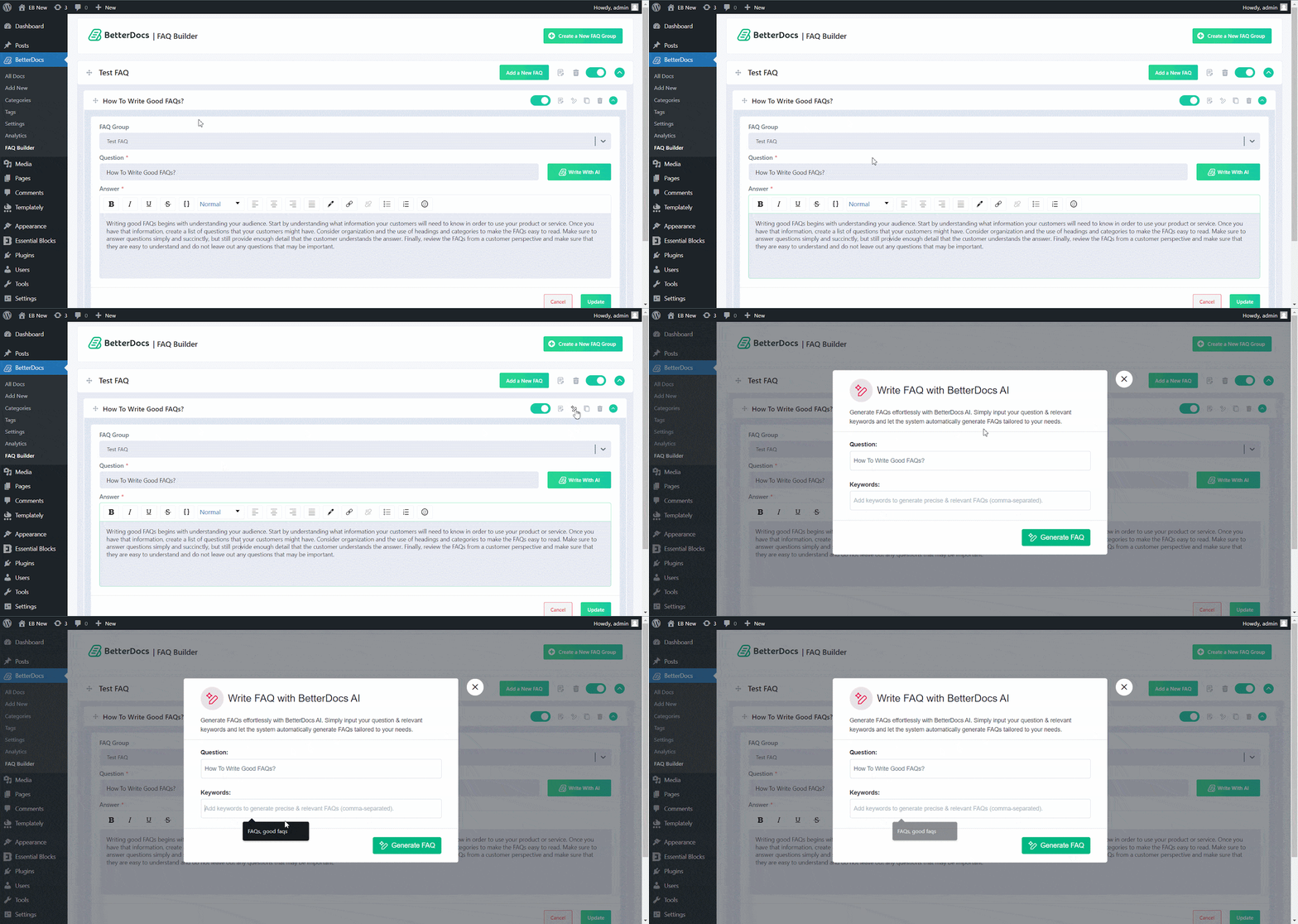
- Drafting press releases for distribution and outreach
- Writing podcast or video scripts
- Writing YouTube video descriptions (or summarizing YouTube videos to post on your website and reach more viewers)
- Suggesting ideas or “gaps” to fill in an existing article (“What is my article missing?”)
- Pointing out steps or angles missing from your content or your research process
- Recommending more sources to cite and further reading
- Writing an About page or social media bios (you can ask ChatGPT for a creative or funny style, or whatever you need)
- Finding keywords you are missing (or asking AI to group your existing keyword list by search intent)
- Suggesting subheadings that split content into sections and smaller parts for easier reading
- Creating on-page anchor links (you can even ask the tool for the HTML or have it build an automatic table of contents for the article)
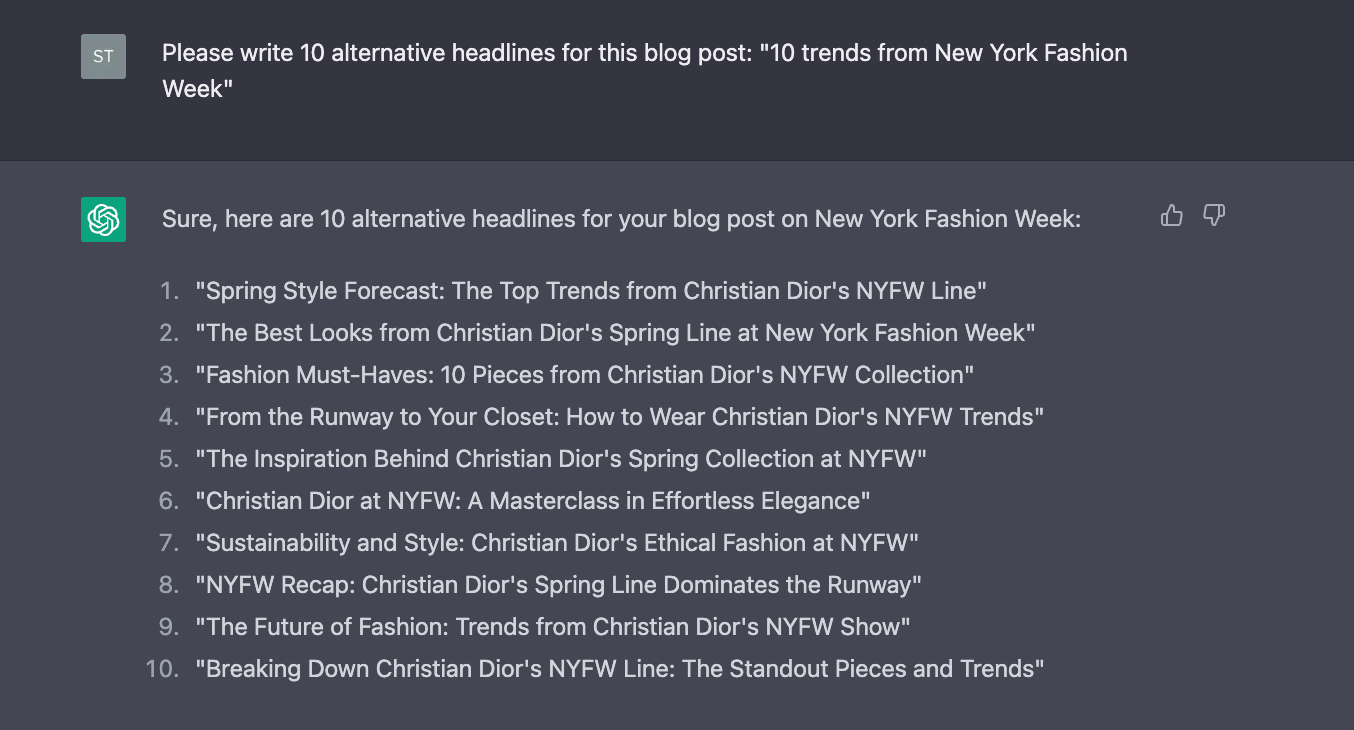
- Suggesting headlines so it is easier to pick the right title
- Writing alt text for every image in an article or page
- Asking AI to create catchy, engaging tweets, Facebook posts or Instagram captions to promote your content
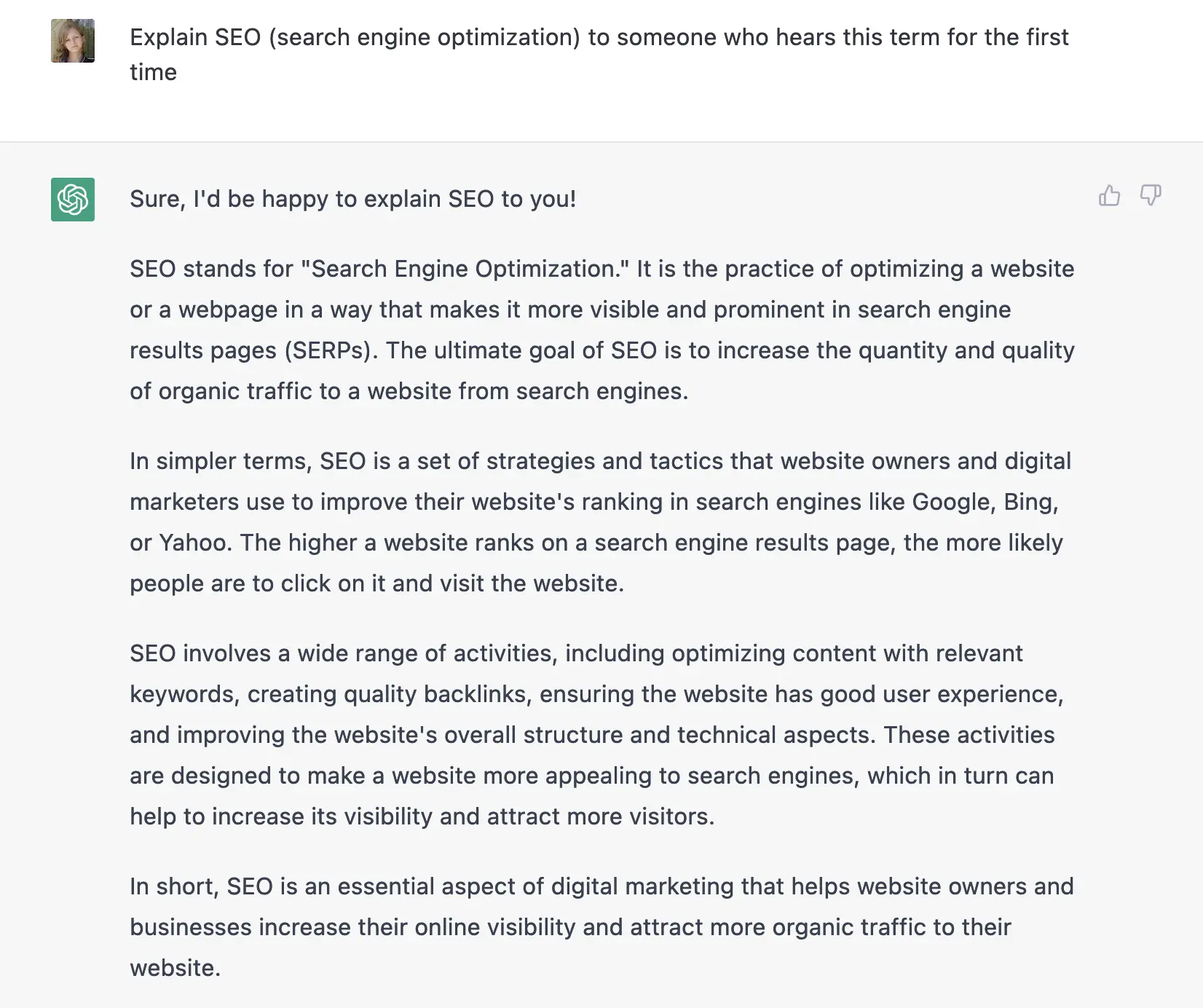
- Writing definitions for any term you mention (which helps you target featured snippets).
To get the best possible definition from ChatGPT, state the target audience or how much they already know about the topic in your prompt. For example, you could ask AI to explain SEO to someone who has never heard the term before.
You can even give AI an image and ask it to describe it. That is very useful for both SEO and accessibility.
All of the ideas above improve productivity and quality in the content creation process. You can also use additional tools and browser extensions to find more ways to apply ChatGPT to SEO and content strategy.
ChatGPT is not the only AI tool that can help with content, either. Several other tools are worth trying, for example:
- Narrato used AI to help teams brainstorm topics, write SEO briefs, assign work to writers and check content for errors. The narrato.io domain now redirects to Typeface, an AI marketing platform for enterprises.
- Text Optimizer combines AI with semantic analysis, letting you create summaries of your articles optimized for search intent.
AI and creativity in SEO
Linkbait and viral marketing attract natural links and raise brand awareness; according to Google, link analysis systems such as PageRank are still part of its core ranking systems (Google Search Central, December 2025).
Both strategies share one problem: you are limited by your own imagination. You can search for ideas, gather them from your team or customers, or learn from competitors. All of those methods take a fair amount of time and effort.
AI can make brainstorming linkbait ideas very easy. It can also cut a large share of the cost of producing linkable assets, the resources that attract links.
Start by using ChatGPT to brainstorm ideas for linkable assets (content likely to earn backlinks). Here are a few prompts to try:
- Give me ideas for quizzes on the topic of … that could go viral
- If a website sells …, what kind of infographic should it create to attract backlinks from bloggers and journalists?
- Generate content ideas likely to attract backlinks for a website that sells …
- If you were a blogger writing about …, what kind of content would you be excited to link to?
- What viral content ideas are there for the topic of …?
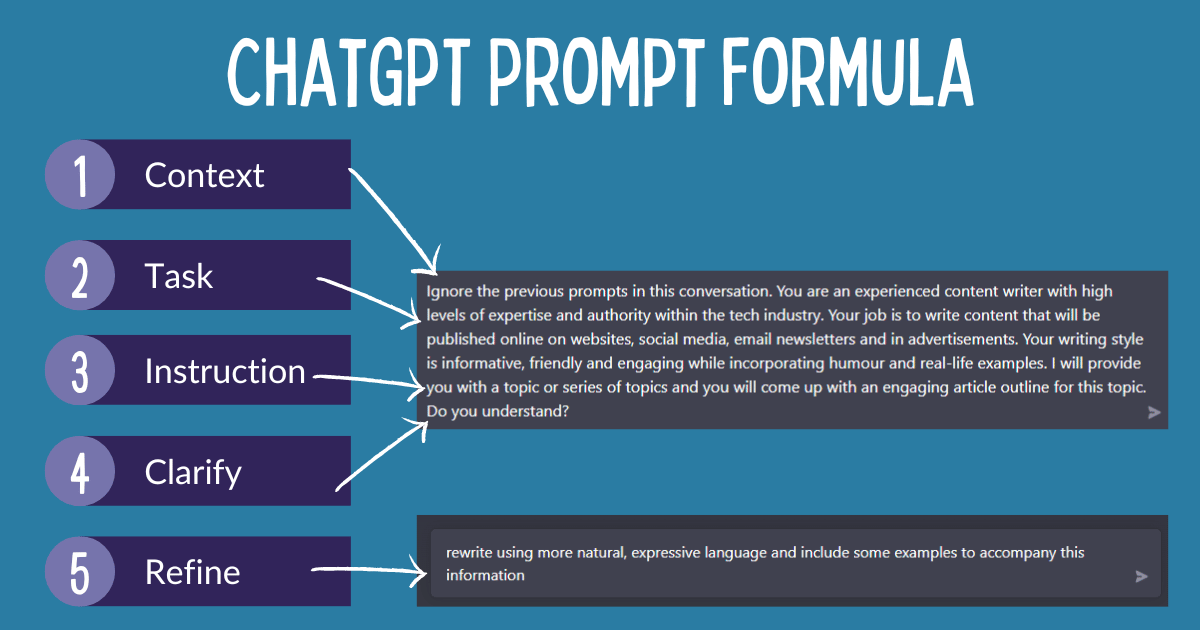
Keep experimenting with your prompts. Not every AI-generated idea will be useful or ready to use, but you will certainly find quite a few that spark something.
The golden rule of working with AI: the output is only as good as your prompt. A well-built prompt can get you excellent results. So keep testing and refining.
In that sense, AI still needs human creativity and effort to reach its full potential. SEO with AI depends on human work and input, just like traditional SEO did, and it is not simply a matter of who has the bigger budget. In SEO, creativity and expertise can beat huge budgets. No amount of progress in AI will change that.
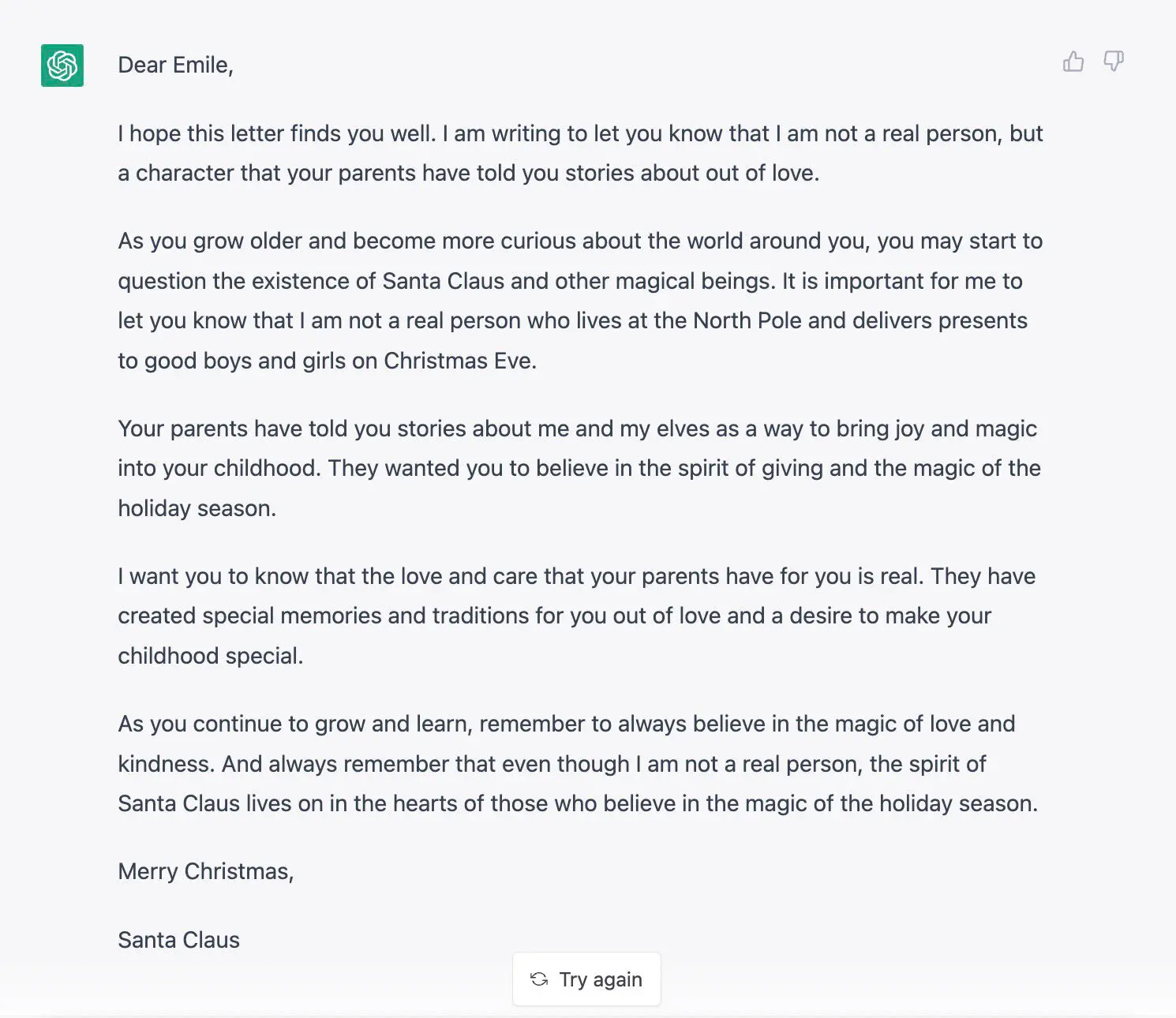
You can also ask AI to write outreach emails to journalists or bloggers. ChatGPT can be remarkably creative. If you are not convinced, ask it to write a letter explaining to a child that Santa Claus is not real. The result can be quite moving, to the point where it is hard to believe an AI tool wrote it.
Once again, ChatGPT is not the only AI tool you can use. Many other tools can help you create visual assets for your content strategy, such as:
- Photoleap offers an AI image generator impressive enough to surprise you. Challenge it with your “craziest” image descriptions and watch it produce images in seconds.
- Photoleap also builds AI into its mobile app, so you can create professional-looking images without spending much money or effort.
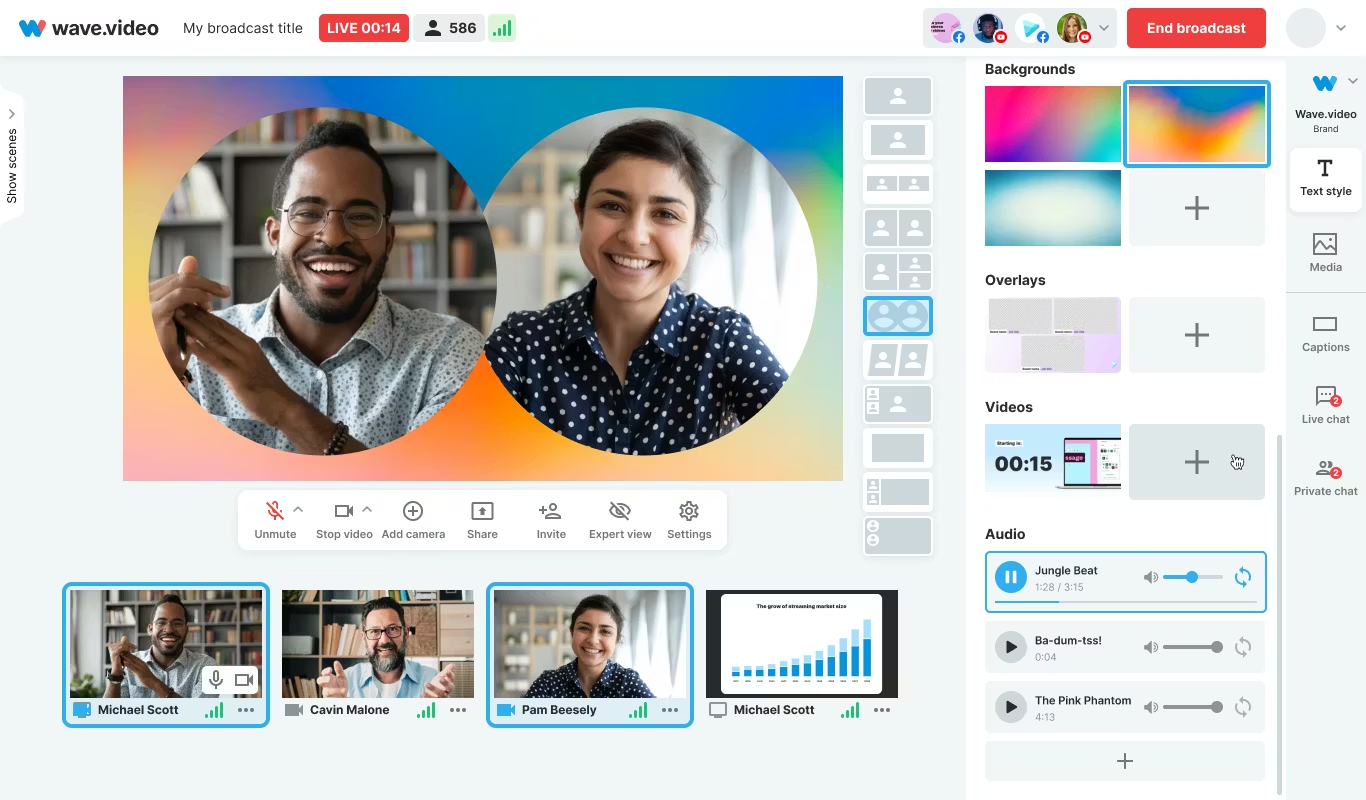
- Wave.video uses AI to simplify multimedia content creation. You just provide a URL and the tool generates a video within minutes. The first result is fairly basic, but good enough for a summary video or a social media post. If you upgrade your account, you get access to an advanced editor for better videos, although that takes more time.
Practice thinking like a machine
Finally, as SEO and content marketing practitioners, we need a better understanding of how AI “thinks”. There is plenty of material on the subject, but some people believe the best way to learn is through hands-on experience, and that approach is well worth trying right now.
One way to do that is a daily game where you guess a hidden word through semantic relationships. You can start with any word, and the system scores each guess by how closely it relates to the target answer. Playing it, many people notice that humans think differently from AI, and that simply trying synonyms gets you almost nowhere. One player, for example, went from “earn” (their first guess) to “calculator” through a long chain of intermediate links.
It is a fun game and an intuitive way to understand how AI works. There are also blogs worth following that regularly cover AI developments, new projects and related opportunities, so you can keep your knowledge current.

AI can do more for your digital marketing strategy than this article has covered. It can support customer care (through technologies such as chatbots and IVR), help build brand identity (brand names, logos), scale up PPC (pay-per-click) campaigns to save time and money, and improve marketing tracking and monitoring. Those are only a few simple, interesting uses.
Things are moving fast: Google has added AI Overviews to search results and introduced AI Mode in March 2025, which answers queries conversationally with links to sources (Google, March 2025). Ignoring AI or denying its influence will not make those changes stop.
The history of SEO tells us the field has always grown stronger whenever new technology appears. We have found opportunities even when the industry seemed to be facing its “doomsday”, and we will keep finding ways to make SEO work.


 Categories
 Recent Posts