ENG
 VIE
 +84 9323 494 34


Generative AI in marketing: tools, real examples and standout case studies
 May 31, 2026
 Uyen Mac
Updated on October 19, 2026: figures reviewed and updated.
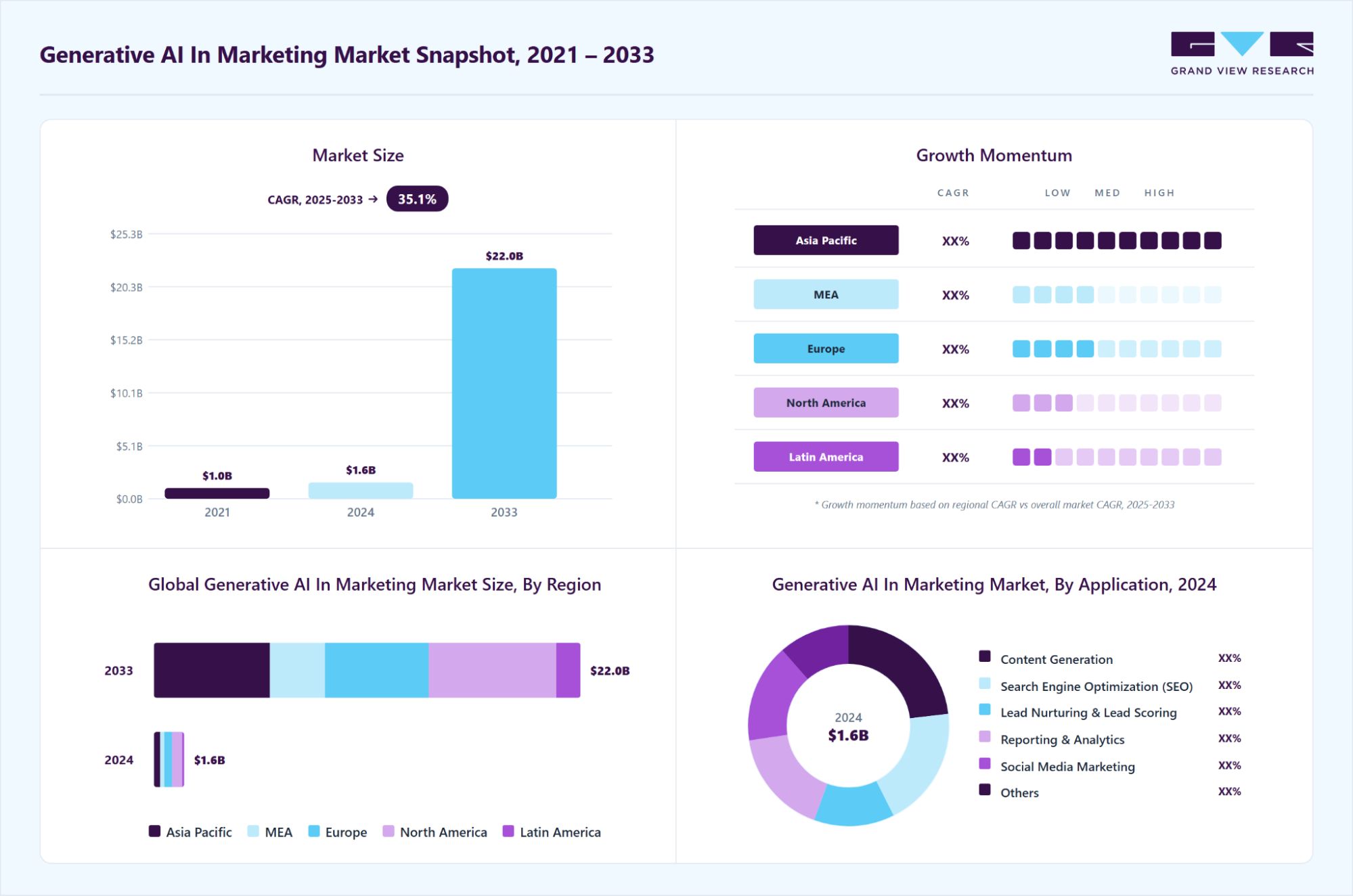
Modern AI technology is developing so quickly that it has become one of the most striking areas of investment. Generative AI in marketing lets businesses automate content creation, optimize campaigns and strengthen customer engagement through personalized messages. The reason for this boom is, of course, generative AI itself, and the growth data for the generative AI market makes the case hard to dispute. According to Statista Market Insights, 2026, the global generative AI market is expected to reach about USD 399.73 billion in 2026 and could climb to USD 1.34 trillion by 2032, which works out to a compound annual growth rate of about 22.36%.
The secret lies in its ability to create original content, automate processes on a regular basis and find non-standard solutions in many fields. Put simply, generative AI lowers the cost of goods and services and frees up people and budget for other tasks. Use cases for generative AI in marketing include automating social media posts, creating targeted email campaigns and personalizing customer interactions based on data analysis. Generative AI is now used in marketing, journalism, design and even programming, and it is opening new opportunities for businesses and the creative industries.
What is generative AI?
Generative AI technology can create new data based on models that have already been trained. It can produce text, images, audio, video and code, and it can adapt to many different fields such as marketing, design and programming.
Generative AI is a branch of AI that can create new content from the data it has learned. Traditional algorithms are used only to analyze and classify data. Generative AI, by contrast, can produce text, images, audio, video and source code on its own.
The technology runs on advanced neural networks such as GPT for language processing and DALL·E for image generation. These models are trained on enormous volumes of data, which lets them recognize patterns and relationships in that data and then produce new output that is meaningful and fits the context.
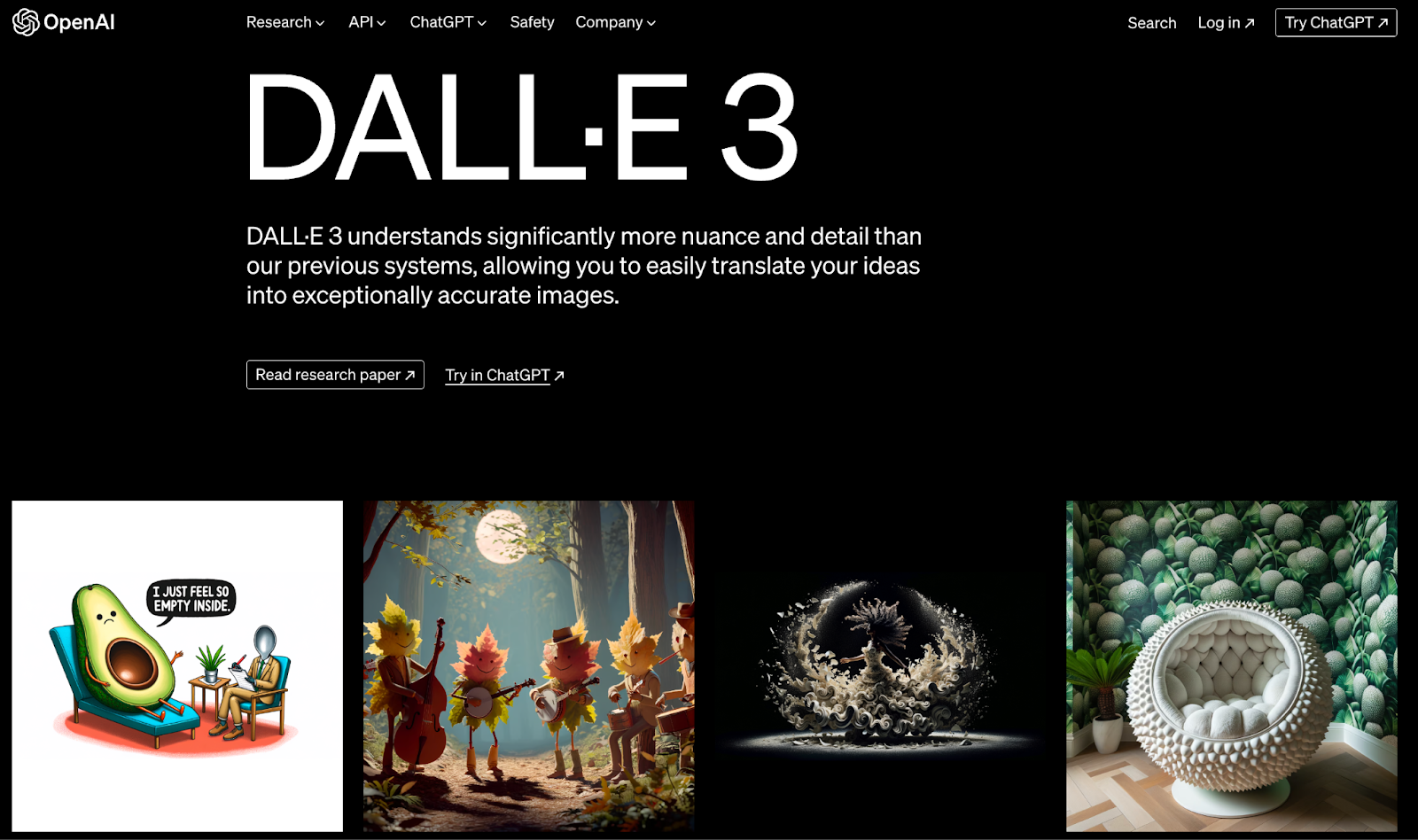
Generative AI can create content such as articles, images, video and music automatically. Because these models are trained on ever larger amounts of data, the quality of their output keeps improving. The more training data there is, the more accurate, natural and useful the generated content becomes.
The standout strengths of these models are flexibility and adaptability, which is why they can be applied across so many fields, from marketing to programming. In marketing, generative AI is used to personalize ad content, write product descriptions and automate customer service replies in order to raise engagement. Generative AI can also interact directly with users, so the content it produces can be adjusted, refined and personalized in real time.
Today, industries such as marketing, journalism, software development, design and media are adopting this technology heavily. In marketing, generative models help businesses automate content production, tailor their messages to each customer group and make their advertising campaigns considerably more effective. Generative AI solutions bring new ways of creating content to marketing and help businesses keep a competitive edge in a market that never stops changing.
What is the role of generative AI in marketing?
Generative AI helps marketers create content faster, which saves a great deal of time when preparing ad campaigns and helps that content reach the right target audience more effectively. A Facebook ad builder powered by generative AI, for example, can quickly produce compelling ad copy, design suitable visuals and write personalized messages for each customer group. As a result, a business can run high-performing ad campaigns with less effort and fewer resources. On Facebook and Instagram the advantage is even clearer, because Meta recommends creative diversification (many different themes, messages and visuals) as the main lever for finding the right customers, and its Meta Andromeda ad retrieval system is designed to handle a larger volume of creative in order to personalize delivery.

One of the biggest benefits of generative AI is its ability to automate repetitive work. Using AI to create text, images and video saves a business a significant amount of resources and frees up its teams’ time for more strategic work. In terms of real-world results, many businesses have recorded a noticeable rise in productivity after adopting these technologies. For example, according to Bain & Company, March 2025, retailers that tested AI-personalized targeting campaigns saw ROAS (return on ad spend) rise by 10% to 25% during the initial test phase.
Putting generative AI to work in marketing means integrating AI tools into existing workflows to streamline operations and expand the creative capacity of the marketing team. AI marketing strategy tools can also analyze huge volumes of data to design campaigns grounded in real data, which helps a business reach the right customers with the messages that carry the most weight for them.
Generative AI has quickly become an important part of marketing work. Creating communications for email, push notifications or SMS now happens much faster. There are also fewer errors, which shortens the time and cost of quality checks thanks to AI support.
Driving innovation and agility in marketing with generative AI
Generative AI does more than support content production and automate repetitive work. It is changing the nature of marketing itself by opening up room for innovation and making businesses more adaptable. The ability to create hyper-personalized content at scale lets marketers test many different ways of delivering a message, and many different creative formats, for each customer group. This continuous testing, combined with how fast AI can produce content, shortens the cycle of learning and campaign optimization, which keeps the content appealing and relevant to users.
Generative AI also makes marketing more agile by adjusting content in real time. AI tools can, for example, automatically change ad copy, images or email templates based on customer behavior, special holidays or shifts in the market. This ability to react quickly helps a business hold its competitive edge in a constantly changing environment and seize opportunities faster than traditional marketing methods allow.
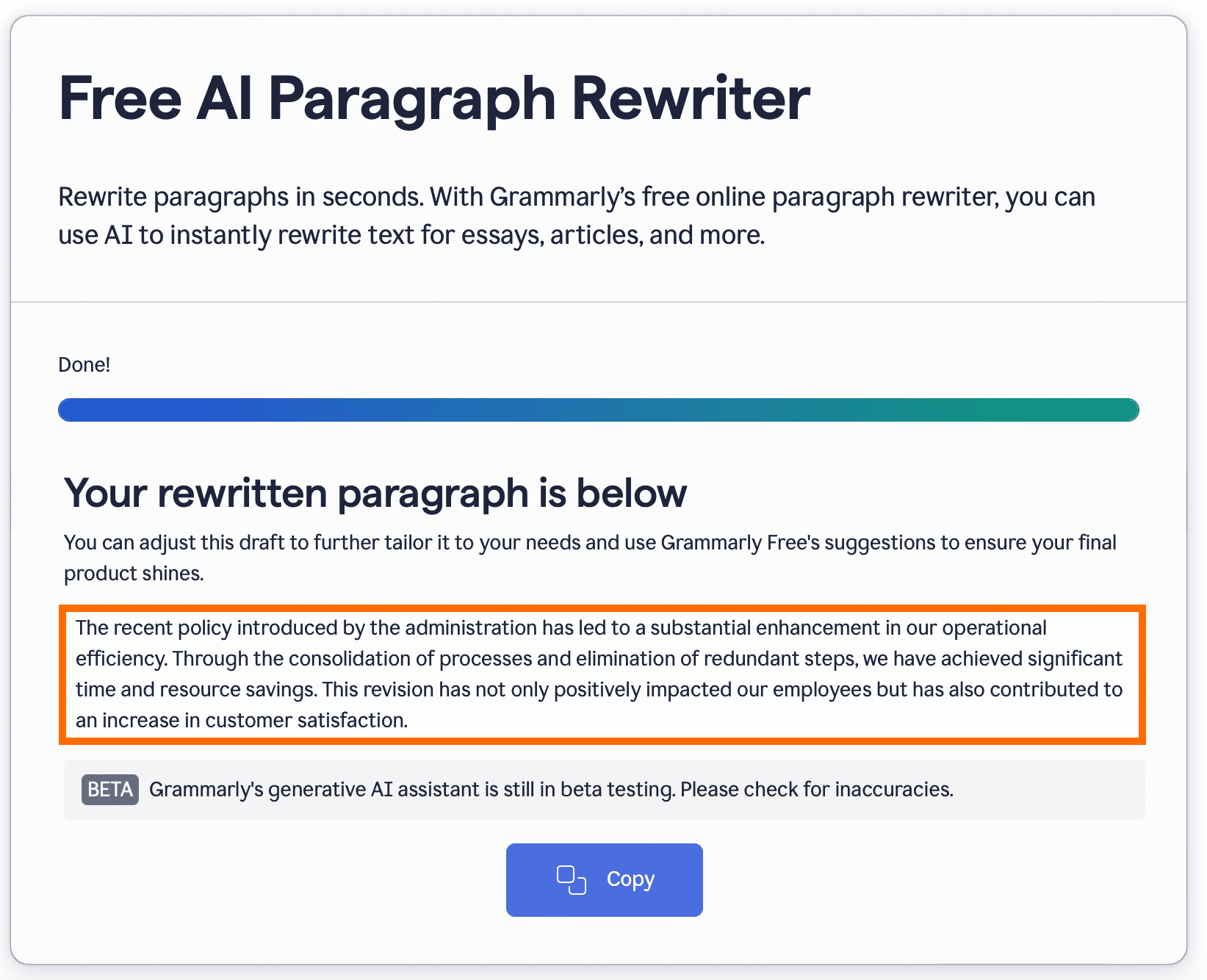
On top of that, the big data analysis capabilities of generative AI help marketers spot new trends early, along with valuable information they can use to rethink their strategy. Based on those insights, a business can build more effective strategies for product positioning, communications and customer targeting, and be better prepared for future demand. This data-driven approach also helps build a culture of continuous improvement inside the organization.
Why does researching your target customers matter more than just writing prompts?
Integrating generative AI also creates collaboration between departments such as marketing, sales and product development. When they share the same customer personas and AI-assisted content templates, teams can work together more closely to build a consistent brand experience across many channels. That helps a business form deeper relationships with its customers and get a better return on its marketing campaigns.
As generative AI keeps developing, the marketers who know how to put its creative power and adaptability to use will have a major advantage in dealing with market uncertainty, meeting customer needs and shaping the future of the marketing industry.
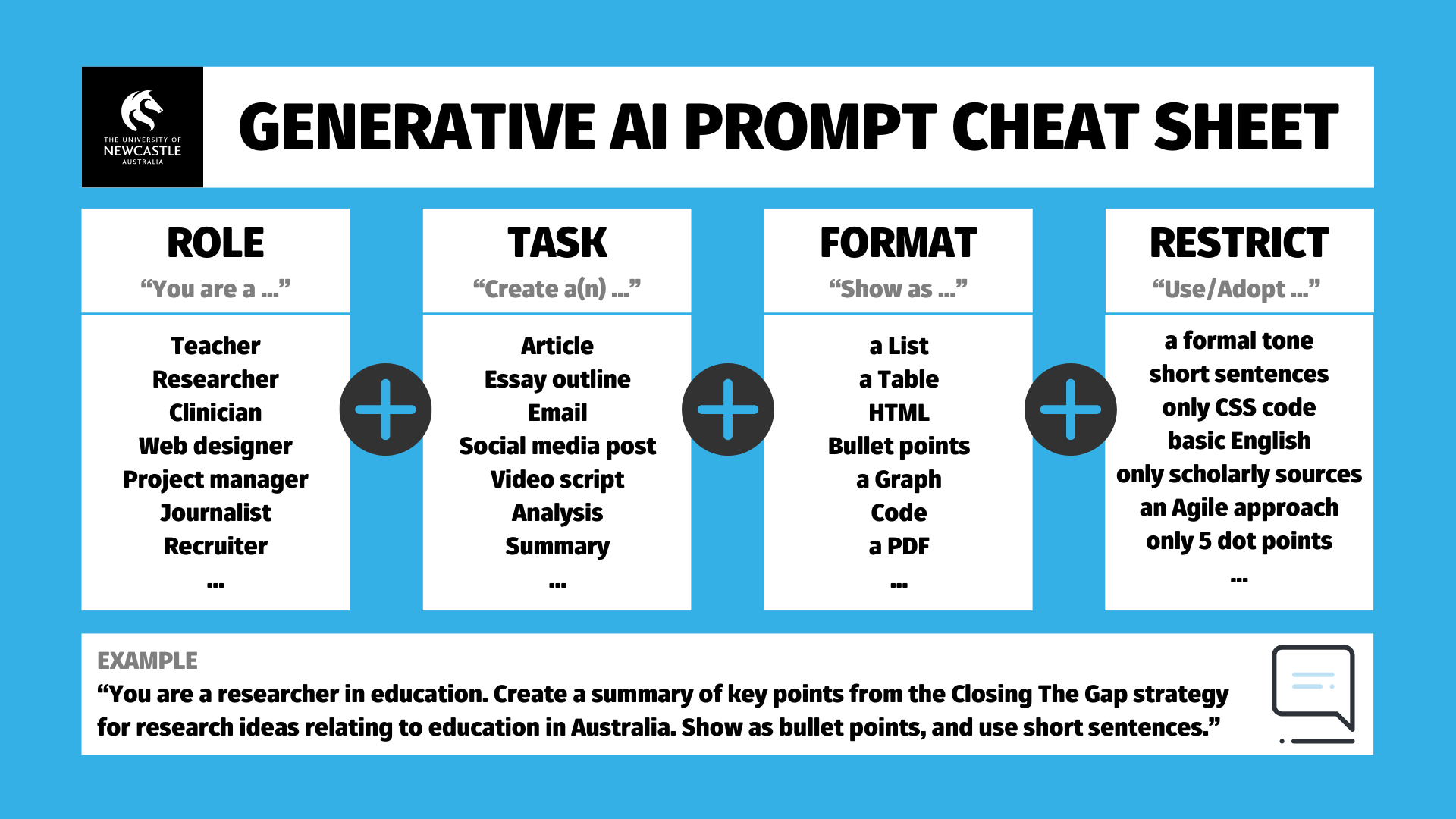
Speeding up creative work with AI
You can feel how AI is changing the speed of marketing execution even before you see the impact on your analytics dashboards. When campaigns demand speed, accuracy and a consistent message at every touchpoint, generative AI models become the engine that expands a business’s creative capacity.
The leading marketing teams do not treat AI as just a content production tool. They see it as part of their strategic system, a place where customer data, market understanding and real-world context come together to create content that generates actual revenue.
Instead of spending days testing new ideas, messages or product positioning, a business can produce dozens of content variations tailored to each customer segment in a short time. That cuts the time needed to optimize a campaign considerably and lets decisions rest on real data rather than gut feeling.
Another benefit is the ability to keep the brand message consistent. When content production is scaled up by hand, drift in tone of voice or inconsistencies in the message are hard to avoid. AI trained on target customer data, brand positioning and communication guidelines, however, helps keep hundreds of different pieces of content aligned.
AI also reduces the burden of constant task switching for creative teams. Instead of spending a lot of time on operational work, people can focus more on building the brand story, developing new ideas and analyzing business performance.
Data in generative AI marketing
Adopting generative AI without the right measurement and data management systems can leave a business producing large volumes of content without any real improvement in business results. The most successful brands treat generative AI as a system for continuous testing, not just a content production tool.
The real advantage appears when every piece of AI-generated content is tied to a specific business goal. A business needs to define its target customers clearly, form a marketing hypothesis, roll out content variations and measure the results against the metrics that matter.
A simple process might look like this:
- Define the target customer segment and the behavior you want from it.
- Create several versions of content built around the same core problem and benefit.
- Publish the content across channels with a consistent structure so performance is easy to compare.
- Measure with key metrics such as conversion rate or cost per desired action.
- Keep the content that works and quickly drop the content that does not deliver results.
As a familiar saying in statistics goes (often attributed to W. Edwards Deming, though there is no evidence he ever wrote it): “In God we trust; all others must bring data.” When generative AI runs inside a process with real data discipline, a business can take advantage of the creative speed of AI while keeping its message consistent, and at the same time build a marketing system that lasts and is hard for competitors to copy.
Examples of AI in marketing
- Etsy: personalized gift recommendations based on each user’s interests and behavior.
- Booking.com: AI that simplifies travel planning and choosing the right place to stay.
- Procter & Gamble: AI built into the Oral-B iO electric toothbrush to guide users toward brushing more thoroughly.
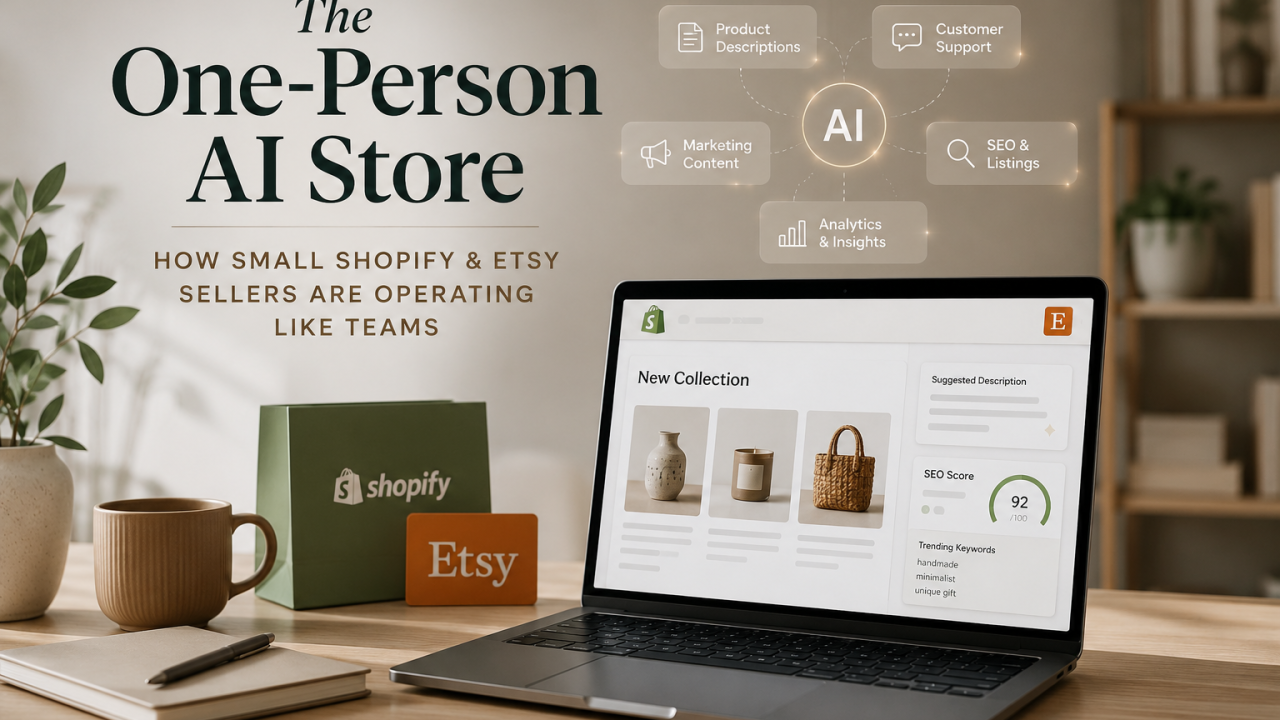
Successful examples of generative AI have appeared across many industries, and the number keeps growing every day. Fields tied directly to online marketing have been the early adopters of this technology.
Etsy, for example, launched a “Gift Mode” feature that uses AI to analyze users’ interests and offer personalized gift suggestions, improving the customer experience and boosting sales.
In a similar way, Booking.com uses AI to simplify travel planning, help users choose suitable accommodation and analyze customer reviews.
Procter & Gamble, meanwhile, built AI into its Oral-B iO line of electric toothbrushes to track brushing on each area of the teeth (3D Teeth Tracking) and guide users to brush more thoroughly.
All of this points to one conclusion: generative AI is speeding up marketing work. Based on the experience of Bain & Company, March 2025, generative AI can cut content production time from several weeks down to a few hours. Practical studies also show that adopting generative AI helps businesses run more efficiently, raise profitability and improve customer satisfaction. The businesses that move early and build generative AI into their workflows gain a competitive edge, and they also build deeper relationships with customers through content that is more personalized and more relevant.
Real-world results of AI marketing
If you are still wondering whether AI marketing is a passing trend or something that really works, the real-world numbers give a clear answer. More and more marketers are using AI in their campaigns, and a large share of them say the technology has noticeably improved their return on investment (ROI).
Salesforce, for example, added generative AI to its Einstein toolset (Marketing GPT, announced in June 2023), which lets marketers automatically create personalized emails, customer segments and marketing journeys. Unilever, meanwhile, uses an AI system to produce product-focused advertising content, which helps it create creative assets about 30% faster than its previous way of working (Glossy, July 2025).
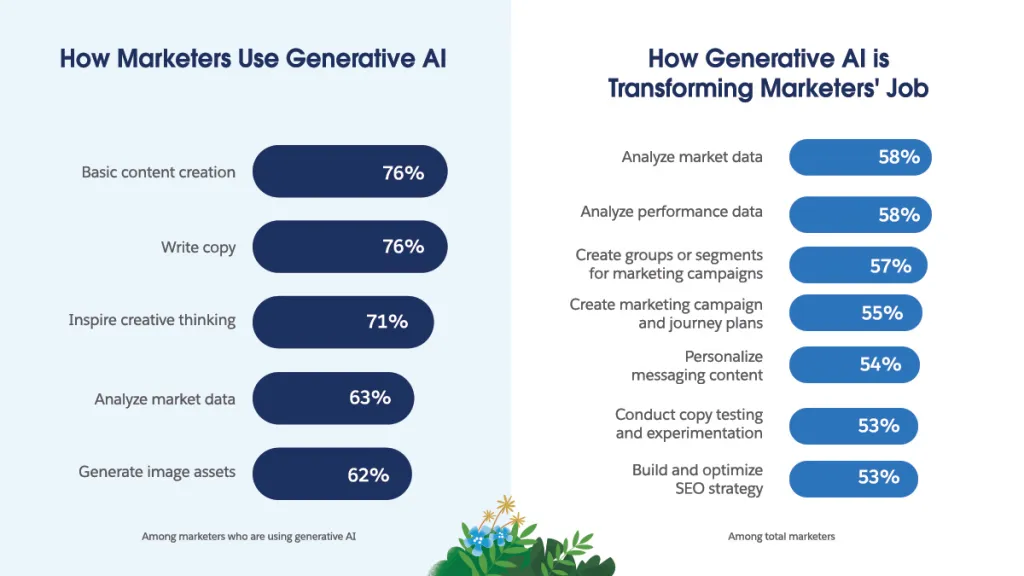
Many businesses today hold large amounts of customer data but do not use it well for segmentation or content optimization. AI tools that help build target customer profiles and marketing strategies are becoming the center of modern marketing processes, rather than optional add-on features.
Another standout benefit is speed of execution. Work that used to take weeks, from the first idea to campaign launch, can now be done in minutes with generative AI tools. A business can quickly create many versions of its content while keeping them consistent with the brand and suited to each customer group.
So instead of focusing only on producing content, businesses today need to aim for real business results. In that setting, AI is gradually becoming a core part of modern marketing strategy.
Measuring the impact of generative AI in marketing
To keep investing in generative AI and expanding its use inside the business, proving its value with specific metrics is essential. Managers and business leaders care about more than the technology’s potential. They want to see results they can measure.
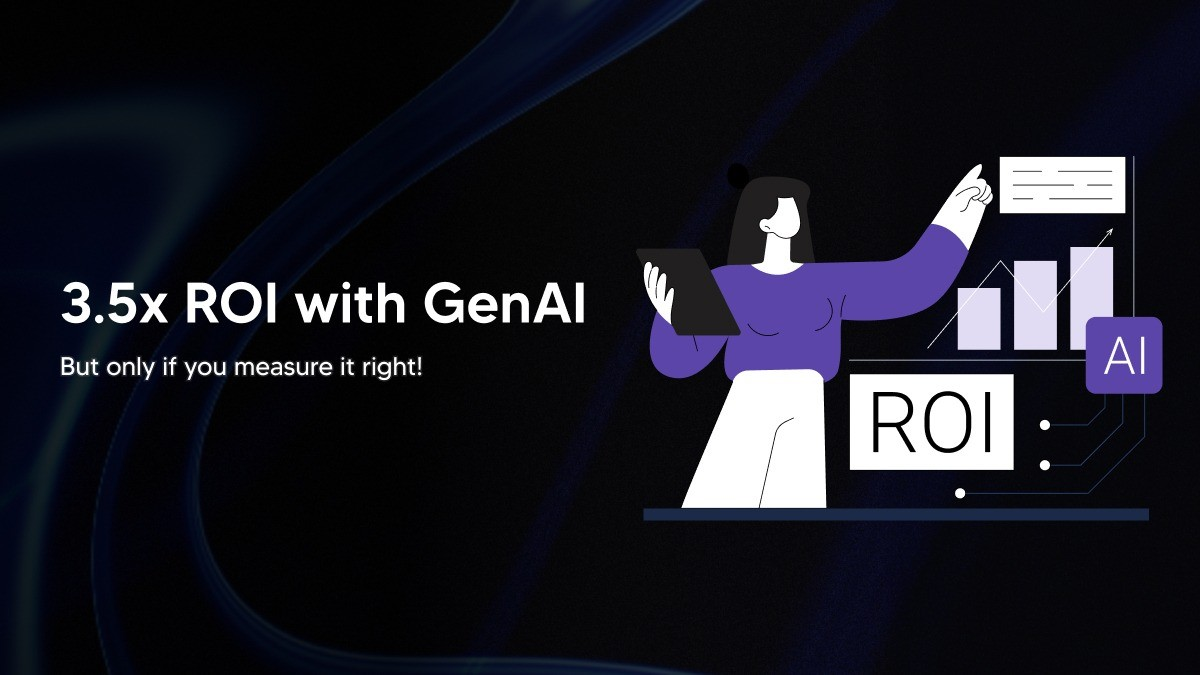
Many studies show that businesses using AI-driven personalization can grow revenue while also making their marketing spend more efficient. To get there, though, a business needs a clear measurement system.
Some important principles:
- Pick one core business metric as the target, such as revenue per visitor, lead conversion rate or repeat purchase rate.
- Combine several evaluation methods to understand the impact of each marketing channel and each piece of AI-generated content.
- Build content on real data about your target customers rather than on general assumptions.
- Link your marketing strategy tightly to the performance metrics from the planning stage onward.
- Review results regularly, keep the content that works and quickly drop the content that adds no value.
In practice, successful businesses usually build a continuous loop between strategy, target customers, content and measurement data. When these pieces are tightly connected, generative AI does more than speed up content creation. It helps the business learn faster, improve performance and scale its marketing in a sustainable way.
In other words, the competitive advantage does not come from using the same AI technology as your competitors. It comes from how a business uses its data, measures results and keeps improving its processes based on what it learns from AI.
Strengthening your marketing strategy with AI
To get the most out of AI in marketing, a business needs the right tools to build and execute its strategy more effectively. With an ideal customer profile tool (ICP Generator), a business can create detailed target customer profiles that serve as the foundation for precise targeting. By analyzing existing customer data, the tool helps identify the customer segments that bring the highest value, so resources can be focused on the most promising prospects.
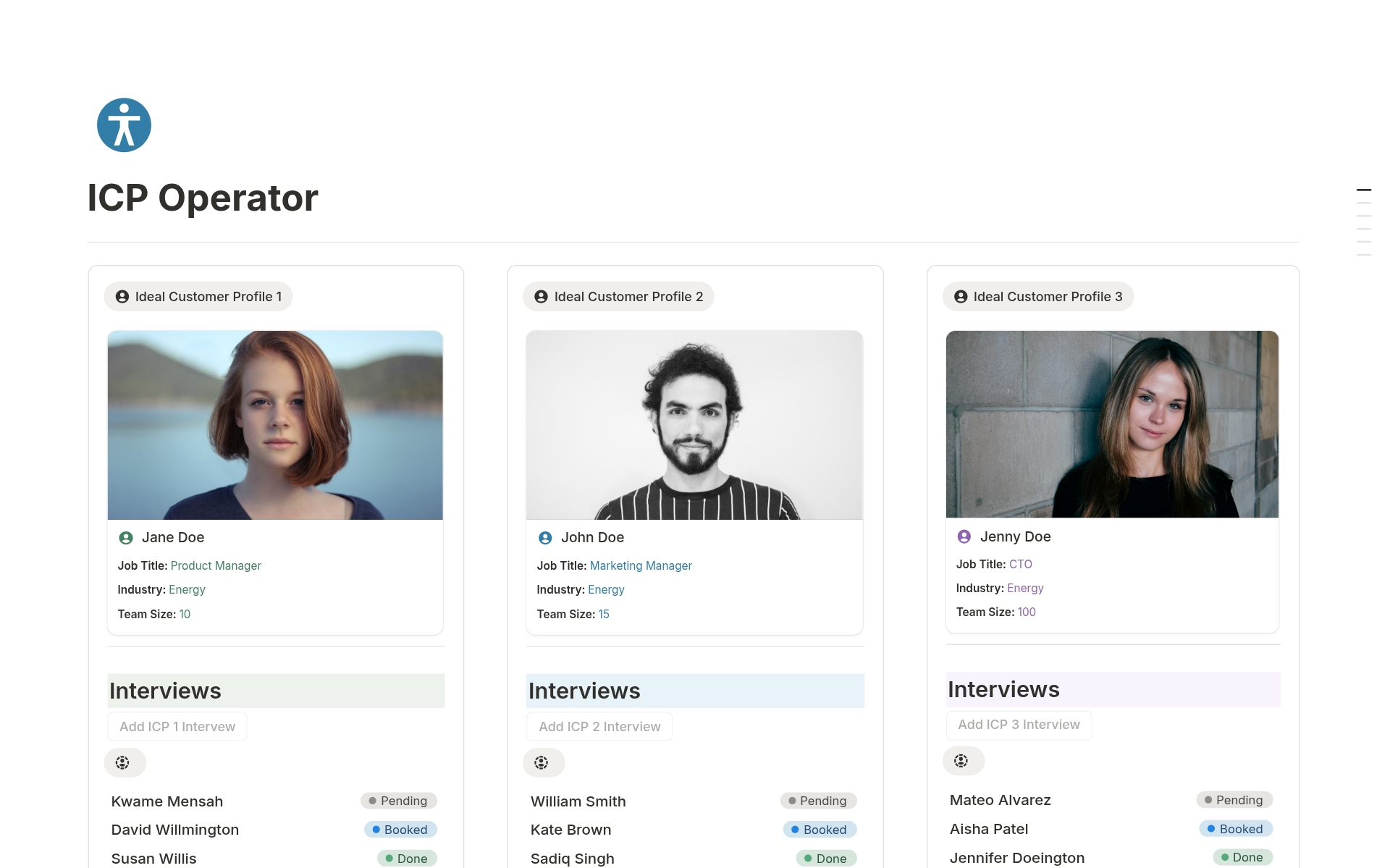
A marketing strategy tool (Marketing Strategy Builder) helps a business design campaigns that match the insights gained from customer analysis. Studies show that businesses using AI-based marketing strategies can improve their marketing performance considerably, because their decisions rest on data rather than intuition.
AI social content tools (Social Media Content Generator) automate content production and help create personalized messages that better fit each customer group. Personalization is becoming a key factor in modern marketing, because content designed around users’ needs and interests usually earns much higher engagement and conversion rates than generic content.
Continuously updating your marketing strategy based on real-time data collected from AI platforms also helps keep campaigns fresh and effective in a fast-changing business environment. Beyond improving marketing performance, AI technology helps businesses build more lasting relationships with customers through experiences that are personalized and closer to what those customers actually need.
7 steps to use generative AI in marketing effectively
Analysis from leading marketing experts points to 7 steps that help a business grow faster with generative AI and get the most out of the technology.
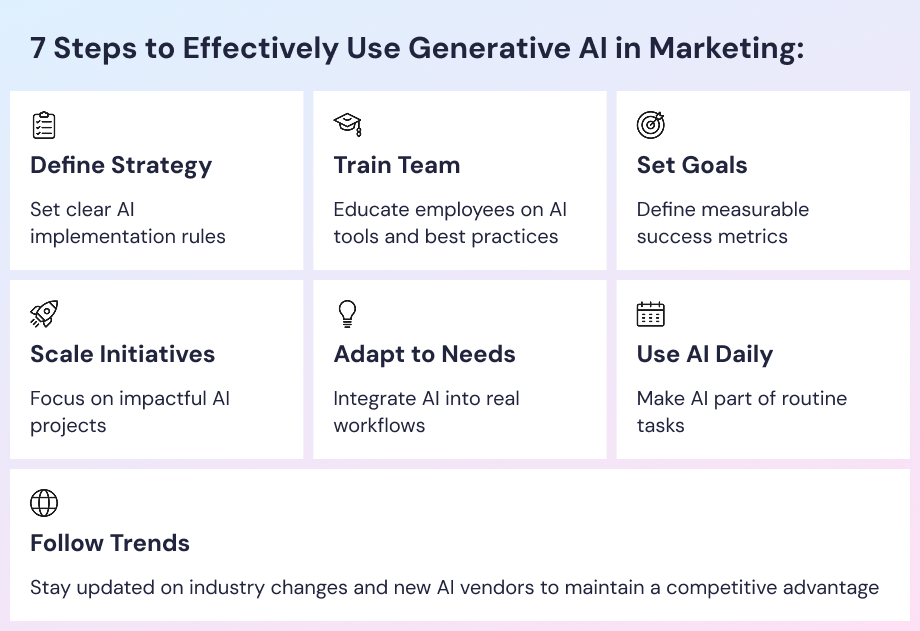
Step 1: Build a strategy for integrating generative AI into marketing
To use generative AI well, a business needs a clear strategy for bringing the technology into its workflows. That includes setting rules for how AI is used, standardizing the adoption process and creating a method for evaluating results. Businesses with a clear AI policy usually roll it out faster and get more stable results.
Step 2: Train your team to use AI effectively
Once the right tools are chosen, training people is the deciding factor. A business needs to do more than give access to AI tools. It also has to show employees how to use them well in their daily work.
Training sessions, workshops and internal knowledge sharing help the team keep finding new ways to apply AI. Some media companies even make sharing AI success stories a part of their regular meetings to help employees adapt.
Step 3: Define goals and success metrics
A business needs to set specific, measurable goals, such as shortening campaign rollout time, increasing content personalization, improving conversion rates and raising marketing ROI.
The SMART method is often recommended to make sure goals are clear, achievable and measurable with real data.
Step 4: Focus on initiatives that can scale
Rather than running too many small, scattered pilot projects, a business should prioritize AI solutions that can scale and have a large impact. Many financial institutions, for example, have rolled out AI assistants that help create personalized content, which has cut content production time considerably while also bringing in more new customers.
Step 5: Shape AI around what users actually need
AI needs to fit naturally into employees’ workflows rather than being imposed from the top down. A business should listen to feedback from its users, build tools that support real work needs and use its AI-savvy staff to coach other people in the organization.
Step 6: Build AI into everyday workflows
Generative AI should not be limited to pilot projects. It needs to become part of the daily work of the marketing, data analysis and content creation teams.
Bringing AI into the workflow raises productivity, reduces the time spent on repetitive tasks, encourages teams to try new creative ideas and makes operations more efficient.
Step 7: Keep up with trends and innovation in generative AI
The AI field is changing very quickly. That is why a business needs to keep up with new trends, test different AI platforms and learn from successful case studies in the market.
Businesses that pick up and adopt new technology quickly often gain a significant competitive advantage, because they can run their marketing more effectively.
| AI marketing tool | Main uses |
| M1-Project (Elsa AI) |
|
| Jasper |
|
| Copy.ai |
|
| Synthesia |
|
| Midjourney |
|
In their search for better solutions, marketers are increasingly “drowning” in thousands of different AI marketing tools. Having that many options, though, makes it harder and less efficient to analyze them and pick the right one. Below are 5 popular tools that marketers should know about.
M1 Project: AI for developing your ICP and refining your marketing strategy
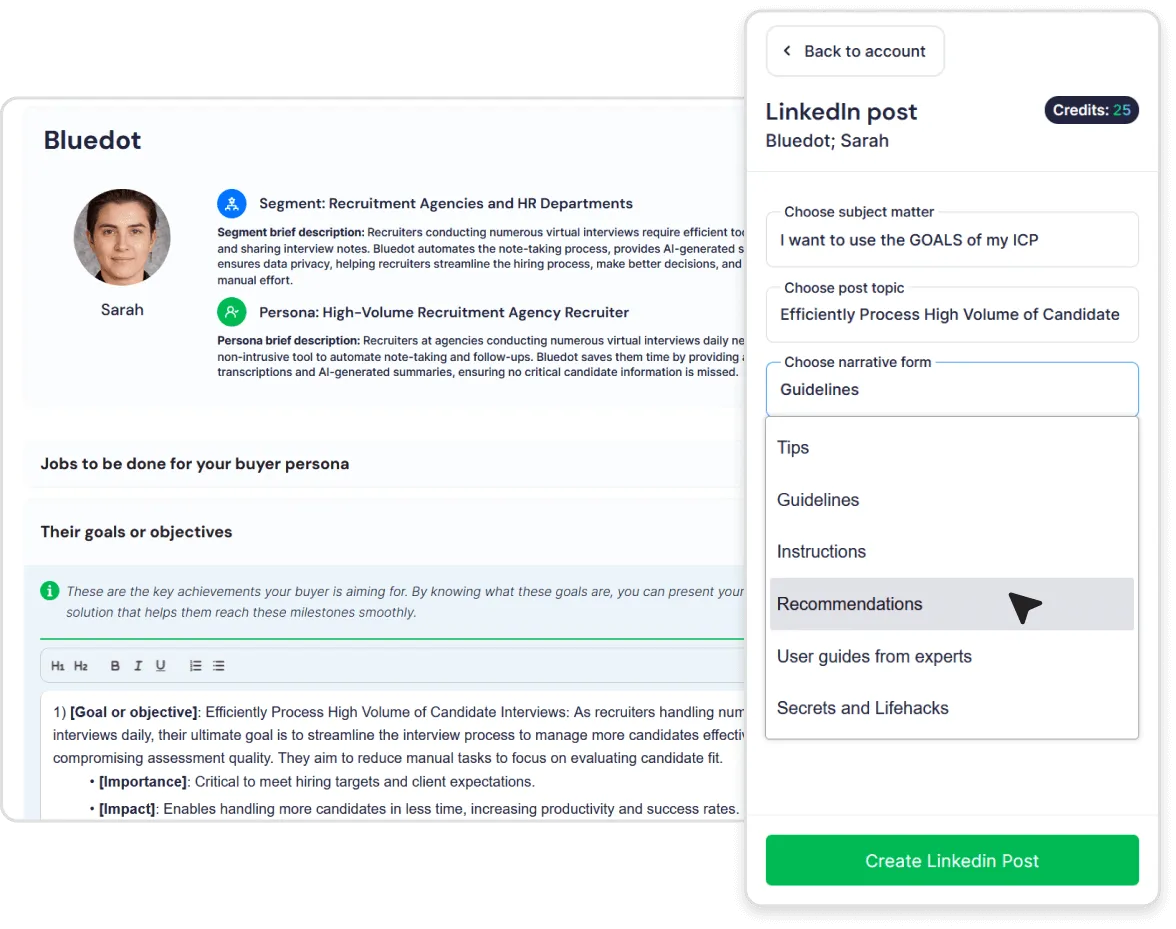
The first tool is M1-Project (the product now goes by the name Elsa AI), a solution designed to build and refine the ideal customer profile (ICP), improve marketing strategy and create effective content.
Unlike many other AI tools that focus only on generating content, M1 Project uses data analysis, customer segmentation and market positioning to help businesses get the most out of their marketing. With these capabilities, a business can raise its conversion rate, pin down its target audience more precisely and make better use of its ad budget, which in turn lifts ROI.
Jasper AI: a text generation tool for marketing and advertising
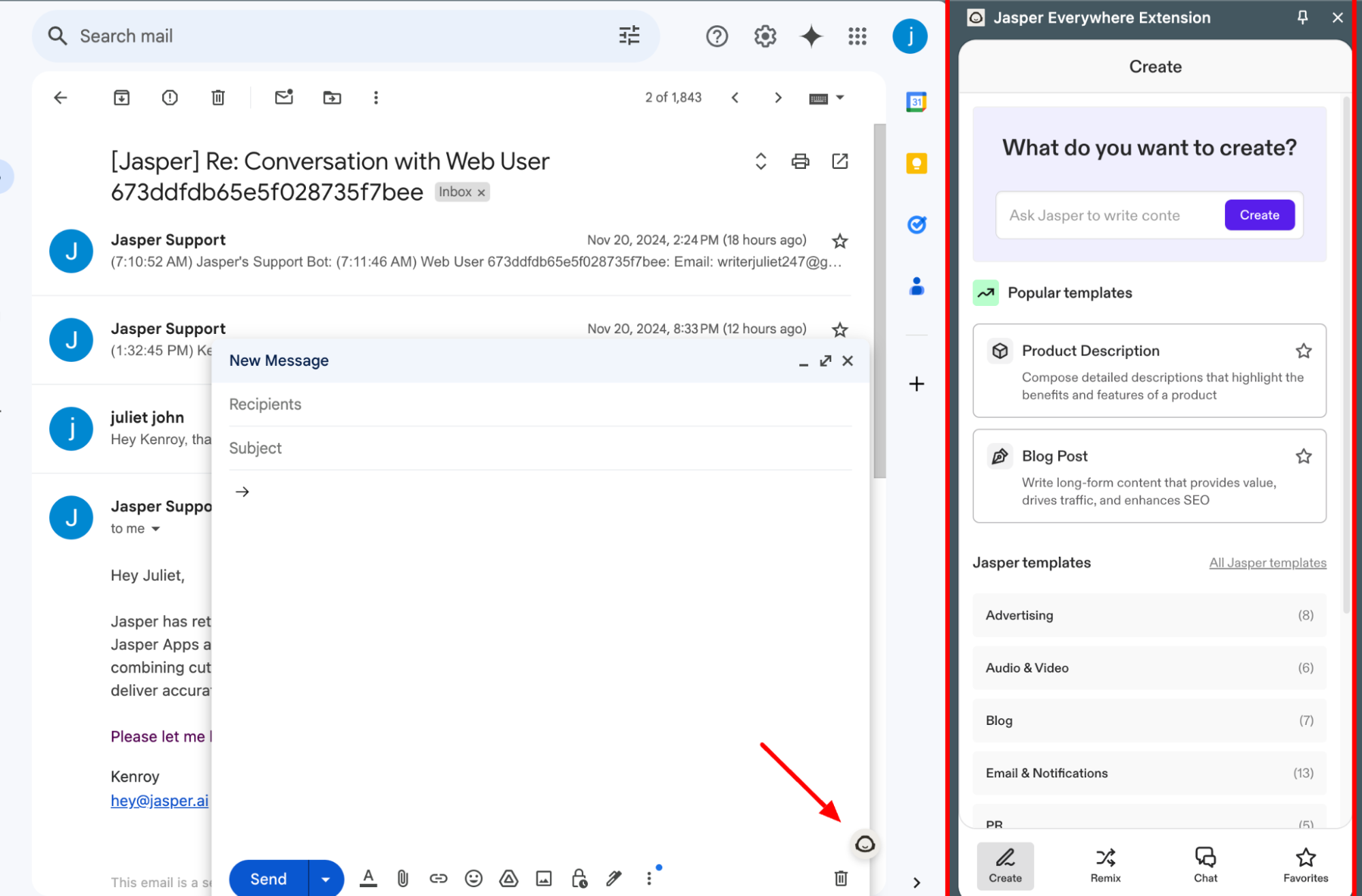
Another popular tool is Jasper AI, which is widely used to create content and ads. It lets users produce articles, ads, email newsletters and product descriptions in a very short time, while keeping the brand style consistent and the content optimized for SEO. Marketing teams can cut the time it takes to draft content considerably, but they still need to edit and review the output to keep quality where it should be.
Copy.ai: AI ad copywriting for high-conversion campaigns
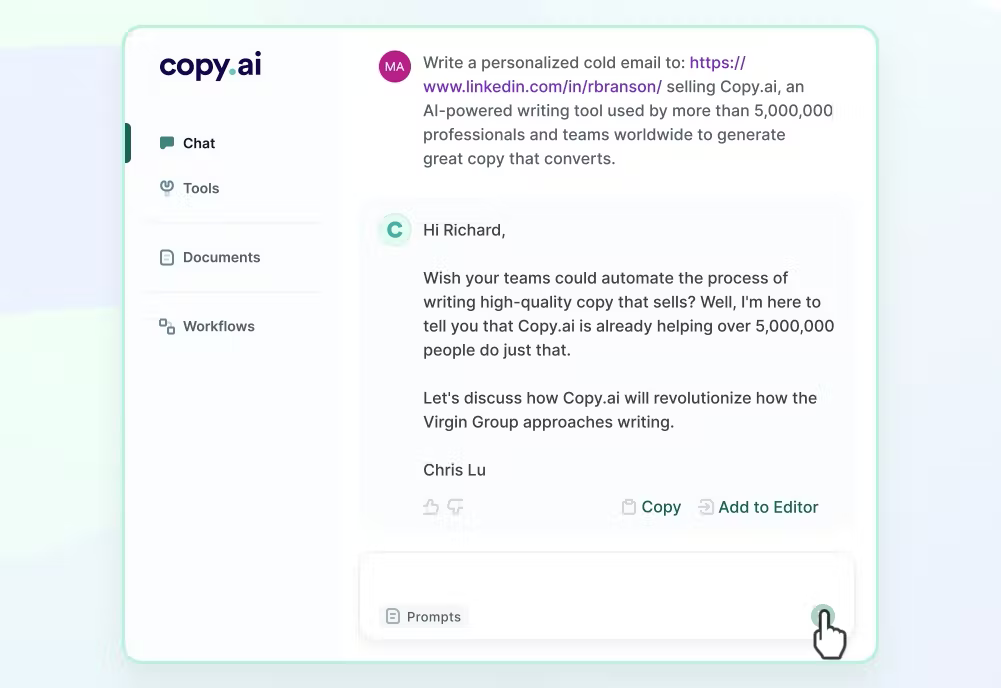
Copy.ai is an effective tool for conversion campaigns, helping you create compelling ad copy, landing pages and product descriptions. Its technology suggests many content variations tailored to each customer audience and each market, which raises user engagement and improves conversion rates.
Synthesia: AI video creation
Video content is becoming a key requirement in modern marketing strategies, and Synthesia has made video creation much easier. The tool lets you quickly create personalized videos, promotional presentations and training content.
The system supports video creation with virtual avatars and voiceovers in many languages, which makes it a convenient solution for brands that operate in international markets. Businesses using Synthesia often report lower video production costs and higher audience engagement.

MidJourney: creating visual content for marketing and branding
Visual solutions matter just as much in marketing, and MidJourney lets you create unique images for brand building, ad campaigns and social media. Using text prompts, users can quickly produce professional-looking graphics, which is especially useful in digital marketing campaigns. A business can then produce creative content without relying heavily on expensive design services.
Marketing teams are facing a very large workload, demands for personalized content and pressure to keep ad costs down. Generative AI helps solve these problems by making marketing campaigns faster, more accurate and more efficient. Below are 5 real-world examples of businesses using AI successfully in marketing.

Bayer: predicting market trends with AI
Bayer wanted to move from reactive marketing to a predictive strategy that would let it understand customer needs ahead of time. To do this, the team combined data from Google Trends, climate information and predictive models on Google Cloud ML. The system helped forecast rises in flu cases period by period, which made it possible to adjust marketing messages in time.

Results:
- CTR up 85% year over year
- Cost per click down 33%
- Website traffic up 2.6x
Sage Publishing: automating content marketing with AI
Every year Sage Publishing releases many new textbook titles, and every title needs its own marketing content. Writing that content by hand took a lot of time and money, so the team brought in Jasper AI to automate text creation. Today a book description can be generated in seconds from the title, the author’s name and a summary of the content.
Results (according to the case study published by Jasper):
- 99% less time spent drafting textbook descriptions
- 50% lower marketing costs
Buzz Radar: real-time campaign performance analysis
Buzz Radar built a “cognitive command center” platform on IBM Watson technology to help marketers analyze campaign performance in real time. With it, the agency can see right away how a campaign is doing and make timely adjustments to improve ROI.
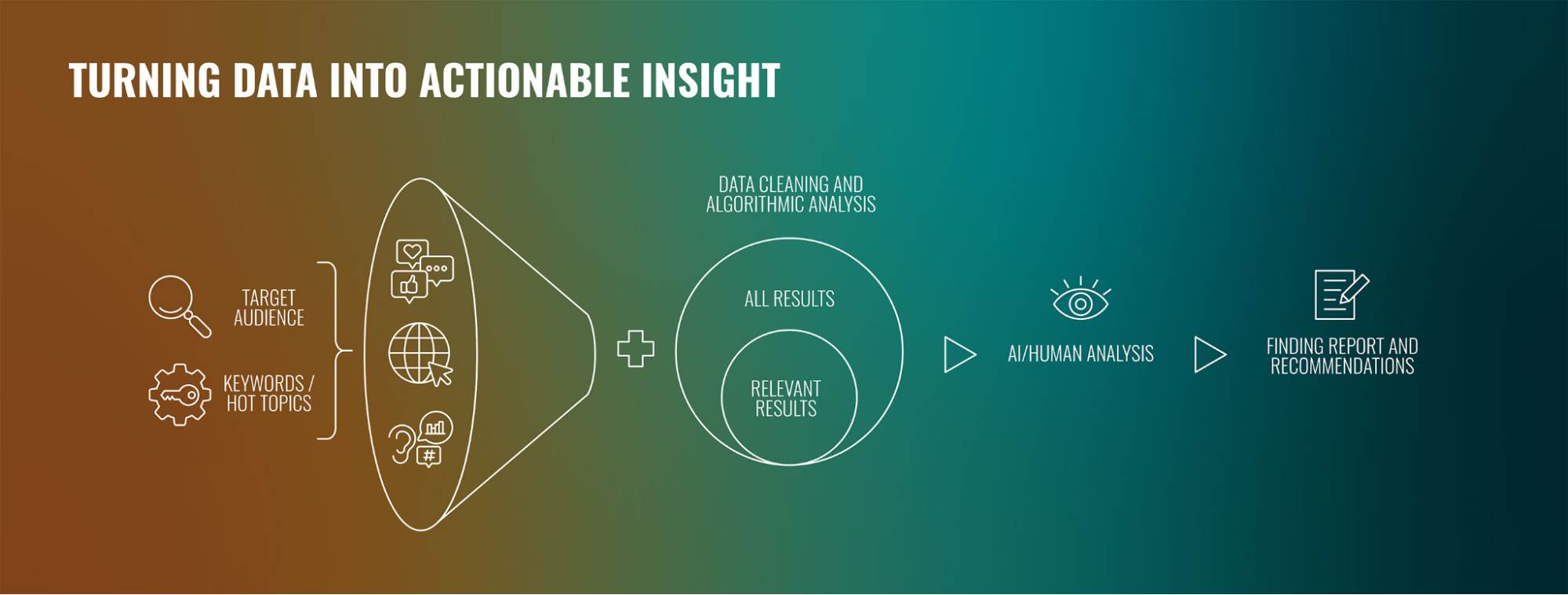
Results:
- Saved clients millions of US dollars by improving the ROI of their digital campaigns
- Helped Buzz Radar compete better against larger, longer-established rivals
- Lower staff turnover, because the developers no longer had to worry about maintaining IT infrastructure
Envidual: refining marketing strategy with M1-Project
Marcel, a UX designer and digital project manager at Envidual, is responsible for building the company’s marketing strategy. One of his key tasks is to keep updating and refining the ideal customer profile (ICP). That work took a lot of time, though, and the team spent about 10 hours a month finding the right segments and choosing the best strategy.
To solve this, Marcel automated the process with M1-Project. The AI ICP tool lets him build an optimized customer profile in just a few minutes, along with detailed segment suggestions and a fitting outreach strategy. As a result, Envidual has improved its targeting and also saves time when building content marketing.
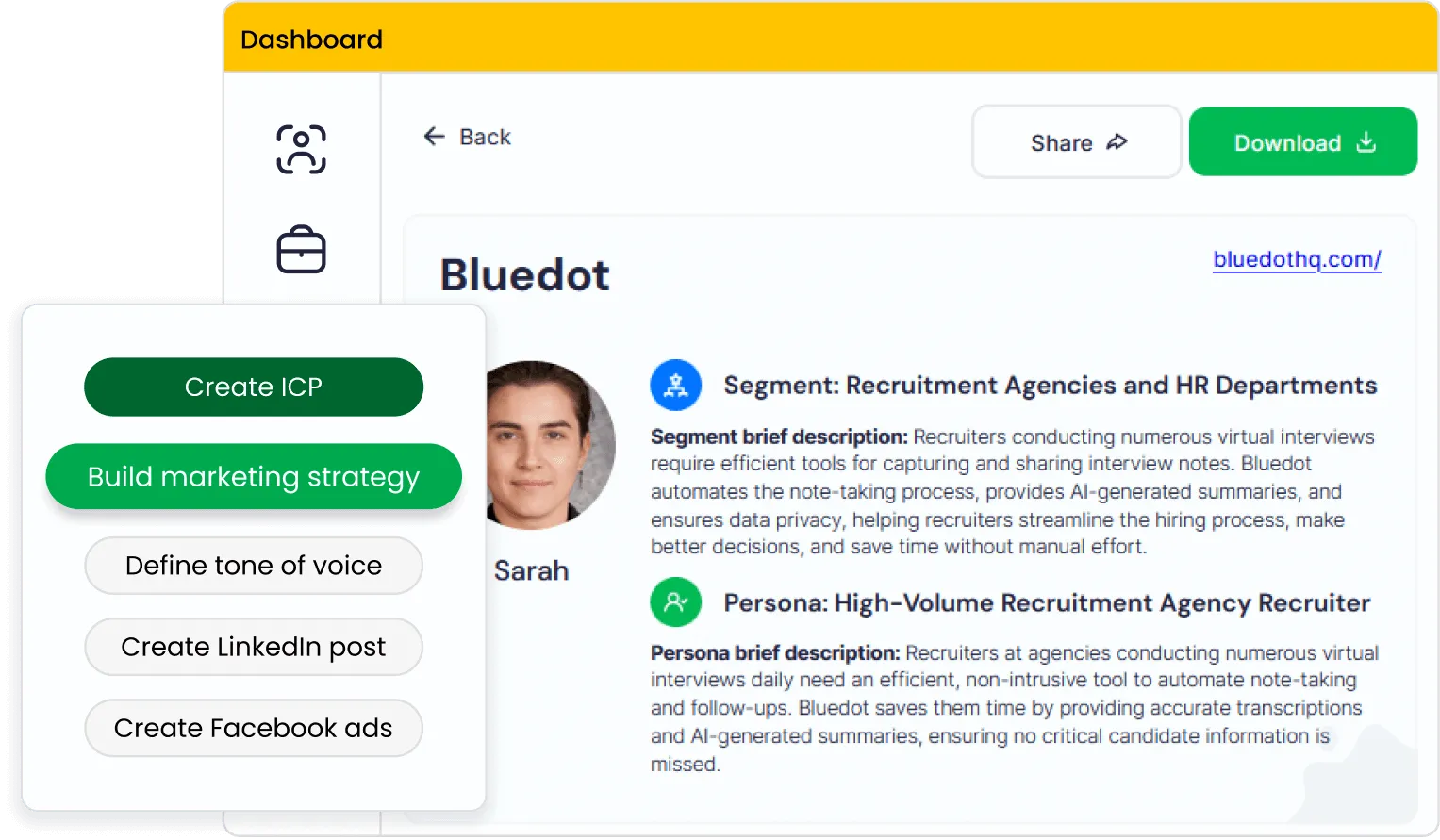
Results:
- Landing pages optimized around the “key pain points” of the target users
- A LinkedIn campaign that reached a 0.75% CTR, 1.7 times the industry average (0.43%)
- An automated ICP process that saves the marketing team many hours of work
24Sales: automating ICP creation and saving time
24Sales is a Rotterdam-based marketing agency that specializes in sales automation, marketing strategy and applied AI. Building an ideal customer profile (ICP) used to take about 4 hours and required several interviews and rounds of data analysis.
After adopting M1-Project, the same work takes only about 30 minutes. The platform automatically generates about 80% of the information needed, and the team fills in the rest by hand. With M1-Project, 24Sales can develop more precise marketing strategies, run better-targeted campaigns and create more effective personalized messages. This has raised the team’s productivity and improved the quality of its work with clients.

Results:
- ICP creation time cut from 40 hours to 5 hours a month
- Client reports produced 8 times faster
- About USD 1,000 saved per month (equivalent to USD 12,000 per year)
- An ICP completed in a single 1-hour meeting instead of a week of back-and-forth
The future of generative AI in marketing
The future of generative AI in marketing will be shaped by hyper-personalization, strategic integration, automated multichannel campaigns, better customer interaction and a commitment to ethics.
The technology keeps developing, and AI-driven marketing methods are becoming more personalized, more data-driven and more effective, helping brands reach customers in ways that were not possible before.
Most likely, the biggest change we will see is hyper-personalized content. AI will create text, images and video, and will automatically adjust content for each user based on real-time behavioral data. This will clearly build momentum and have a strong effect on how ad content, emails and social media posts are created, with everything optimized automatically to match each user’s interests and needs, which raises engagement and conversion rates.
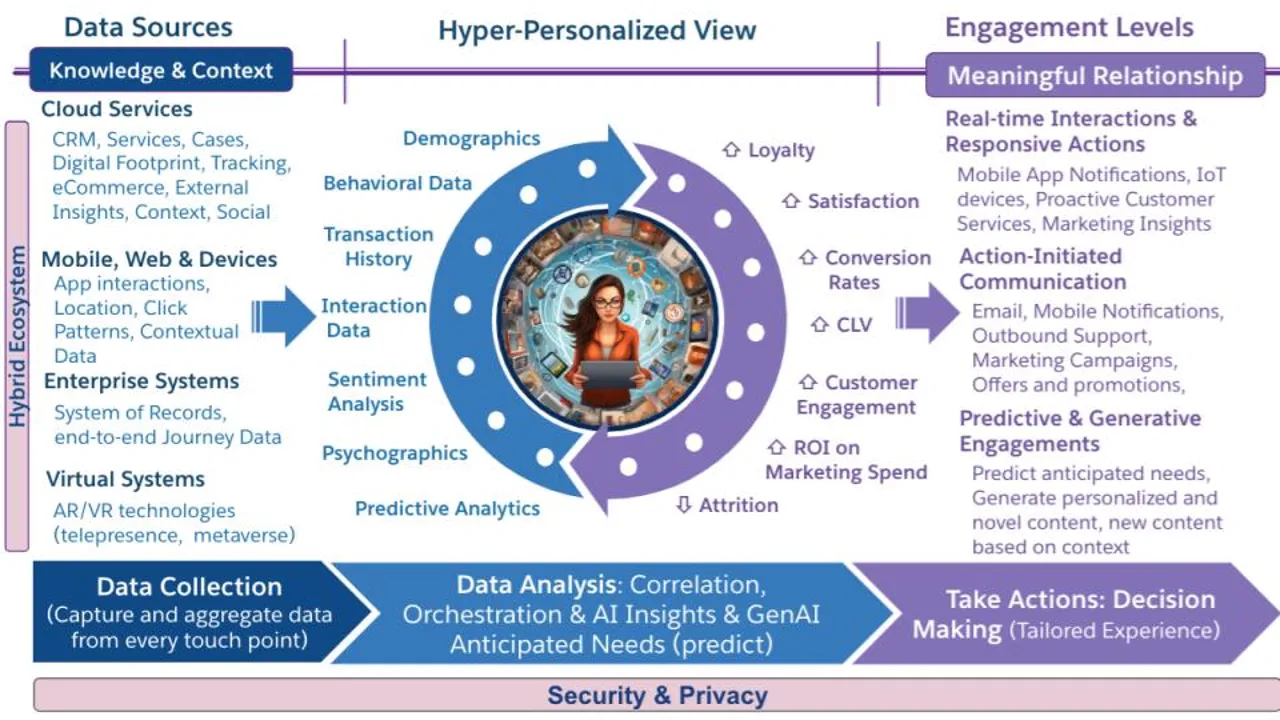
The second major trend we cannot ignore is that AI-assisted marketing strategy work will become widespread. AI programs will not stop at creating content. They will also take part in designing marketing roadmaps, predicting market trends and identifying high-value customer segments. Some platforms, such as M1-Project (Elsa AI), already use AI to optimize the ideal customer profile (ICP) and go-to-market strategy.
AI will also transform how multichannel campaigns are run. Instead of manually editing campaigns across many different platforms, teams will rely on AI to pre-optimize content for social media, search engines and paid ads, keeping the message consistent and effective across every channel. This removes most of the manual work and improves campaign performance.
The development of conversational AI and virtual assistants will also change how businesses interact with customers. AI-powered chatbots and voice assistants will keep getting smarter, able to give context-aware answers in real time and guide customers through the whole buying journey with little or no human involvement.
Finally, it is worth stressing that AI ethics and transparency in how AI is operated will become top priorities. Businesses that adopt AI responsibly will build stronger trust with customers and create long-term brand loyalty.
This article was compiled by Adtek with reference to the original content from M1-Project (2026), updated on October 19, 2026.


 Categories
 Recent Posts