ENG
 VIE
 +84 9323 494 34


How to optimize your entire marketing funnel with AI
 May 6, 2026
 Uyen Mac
Marketing is changing faster than most marketing teams can adapt. People now expect instant answers, and they tend to search across many different channels before they ever reach your website. Search results summarize the main points before showing any links. AI Overviews and LLMs (large language models) give users clear, well-structured answers that used to take a long stretch of research to piece together. That shift is why the AI marketing funnel needs its own playbook.
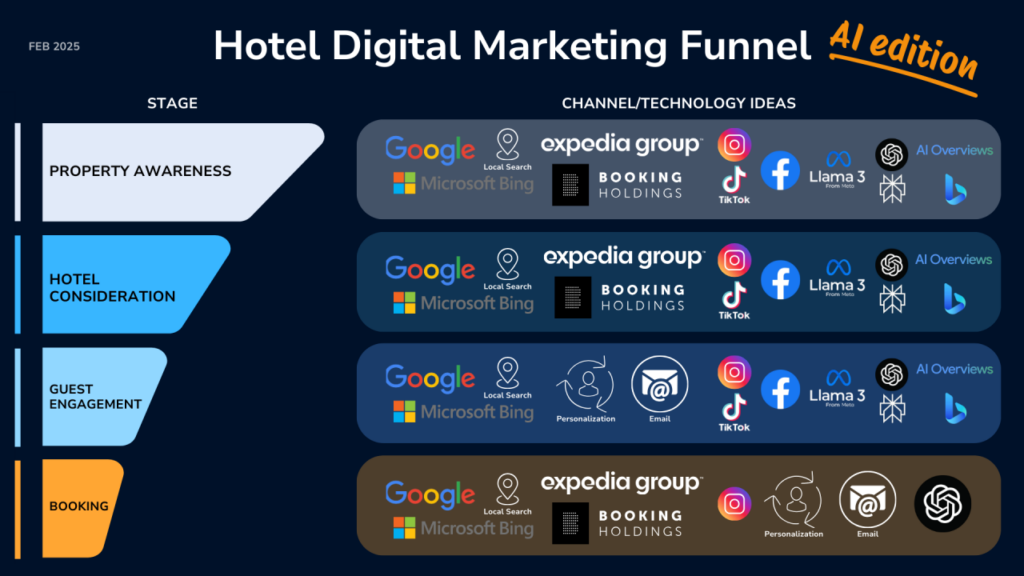
This shift affects every component of the marketing funnel. That is not because the basic principles of marketing have changed. It is because AI has reshaped the way information appears in front of people and the way they arrive at decisions.
If you want your marketing system to keep up, you need to adjust your funnel to the way people now search, compare and act. In practice that means new workflows, smarter content systems and a team that knows how to put AI to work instead of fumbling around with it.
Below is a practical look at how to rebuild the entire marketing funnel, stage by stage, for the AI era.
Key takeaways
- Artificial intelligence (AI) is changing how people research, weigh options and make decisions, which means your funnel has to adapt to shifts in user intent and behavior.
- Teams with a clear operating system can use AI consistently across all of their work: planning, content production, customer outreach and improving how they work
- Content has to be optimized for both people and AI, which means it must be clear, structured and credible.
- AI speeds up the work, helps you understand insights and opens up more room for testing, but people still set the strategy and protect the quality of the brand
- Funnel performance improves when the system is updated continuously and uses real-time data and predictive analytics to guide action
The AI reality in marketing
With the arrival of AI, people expect to get fast answers at any time and wherever they happen to be. They expect short, clear explanations, and they expect content that gets straight to the point.
Search engines now often summarize the information themselves before sending users on to a website. AI tools analyze the question and return results with specific links to steer users where they need to go. Teams that still work from old plans or rigid processes will struggle to keep up with this change, because the environment is moving too quickly.

AI also gives marketers more information, so they can spot bottlenecks quickly. You can pick up signals about what users need much earlier than you could before. AI can even produce several versions of one idea in a few seconds instead of a few hours. The speed and clarity that AI provides have already started to change the way marketers think, as well as the way you plan and carry out your work.
That is why systems matter. AI works best when the input data is good, the workflows are clear and your team knows how to train the models toward specific goals.
Rebuilding the marketing funnel to work with AI
The marketing funnel used to follow a fairly predictable path. People searched for information, explored the results, weighed their options and then started to decide. AI arrived and broke that pattern. Users now skip steps, want answers before they have even started searching, mix many different channels and platforms, and jump back and forth between results in less time but with more tools.
What you need now is a marketing funnel that adapts to user intent in real time. It is time to look at what these changes mean at each stage.
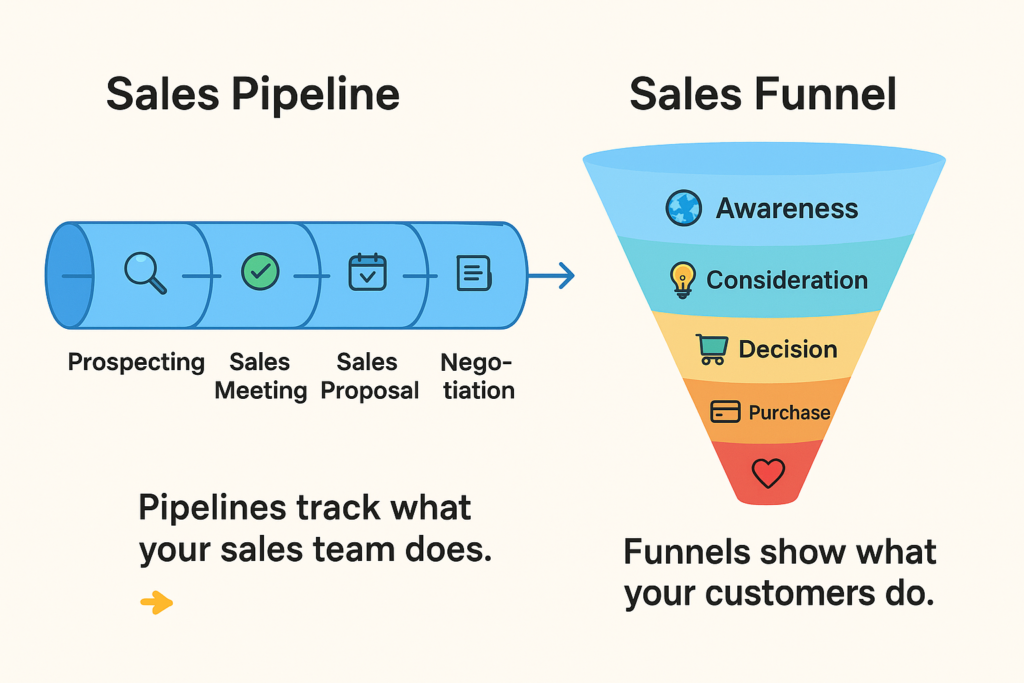
Awareness: stand out among summarized answers
Brand awareness used to mean ranking high in search results or showing up on social media. Now awareness means being visible wherever AI models and search engines collect their information. Your content has to be clear and specifically structured so that AI systems can understand it right away. That means using clear definitions, short explanations and answers that hit the point instead of circling around it.
AI can also help you plan faster by spotting topic clusters, related search behaviors and interests, language patterns and the questions people ask before they search. From those insights, you can create content that works for both the people reading it and the AI systems summarizing it.
Consideration: personalize and adapt as users explore
People take decision paths that are hard to predict. One person might read a comparison page, then watch a video, then search for alternatives. Someone else might start with a chatbot, skim a few reviews and go straight to pricing.
AI helps you adapt to those differences between one buyer and the next. You can personalize the next piece of information based on what people actually do, rather than on assumptions. You can find and understand the sticking points and offer solutions that support their decision. As a result, the content path that reaches each user feels smoother and more natural.
Conversion: speed up decisions with deeper insights
AI helps you analyze signals more effectively across the whole campaign: identifying the touchpoints that matter, understanding where users drop off and why they come back. You can also optimize the timing of your outreach based on how people behave, instead of following a fixed schedule.
AI models support the decision itself by building guidance tools and calculators, serving personalized content and answering the last remaining questions before the conversion, so users feel more confident when they make up their minds.
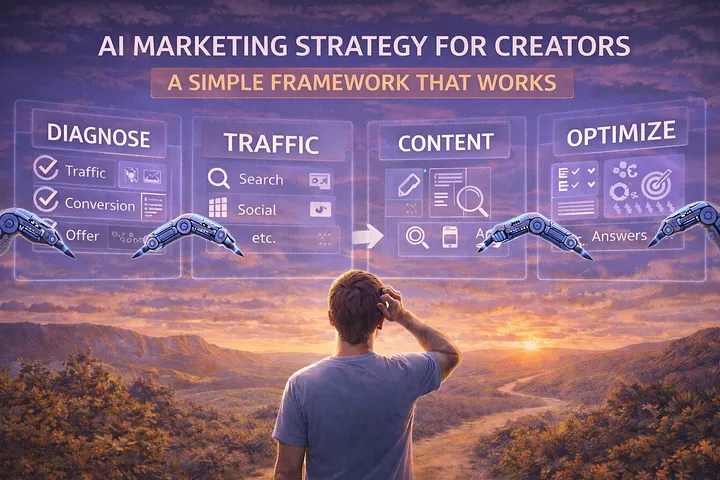
Upskilling your team for the AI marketing funnel
AI changes workflows, but how much difference it makes depends on how your team uses the tools. You need people who know how to get the most out of the system, who think strategically about where AI fits, and who know how to improve the output it produces.
From doing the work to directing AI
AI speeds up how work gets done. In practice, this means your team moves away from doing every step by hand and toward directing and coordinating the whole process. They need to know how to give direction, judge the results and make the calls that a model cannot make for them.
This is where strategy and quality control carry the most weight. Your team’s experience is the intelligence that runs the system.
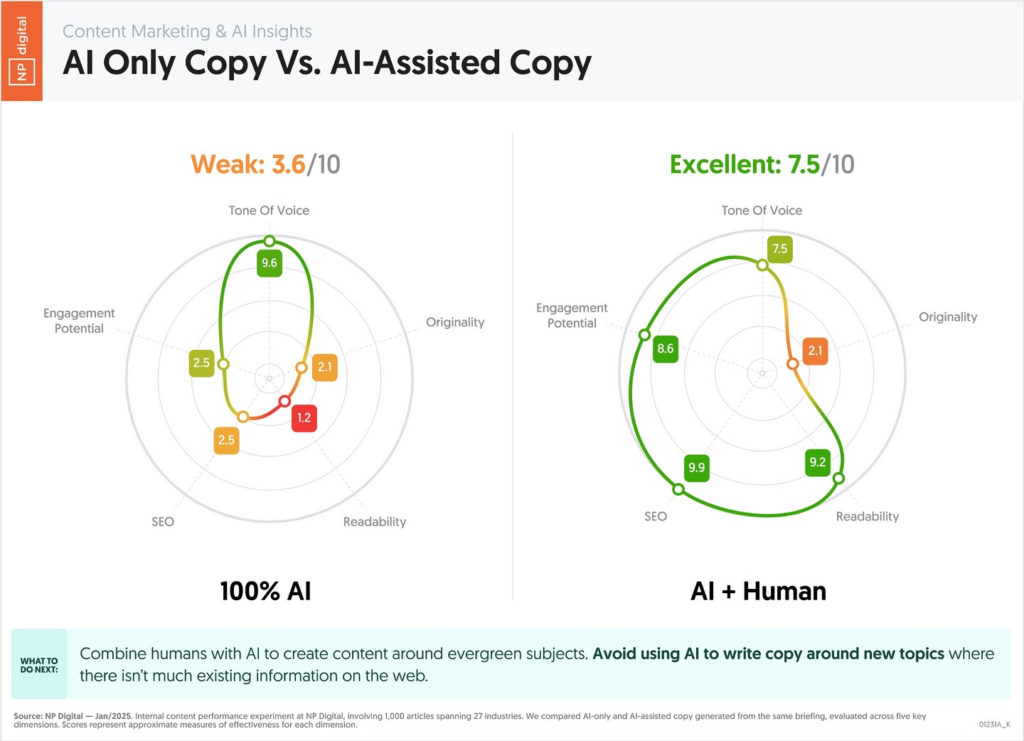
Build systems, not one-off tasks
AI performs best when there is a clear structure around it. You need clear workflows with good inputs, defined expectations for the output and consistent controls. That includes:
- A prompt library
- Structured briefs
- Standardized content formats
- Quality assurance against agreed criteria
- Automation playbooks
When these systems run well, you can scale up the volume of work without losing quality along the way. What you want to avoid is sinking time into AI resources that give you little value back.
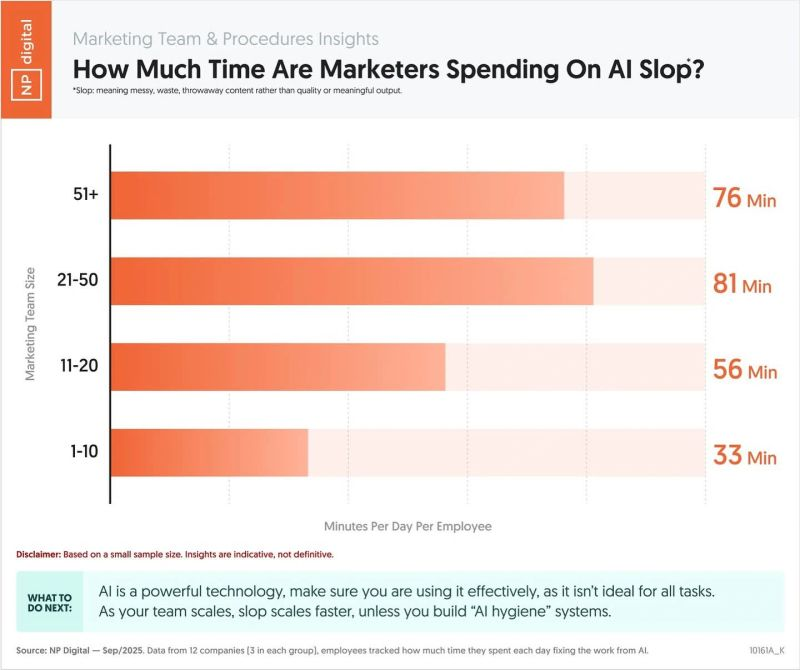
Build AI literacy through training
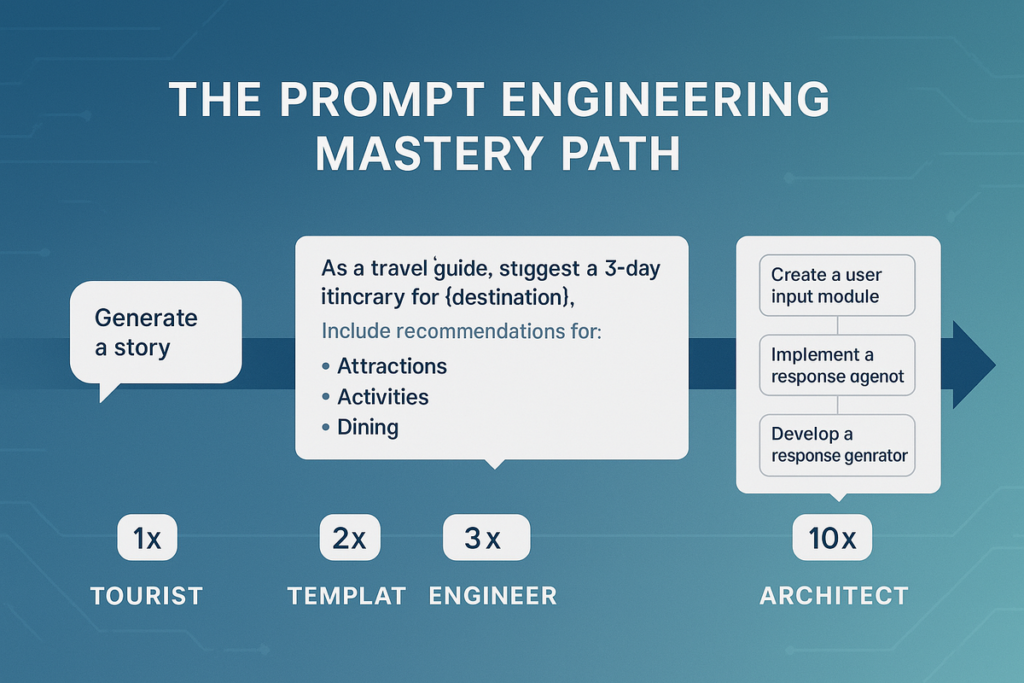
Set a fixed window, for example two weeks, to help the team get confident applying AI. During that window, identify repetitive tasks, move them into AI workflows, refine the prompts and share the results across the team.
5 core skills a modern marketing team should have
Your team needs to be able to:
- Write effective AI prompts
- Understand and validate data
- Build simple automations
- Combine creativity with what AI can do
- Make accurate predictions to safeguard quality
AI at the top of the funnel: Attract
Work at the top of the funnel gets much faster with AI. You can produce a content calendar, briefs and outlines in a few minutes. At the same time, you can analyze emerging trends and catch what people are starting to search for before those searches become common.
AI also helps you find content gaps. When you study how platforms display information, you will see which answers, examples or pieces of information are missing. Those gaps give you a direction for building out your content roadmap.
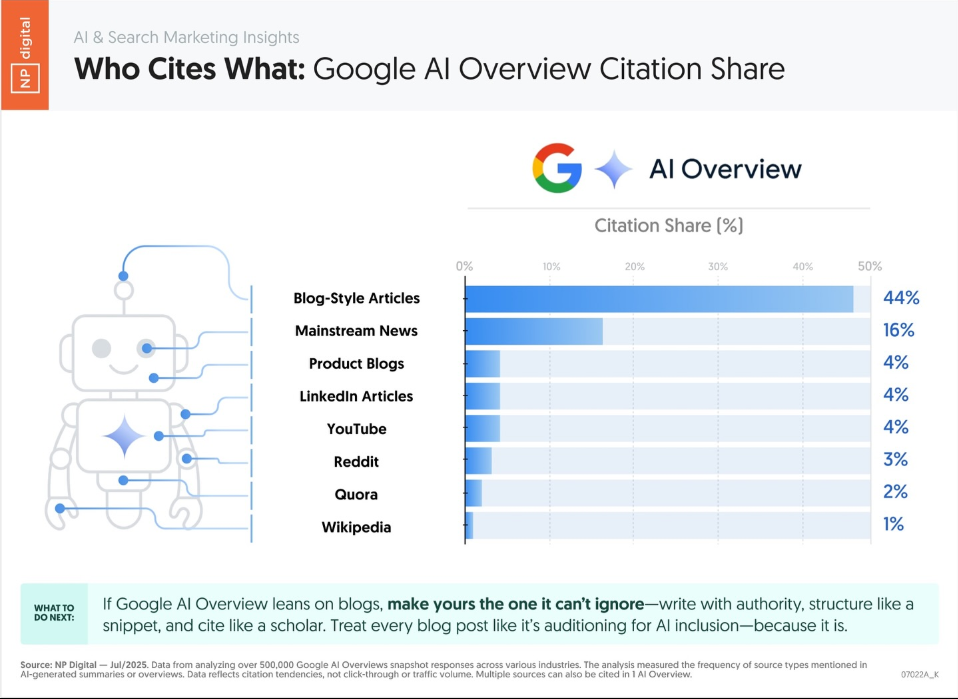
You need to create content that AI models can read and understand easily. Pages should have clear summaries, simple explanations, a tight structure and credible sources. AI “reads” signals of clarity and authority. When content is built on a coherent structure, it has a better chance of being shown to users and cited as a source.
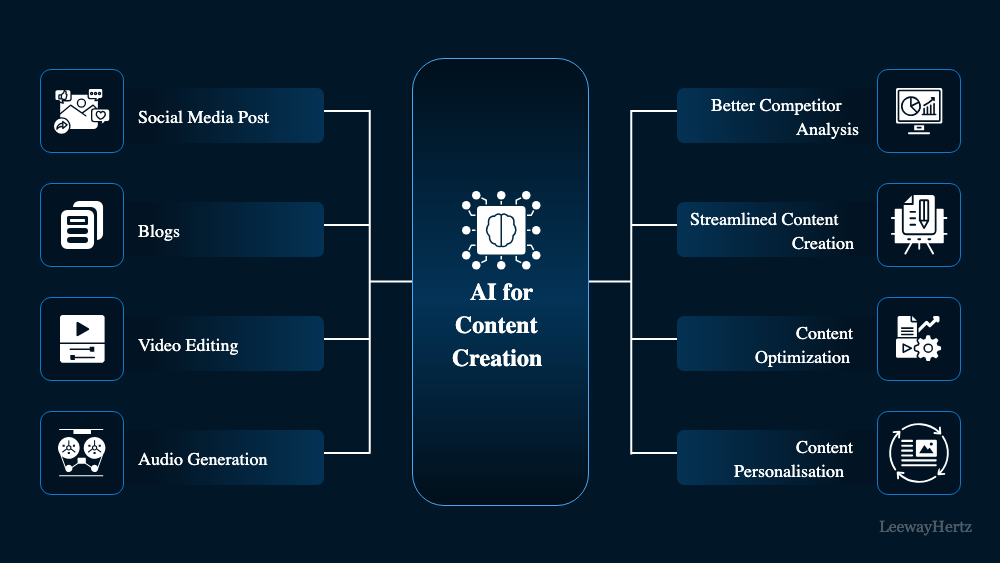
Repurposing content also gets easier. One long article can quickly become social media posts, emails, video scripts or answers to any topic in an online community. AI helps you explore more angles and variations of the content without losing the core message.
Structure content so AI can process and extract it
AI models work by recognizing patterns they have already seen. They favor content with consistent formatting, headings phrased as questions, short explanations and supporting material such as data or worked examples. When your content follows these principles, it is more likely to be shown.
Turn one piece of content into many formats
AI lets you turn a single piece of content into many different versions. A blog post can be reused as video ideas, multi-image posts, an email sequence and outlines for more in-depth content. That way you speed up content production while also keeping the message consistent across every channel you use.
AI in the middle of the funnel: nurture and convert
The middle of the funnel works best when human expertise is combined with AI insight. You can turn educational content into interactive tools and enrich prospect profiles with data such as company size, the tools they use or user behavior. You can also score leads based on actual signals instead of judging them by gut feeling.
Personalization starts to feel more natural to the people receiving it. You can tailor the message to the way each person takes in information and offer the right format for them, whether that is a video, a comparison table or an in-depth guide.
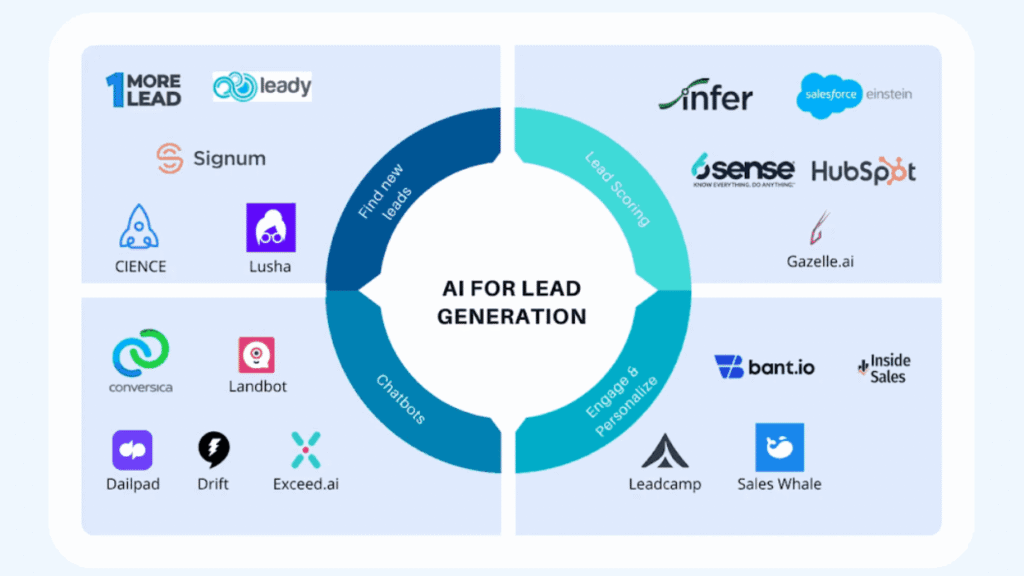
AI also strengthens your efforts to reach customers. It can create personalized outreach content and adjusts when messages are sent based on how people respond. This lets your team concentrate its time and energy on the conversations that have real potential to convert.
Audience modeling becomes more precise. Instead of relying on broad personas, you can break your audience into smaller segments based on motivation, predicted actions and friction points along the way. The result is a user journey that tracks real-world behavior much more closely.
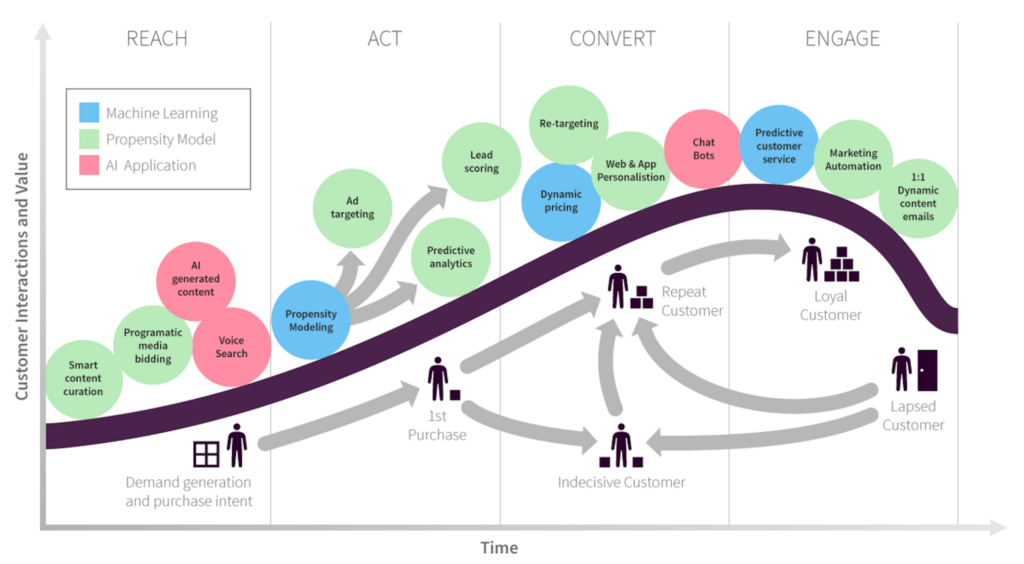
Turn expertise into self-service tools
AI makes it easy to turn long-form content into calculators, quizzes, assessments and guided walkthroughs. These experiences educate people, capture behavioral signals and qualify leads, all at the same time.
AI at the bottom of the funnel: retain and expand
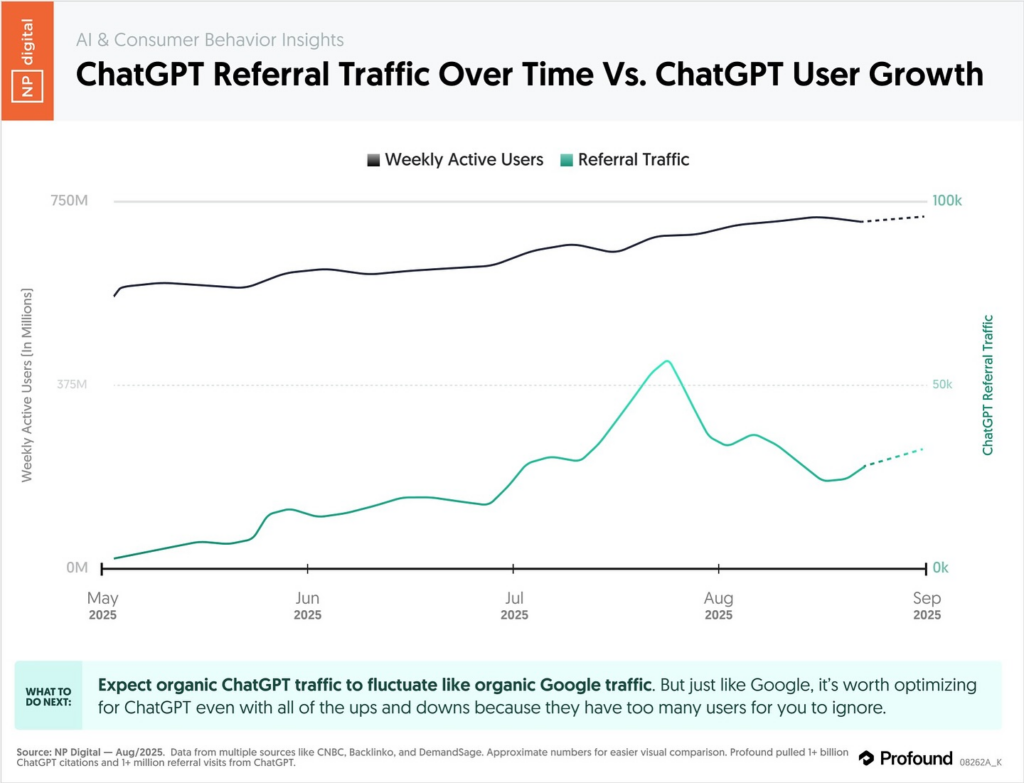
AI changes how you manage customer relationships. It helps you pull insights out of conversations, flag customers at risk of churning early and reach out proactively to keep them interested. AI also helps you find opportunities to expand your reach with existing users by analyzing their behavior and engagement levels.
Sales teams can turn calls and support conversations into work that can be repeated. You can pull out the objections customers raise and the responses that worked well, then build communication templates that help new hires get up to speed quickly.
At this point, customer retention becomes much more proactive. You can monitor behavior to catch early signals, trigger personalized customer care actions and reach out directly based on what each customer needs.
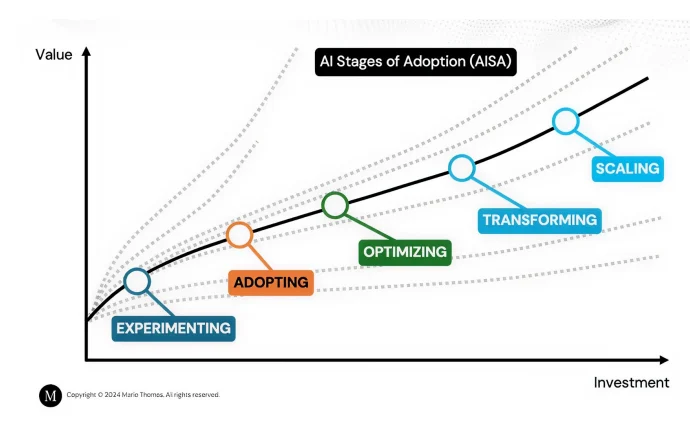
Upselling (selling a customer a higher-value option) and account expansion also become more personalized. They focus on the touchpoints that deliver value and highlight the features or products that fit each customer’s journey.
Optimize your AI marketing funnel and get ready to scale
Transforming the entire funnel with AI is not something that happens overnight. The most effective approach is to start with the workflows that pay off quickly. You can begin using AI for research, content summaries, reporting and ongoing monitoring.
You also need to train your team to review AI output the way a real editor would: think critically, refine the suggestions and steer the models toward better results. When the team treats AI as a collaborator, quality stays at a high level.
Every success should be written down and turned into part of your system. When a workflow works well, make it part of a playbook. Build a culture where testing is normal and expected. Share wins and failures openly so your team learns faster and improves together.
Frequently asked questions
Where should I start if my funnel is not yet optimized for AI?
Start with the workflows that affect every channel. Research, summaries, reporting and monitoring are the easiest places to apply AI, and they can pay off right away.
Will AI replace my marketing team?
No. AI speeds up execution, but your team sets the strategy, makes the judgment calls and protects quality. The work shifts from doing things by hand to steering intelligent systems.
How do I keep brand quality high when using AI?
Set clear rules from the start. Use structured briefs and standard formats, and define clear editorial criteria. Always check the output carefully and keep refining your prompts until the results match your tone of voice and your standards.
How do I introduce automation without disrupting existing workflows?
Start small. Automate simple, repetitive tasks first so the team builds confidence with the tools. Only add complexity once people have mastered the basics.
How do I measure improvement across the whole marketing funnel?
Track speed, quality and impact. Then look at how quickly your team is applying AI to specific, concrete pieces of work.
AI is not replacing the marketing funnel. It is reshaping how the funnel works from top to bottom. Every stage of the journey changes as people respond to information faster, pick clearer answers and use smarter systems.
Teams that build their operating structure around AI will move faster, make more accurate decisions and adapt better to behavior as it happens. Small improvements compound over time. When you refine your workflows, train your team and turn successful tests into standard practice, you are building a system that learns with every cycle.
The future belongs to marketers who know how to use AI clearly and with a defined purpose. Start building a marketing funnel today that matches the way people actually make decisions every day.


 Categories
 Recent Posts