ENG
 VIE
 +84 9323 494 34


Education marketing in Vietnam for 2027: online student recruitment by school type
 November 9, 2026
 Tin Le
Contents
Vietnam’s Ministry of Education and Training has just published the 2027 admissions calendar: candidates register their choices from 9:00 on July 1 to 16:30 on July 13, 2027, and can change them as many times as they like (Tuoi Tre, October 23, 2026). For education marketing, the nearer deadline is the urgent one: universities and colleges must publish their 2027 admission information on their websites before December 31, 2026. That means program pages need to be updated before New Year.
Preschools, private K-12 schools and language centers have no shared calendar like this, but they compete for the same parents on Facebook, Google, Zalo and TikTok. Lead measurement, screening forms and CPQL for these schools are covered in the article on enrollment marketing for international schools.
Education marketing: the payer and the student are often two people
Selling a school is not like selling lipstick. The person who buys lipstick wears it. In education, parents pay, children study, and the child’s voice grows with every grade. Know who decides before you pick a channel.
| Type | Decision maker | First conversion point | Priority channels | Final number |
|---|---|---|---|---|
| Preschool | Parents of children aged 1 to 5 | Booking a school tour | Google Maps, Facebook, Zalo | Children enrolled |
| Private K-12 | Parents, with older children having a say | Tour, open day, entrance assessment | Facebook, Google Search, Zalo | Students enrolled |
| University, college | Grade 12 students, with parents weighing in | Reading the program page, requesting advice, listing the school as a choice | Program page SEO, TikTok, YouTube, Google Search | Candidates confirming enrollment |
| Language center | Parents (kids’ classes) or working adults | Placement test, trial class | Google Maps, Google Search, Facebook | Students paying tuition |
| Skills center | Parents or working adults | Trial class, workshop | Facebook, TikTok, Zalo | Students paying tuition |
Two takeaways. Preschools and centers sell within a radius: parents rarely drive their children far, so Google Maps matters more than city-wide ads. Universities are the only type where most of the main decision makers are still under 18 during peak season, and that changes how ads can run.
Student recruitment ads for people under 18: what the platforms restrict
Most grade 12 students in the 2026-2027 school year were born in 2009. On July 1, 2027, anyone born after July 1, 2009 is still under 18. Meta and Google treat this group differently.
On Meta (Facebook, Instagram): when an ad audience includes people under 18, you cannot use gender, locations smaller than cities, detailed targeting (interests, behaviors, demographics), language, any custom audience such as website visitors, customer lists, page engagers or lead form openers, or lookalike audiences. Several optimization goals are also off for this group, including leads, landing page views and conversations; link clicks, offsite conversions, reach and impressions remain available (Meta, About advertising to teens).
On Google: users under 18 are not eligible for personalized advertising of any kind, including serving based on Google’s predefined audiences (Google Ads Policy, Restricted targeting in personalized advertising).
Put simply: with a 17-year-old, you are not allowed to read their profile to decide who sees the ad. You choose age and city, and the content has to attract the right people by itself. What this means for university marketers:
- Split into two ad groups. The 18-plus and parent group gets every tool: lead forms, retargeting, lookalikes. The 13 to 17 group is targeted by age and city only and optimized for link clicks or website conversions.
- Let content do the targeting. Without interest filters, the headline must filter: name the program, the subject combination, the tuition. A video called “A day in the Logistics program” pulls in people who care about logistics.
- No remarketing to 17-year-olds. Someone who visited a program page can only be reached again with ads once they turn 18. Until then, follow up through channels they opted into themselves: Zalo OA, email, the school’s community groups.
- Collect parents’ phone numbers, not those of younger students. The form should state why you will call and include consent wording in line with Vietnam’s personal data protection law.
Google Search is less affected because ads show for the keywords someone types, not for their personal profile. That is why SEO and Search carry so much weight in university recruitment.
Online student recruitment channels by school type
Vietnam had 85.6 million internet users, 84.2% of the population (October 2025). Facebook could reach 79.0 million people, Zalo had 78.3 million monthly active users according to VNG, TikTok could reach 76.1 million people aged 18 and over, and YouTube 62.1 million (DataReportal, Digital 2026: Vietnam). Every channel has the audience. The question is which one fits the job.
Google Search: catch active searchers, watch the word “online”
People searching “trung tâm tiếng anh” (English center, 12,100 searches a month) or “tuyển sinh lớp 10” (grade 10 admissions, 6,600) have real demand (Google Keyword Planner, October 2026).
A common trap: research phrases containing “online” and Keyword Planner suggests many login portals that current university students use, such as “hcmue online” (33,100). If a Search campaign uses broad match or has AI Max for Search turned on, admission ads can show to students looking for a login page. In the first week, open the search terms report and add negative keywords such as “đăng nhập” (log in), “lms” and the names of local e-learning portals.
Program page SEO and Google Business Profile
Students choose a major by asking Google. “Học marketing ra làm gì” (what jobs does a marketing degree lead to) gets 720 searches a month, “ngành marketing học gì” (what does a marketing major study) 390, and “marketing học trường nào” (which school for marketing) 260 (Keyword Planner, October 2026). One major alone draws more than 1,000 searches a month from exactly the people choosing a school.
Each program should have a page that answers what students ask themselves: what you study, what jobs follow, which subject combinations are accepted, tuition per year, where internships happen. This is the cheapest SEO a university can do, and many skip it because their program pages are a single generic paragraph. Clear answer pages are also easier for AI tools to cite when students ask ChatGPT or AI Overviews (see AI search optimization).
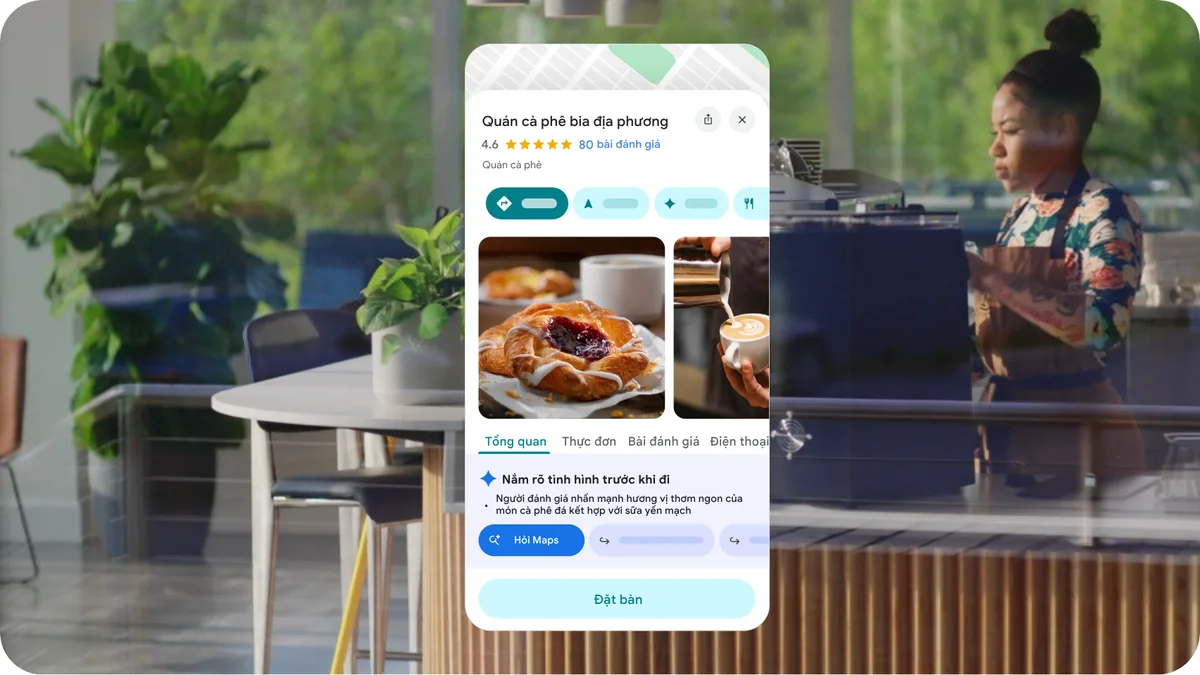
Preschools and centers are the opposite: parents search on the map. Each campus’s Google Business Profile needs real classroom photos, correct opening hours and replies to reviews. A profile with no photos looks like a shop with its shutters down on a busy street.
Meta: the parents’ channel
Parents of preschool, K-12 and kids’ center students are adults, so Meta’s full toolkit is available. For centers with several campuses, target a radius around each campus and put the campus address in the ad. Meta picks who sees an ad largely from the creative, so ads need genuinely different angles (see Meta Andromeda).
TikTok and YouTube: the students’ channels
Students choose majors through video: a day in the dorm, a third-year student on an internship, a lecturer explaining the major in 60 seconds. Two notes. TikTok’s 76.1 million figure only counts people aged 18 and over. For students under 18, ads cannot be targeted by interest, so organic (unpaid) video and videos made by real students have to do most of the work of finding the right people.
Zalo OA and ZNS: reminders after sign-up
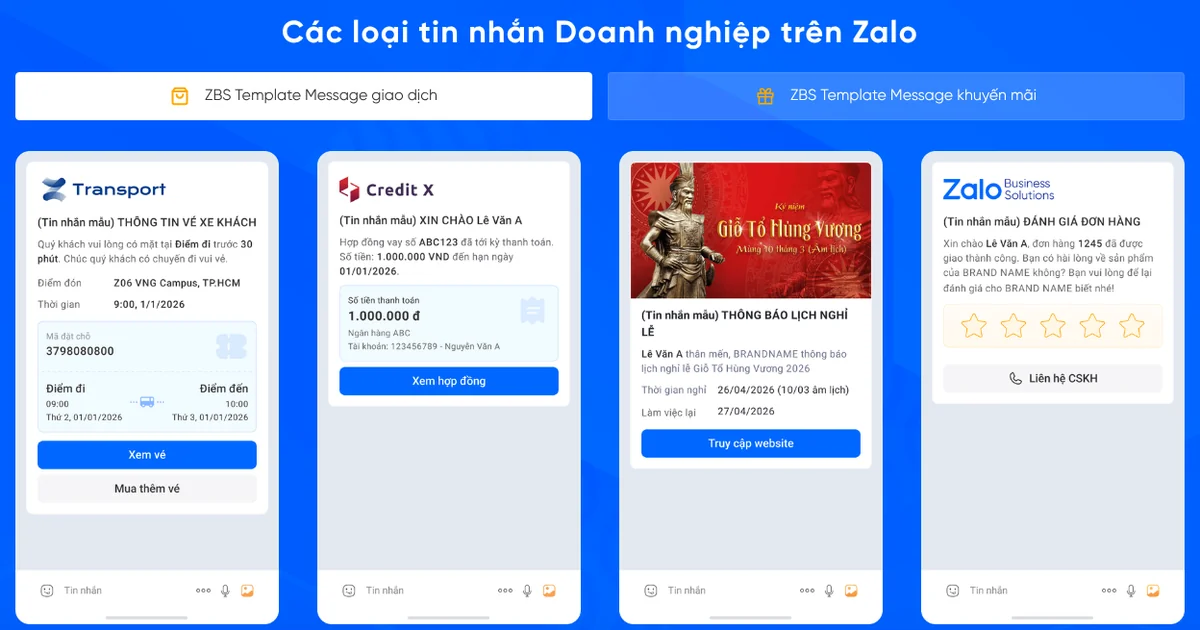
Zalo suits following up with people who have already left their details, not finding new ones. When a parent books a tour, Zalo OA sends the confirmation and address and a reminder the day before. Transactional messages such as placement test results or seat-hold deadlines go through ZNS. Every forgotten appointment is ad money thrown away.
Example: summer 2027 recruitment for a kids’ English center
Example (hypothetical): I run marketing for a kids’ English center in Ho Chi Minh City with two campuses, taking children aged 6 to 11. The goal is 60 new students for the summer 2027 course. I go through five steps.
Step 1: write down the questions parents ask themselves. I read the 1-star and 2-star Google Maps reviews of nearby centers and group them into 5 worries:
- Will my child improve, and how is that measured?
- Who is the teacher, and will they change mid-course?
- How many children are in a class?
- How far is the campus from home, and is there parking while I wait?
- What is the full course fee, and are there extra charges?
Step 2: choose the conversion point. I do not ask for “register for admission advice”. I offer “a free 30-minute placement test with a same-day results report”. The test answers worry (1) up front and gives the center a reason to meet the parent in person.
Step 3: choose channels by radius. A Google Business Profile for each campus, with classroom photos, parking photos and a map, solves (4). Google Search with “trung tâm tiếng anh thiếu nhi” (kids’ English center) plus the district name. Meta targeting parents within 5 km of each campus. Zalo OA for booking confirmations and the results report.
Step 4: each ad answers one worry.
| Ad | Content | Worry |
|---|---|---|
| 30-second video | A real lesson in a class of 8, filmed from the back of the room | (3) |
| Teacher video | The summer course homeroom teacher introduces themselves and the fixed teaching schedule | (2) |
| Sample report image | A 4-week progress report with the student’s name hidden | (1) |
| Price image | Full course fee, stating that materials are included | (5) |
That covers worry (1) through the conversion point, (4) through the map, and (2), (3) and (5) through creative.
Step 5: work the budget backward. Conversion rates come from the center’s records for last season (hypothetical here):
| Step | Formula | Example (hypothetical) |
|---|---|---|
| New students needed | Target | 60 |
| Placement tests needed | Students / test-to-enrollment rate (40%) | 150 |
| Bookings needed | Tests / show-up rate (60%) | 250 |
| Ad budget | Bookings x cost per booking (150,000 VND) | 37.5 million VND |
| Cost per new student | Budget / students | 625,000 VND |
The cheapest lever in the table is the show-up rate. Raise it from 60% to 75% with Zalo reminders and you need only 200 bookings, saving 7.5 million VND without touching the ads.
Vietnam’s 2027 university admission calendar and the marketing tasks
The calendar below comes from the Ministry of Education and Training’s plan for 2027 university and college admissions (Tuoi Tre, October 23, 2026; VTV, October 24, 2026).
| 2027 admission milestone | What candidates and schools do | What marketing does |
|---|---|---|
| November 2026 | The Ministry expects to issue amended admission regulations | Wait for the final regulations before explaining admission methods; do not write from the draft |
| Before December 31, 2026 | Schools publish 2027 admission information on their websites | Update program pages: subject combinations, methods, tuition; this is when SEO starts working |
| 9:00 July 1 to 16:30 July 13, 2027 | Candidates register and adjust choices, with unlimited changes | Highest Search budget; remind the 18-plus group and parents; Zalo OA deadline reminders |
| Before 17:00 August 12, 2027 | First-round admission scores announced | Prepare an “Enrollment steps” page and congratulation messages |
| Before 16:30 August 19, 2027 | Admitted candidates confirm enrollment online (first round) | Remind admitted candidates to confirm; every one who forgets is an empty seat |
| From 8:00 August 20, 2027 | Supplementary admissions | Move budget to programs that still have places |
Unlimited changes mean the order of choices can shift until the last minute, 16:30 on July 13. Reminder ads in these 13 days are worth more than at any other time of the year.
Preschools, private K-12 schools and centers have no shared calendar. Build your own from four milestones: registration opening, open day, seat-hold deadline, first day of class. Which months deserve more budget is something to read from last season’s CRM, as described in the international school article.
A message formula for education ads
Education ads usually fail by talking about the school instead of the student. The formula I use:
[What the student achieves, and how it is measured] + [Visible proof] + [Conditions: age, grade, campus] + [A light next step]
Example for an English center: “After 12 weeks, your child reads a 100-word passage aloud in front of the class. Watch a real lesson with a class of 8, ages 6 to 8, at our Go Vap campus. Book a free 30-minute placement test.”
Example for a university program: “Logistics: company internships from year 3. See a sample weekly timetable and tuition for each year. Get the program description on Zalo.”
Avoid:
- “Guaranteed IELTS 7.0” when you cannot prove it for every student.
- One ad for both parents and students. Parents ask about tuition and safety; students ask about friends and jobs.
- Headlines for the under-18 group like “Can’t decide on a major?”. Without interest targeting, this shows to every student, including those who already decided.
One final number for each type
In education marketing, a cheap lead does not always become a student. Measure digital marketing spend by one final number: cost per enrolled student = total marketing spend / enrolled students, then set it against the revenue one student brings.
Example (hypothetical): a language center charges 6 million VND per course and students take 3 courses on average, so LTV is about 18 million VND. Spending 625,000 VND per student is cheap. A private university collecting four years of tuition can afford far more, but first-year dropouts pull that ceiling down. How to set CAC against LTV is covered in growth marketing metrics.
2027 online student recruitment checklist
Before December 31, 2026
- Each university program or center course has a page that answers: what you study, tuition, schedule, outcomes.
- Each campus’s Google Business Profile has real photos, correct hours and replies to reviews.
- Zalo OA has message templates for booking confirmation and reminders.
Q1 and Q2 2027
- Meta and Google ads are split into an under-18 group and an 18-plus and parents group.
- Search has negative keywords for e-learning portals, “log in” and “free” (unless you offer a free course).
- For students under 18, forms collect only the parent’s phone number, with consent wording.
Peak season
- Universities: budget and reminders concentrate on July 1 to 13 and before the August 19, 2027 enrollment confirmation deadline.
- Preschools, K-12 and centers: appointments are reminded the day before, and the show-up rate is tracked weekly.
If your school or center needs a 2027 student recruitment plan built around its type and the Ministry’s calendar, see how Adtek approaches lead generation or contact Adtek.
Sources
- Ministry of Education and Training, plan for 2027 university and college admissions (October 2026); reported by Tuoi Tre (October 23, 2026) and VTV (October 24, 2026).
- Meta Business Help Center, About advertising to teens (accessed October 30, 2026).
- Google Ads Policy, Restricted targeting in personalized advertising (accessed October 30, 2026).
- DataReportal, Digital 2026: Vietnam (data for October 2025 and late 2025).
- Google Ads Keyword Planner, Vietnam, Vietnamese language, retrieved October 30, 2026.
Want to apply this to your business?
Send your question or situation. The Adtek team reads every question and gets back to you.
Prefer to chat? Message us on Zalo Categories
 Recent Posts