ENG
 VIE
 +84 9323 494 34


The marketing picture in 2026: success in the AI era comes from a distinct brand voice and human involvement
 May 23, 2026
 Uyen Mac
Updated on October 18, 2026: data reviewed and updated.
HubSpot’s State of Marketing 2026 report lands on one clear conclusion: in the middle of the AI boom, the brands that stand out are the ones that keep their own identity and keep people involved in the work.
AI is not a zero-sum fight between people and machines. It is a collaboration in which both sides create more value together. AI is quickly changing how businesses do marketing. Over time, it is also reshaping how buyers look for information and make decisions, and it is breaking many rules that marketers treated as “standard practice” for decades.
Buyers no longer depend on Google alone to find what they need. Before they buy, they scroll through social media, follow creators, read reviews, join communities and even ask AI for answers. To keep up, brands have also pushed hard on using AI to produce content for every channel.
That is where the problem starts. Content is getting blander, more and more alike, and short on personality. Marketers adopted AI so fast that many skipped over their own brand voice. The internet is filling up with messages written “for everyone”, at a time when people want to find brands that feel as if they were made specifically for them.
Anyone can get access to AI tools. The businesses that really know how to use AI to pull ahead are the ones that have:
- A strong brand with a distinctive identity
- Data systems that are connected and consistent
- A marketing “taste” of their own that sets them apart
HubSpot’s State of Marketing 2026 report, based on a survey of 1,505 marketers in North America, Europe, Asia and Australia in September 2025, shows what marketers see as their top priorities, goals and challenges in the AI era:
- 61% believe that as people work alongside AI, creative “taste” and brand identity will matter more than ever.
- 58% say that although traffic from search engines is falling, referral traffic from AI carries much higher purchase intent. In other words, people who reach a website through AI are usually already very close to a buying decision.
- To turn these “high-intent” visitors into revenue, 60% of marketers say businesses need to offer a seamless buying experience, for example by adding an AI chatbot that helps answer questions and closes orders faster.
The report does more than analyze current AI marketing data and trends. It also explains how businesses can put them into practice. You will also find useful AI prompts for marketing and suggested frameworks that you can adapt to your own brand.
AI is making marketing more “human”
The smarter AI gets, the more it frees marketers to focus on the things only people do well. 61% of marketers say AI is driving the biggest revolution in marketing in the past 20 years, completely changing how businesses interact with customers and build relationships with them.
67% of marketing teams say AI saves them at least 10 hours of work per week. 68% say AI makes them more productive, which gives them more time to focus on strategy, creative work and finding better ways to connect with customers.

Whether the goal is to raise brand awareness or to build deeper relationships with customers, what makes the difference is still a set of “human” skills: creative thinking, problem solving, emotional understanding and the ability to build trust. These are things AI cannot yet fully do on its own.
Marketers themselves agree. 63% say that to stand out in the AI era, brands need to create more original, personal and emotionally rich content.
Understanding what customers think and feel, figuring out how to connect with them and building long-term trust is still the job of people. Good marketers don’t use AI to replace their own thinking. They use it to sharpen ideas, raise the level of their strategy and execute more effectively.
- Omnichannel marketing amplifies content performance: around 7 in 10 marketers use 5 or more marketing channels (69% in HubSpot’s detailed table, while the report’s summary says 75%).
- Brand is what creates demand
- 85% of marketers review and update their brand identity every quarter or every year.
- Personalization gives customers the push to act
- 93% of marketers say personalization improves lead volume or increases purchases.
- Optimization is what drives growth
- 59% of marketers review performance daily or weekly.
- AI is a core part of the marketing workflow
- 80% of marketers use AI to create content, and 75% use AI for media production.
- As search behavior changes, content strategy has to change too
- 41% of marketers say the top trend they are focusing on is updating their SEO strategy to adapt to changes in search engines.

What’s new in the State of Marketing 2026
| Year | Marketing goals | Marketing challenges |
| 2025 | Increase revenue / sales | Increase traffic |
| Increase website traffic | Generate leads | |
| Increase engagement | Hiring top talent | |
| Improve the customer experience | Convincing customers to buy | |
| Close more deals | Securing enough marketing budget | |
| 2026 | Increase brand awareness / reach new customers | Measuring marketing ROI |
| Increase revenue / sales | Keeping up with new trends and the latest platforms or features | |
| Increase customer conversion rate | Generate leads | |
| Build connections with customers and strengthen relationships with existing customers | Aligning sales and marketing teams | |
| Close more deals | Securing enough marketing budget |
A distinctive brand identity is becoming a competitive advantage
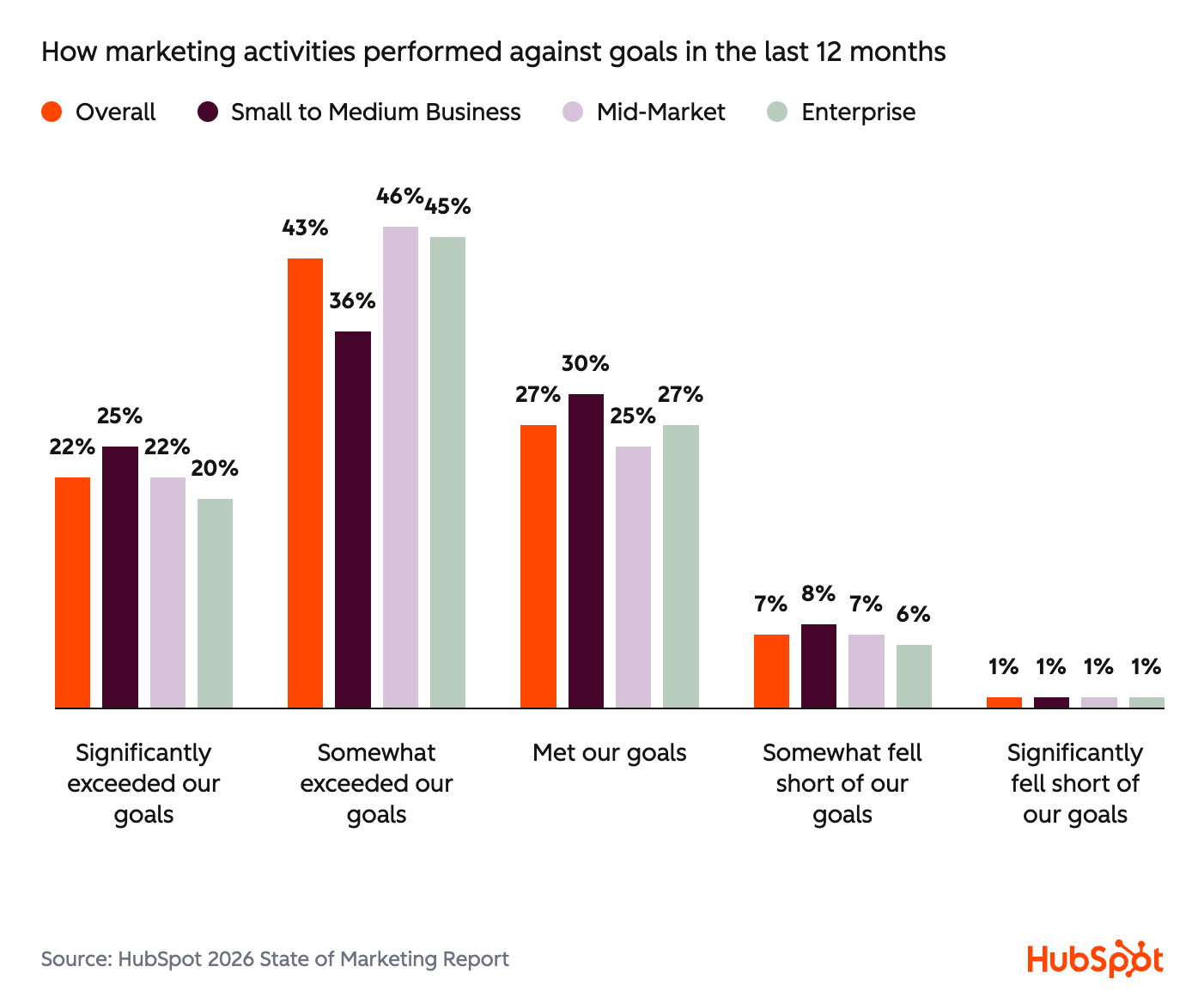
Marketing results are still positive, but there is plenty of room left to grow. Despite a difficult economy, most of the marketers surveyed reported a good year of growth.
65% say they beat their goals for 2025 (92% if you include those who just met their goals), and 72% say the current economy is having a positive effect on their business.
Even with these positive results, as many as 40% of marketing teams have not defined, or have not clearly spelled out, their UVP (unique value proposition), the core value that sets the brand apart. That means businesses still have plenty of room to create content that connects more strongly with their target customers.
AI makes producing content easier than ever. But if a brand has no point of view of its own (brand POV), the content it produces will be generic, flat and easy to forget.
So it is no surprise that 61% of marketers agree that brand “taste” and a distinctive identity are a must for a successful AI strategy.
The most effective marketing strategies today usually combine:
- Omnichannel selling
- A strong brand identity
- Personalized customer experiences
The marketing trends businesses are focusing on
- Using AI to personalize content
- Using automation to streamline marketing processes and make them more efficient
- Creating content that reflects brand values (for example, social responsibility and sustainability)
- Updating SEO strategy to keep up with changes in search algorithms
- Repurposing content across several platforms and media channels
Overall marketing performance today
Marketing today requires businesses to be present on many different channels and platforms. In fact, only 6% of marketers still rely on just 1 or 2 marketing channels.
How many channels marketing teams use
| Number of channels | Overall | Small businesses | Mid-size businesses | Large businesses |
| 3 to 4 | 25% | 28% | 24% | 24% |
| 5 to 8 | 52% | 47% | 55% | 50% |
| 8+ | 17% | 16% | 15% | 21% |
The most widely used marketing channels
| Channel | Overall | Small businesses | Mid-size businesses | Large businesses |
| Website/blog/SEO | 45% | 50% | 41% | 47% |
| Organic social media content |
40% | 41% | 39% | 42% |
| Email marketing | 40% | 43% | 37% | 42% |
| Paid social media content | 39% | 44% | 40% | Not in top 5 |
| Brand awareness | 36% | 45% | Not in top 5 | Not in top 5 |
HubSpot only published the top 5 channels for each business size. For mid-size and large businesses, social media shopping tools made the top 5 (37% and 36% respectively), and large businesses also listed content marketing (36%).
73% of marketers say their marketing budgets are now controlled and scrutinized more closely than before. Even so, as many as 93% expect their 2026 marketing budget to stay the same or grow.
It is no great surprise that AI chatbots (38%) are the channel businesses plan to increase investment in the most. Next come video marketing (37%) and paid social media content (37%).
To stay competitive, marketers are also constantly testing new things. 45% of marketing teams set aside 10% to 20% of their budget to test new media channels. Over the past year, as many as 94% of marketing teams expanded or diversified their media channels.
Of these, 4 in 10 marketers say the most effective change was moving from mass platforms to niche communities, which helped them build better, deeper connections with their target customers. Another 29% say expanding from digital into traditional channels as well was the change that paid off most.
Still, the overall trend shows businesses are gradually cutting budgets for traditional channels:
- 23% plan to cut investment in out-of-home advertising
- 22% are cutting direct mail
- 21% are cutting their print advertising budget
These numbers suggest that digital channels keep proving more effective within a modern marketing strategy.
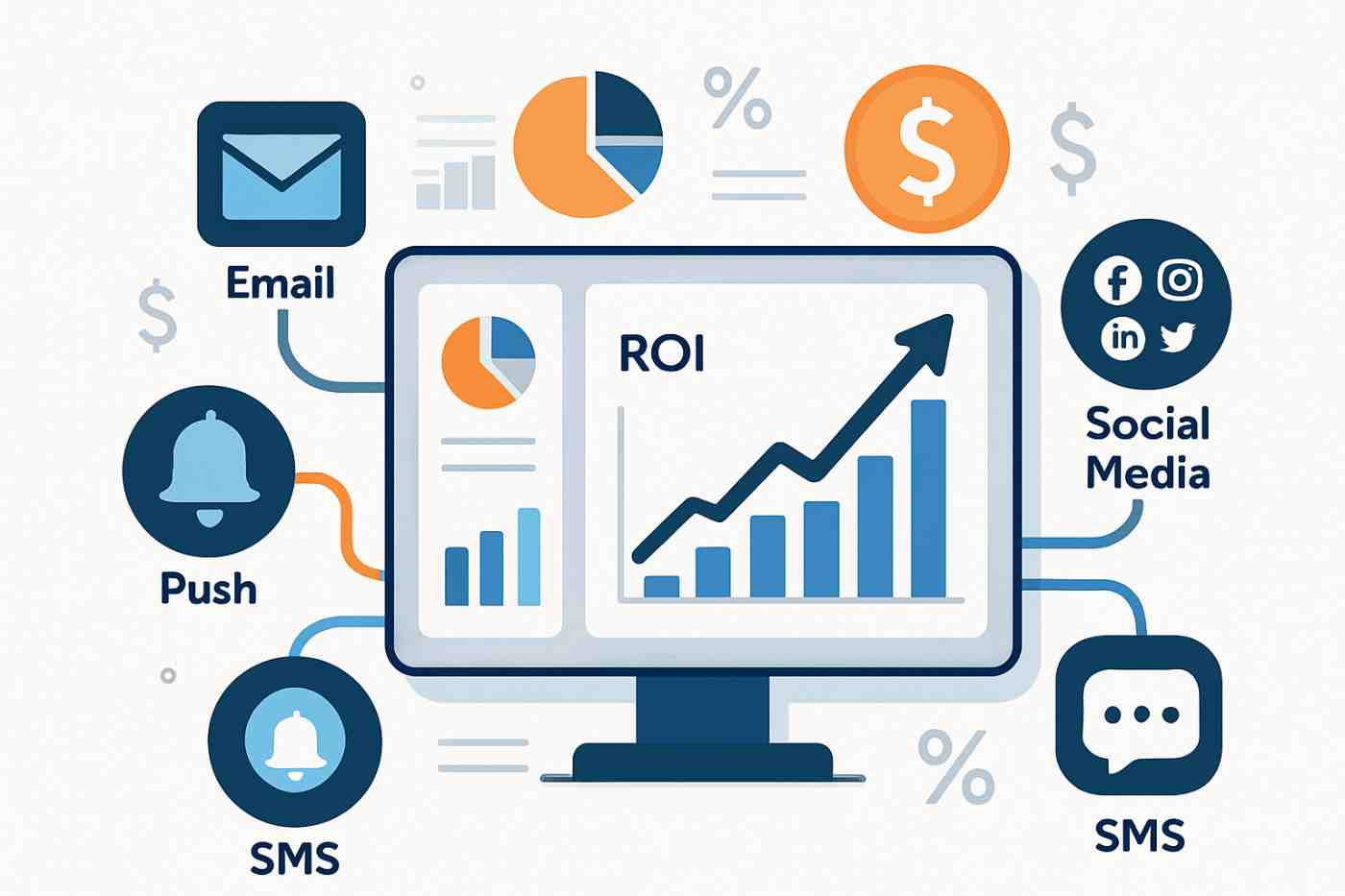
The marketing channels with the highest ROI
- Website/blog/SEO: 27%
- Paid social media content: 26%
- Organic social media content: 24%
- Social media shopping tools (for example, Instagram tools): 23%
- Email marketing: 22%
Brand is becoming a more important competitive advantage than ever. Yet only about 52% of businesses have a value proposition that is clear and strong enough to set them apart from competitors.
To shape their brand, marketers have to rely on data: 57% run competitor analysis and 49% carry out customer research.
Validating brand positioning is also done with real data: 61% of marketing teams run brand perception surveys, and 56% track how engagement changes after they update their brand positioning.
Most businesses now refresh their brand on a regular basis, with 40% updating it every quarter and 45% every year.
“Continuous brand optimization” is becoming the new standard, as businesses have to adapt to a market and to customer behavior that keep changing faster and faster.
The branding investments with the highest ROI
| Overall | Small businesses | Mid-size businesses | Large businesses | |
| Brand awareness campaigns | 29% | 27% | 31% | 26% |
| Aligning the customer experience with brand promises | 23% | 21% | 22% | 26% |
| Building a brand messaging framework or system | 20% | 17% | 22% | 21% |
| Developing a visual brand identity system | 11% | 12% | 11% | 12% |
| Brand partnerships or sponsorships | 7% | 9% | 6% | 6% |
| Building an internal brand culture | 6% | 6% | 6% | 7% |
| Don’t measure ROI on branding investments | 4% | 8% | 3% | 2% |
Kieran Flanagan, SVP of Marketing, AI & GTM at HubSpot, puts it this way: AI is not a “core marketing skill”. Brand positioning is a core skill. Storytelling is a core skill. Understanding customer insight, creating value that customers actually care about, knowing how to educate buyers with the right content at the right time, and building a community around the brand are the skills that matter most.
AI helps marketers do all of the above better. But AI will never replace marketers.
Keep up with the trends using the Loop Marketing Framework
Below is how you can turn the insights above into a working marketing strategy with the Loop Marketing Framework.
1. Express your brand
Strategy
Define a clear brand point of view (brand POV) and a “taste” of your own as a competitive advantage. This matters all the more because 61% of marketers say it is essential for working effectively with AI.
AI prompts/agents
Define a brand POV for my business: the strategic perspectives and differentiating values that make the brand stand out from competitors. Also build a framework that can be applied easily across many different platforms and media channels.
Provide: company name and website, a description of your target customers, the websites of your main competitors, and your industry or field.
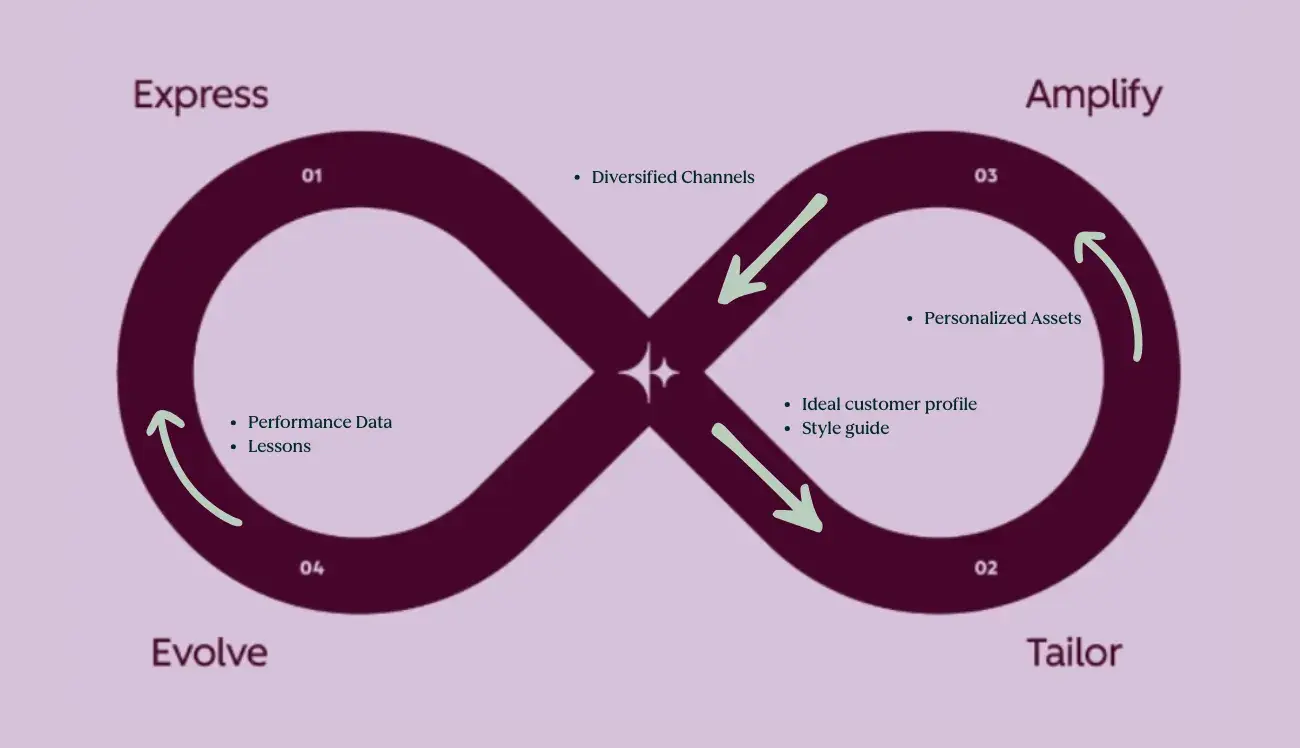
2. Personalize your approach
Strategy
Use behavioral data and CRM data to identify which media channels and brand touchpoints have the strongest influence on each target customer group.
AI prompts/agents
Use Breeze ICP Assistant to analyze your ideal customer’s perspective and get recommendations for a personalized content strategy.
3. Extend your brand’s reach
Strategy
Repurpose content across 5 to 8 different media channels to maximize reach while keeping the brand consistent.
AI prompts/agents
Analyze the content at this URL and suggest how to adapt it for each different platform while keeping the brand voice intact.
Provide: the content URL, your brand guidelines and the content goal.
4. Keep optimizing in real time
Strategy
Track your brand awareness campaigns and keep refining the messaging based on actual performance.
AI prompts/agents
Analyze this campaign data and give me insights to optimize the creative, the messaging and the cross-platform strategy, while staying consistent with the brand positioning. Include separate recommendations for each platform.
Provide: campaign name and goal, the platforms used, the campaign run dates, the target customer persona, your brand messaging framework, and the key performance metrics for each platform (as a URL or a report file).
User-generated content (UGC) is still the strongest driver of conversions
Standing out keeps getting harder in a saturated content market. Content has long been the foundation of marketing. 83% of marketers say that since the AI boom, they are expected to produce more content than ever before. At the same time, 80% of marketing teams plan to keep their content budget the same or increase it in 2026.
But “content fatigue”, where people feel overloaded and gradually lose interest in content, is starting to appear.

How marketers feel about AI content
| Overall | Small businesses | Mid-size businesses | Large businesses | |
| AI makes content too easy to create, so overall content performance is declining | 52% | 47% | 54% | 51% |
| Marketers struggle to differentiate their content in a market saturated with AI-generated content | 53% | 43% | 57% | 52% |
The biggest content marketing challenges
| Overall | Small businesses | Mid-size businesses | Large businesses | |
| Creating highly engaging content (clicks, shares, comments, etc.) | 35% | 45% | 28% | 36% |
| Finding new content ideas | 28% | 29% | 28% | 28% |
| Keeping a regular, consistent posting schedule | 27% | 26% | 28% | 27% |
| Measuring content marketing ROI | 25% | 23% | 26% | 25% |
| Choosing the right channels to distribute content effectively | 23% | Not in top 5 | 23% | 23% |
For small businesses, the fifth challenge is reaching the right target customers (20%).
71% of marketers say AI helps them produce more content. The big problem now is that even though more and more content is being created, marketers still struggle to produce content that actually performs and converts.
This is a real paradox. It forces brands to balance the speed of AI-assisted content production against the ability to stand out in a human way. To rise above a saturated “sea of content”, businesses need to focus on what feels authentic and emotional: real stories from real people, behind-the-scenes content, user-generated content (UGC) or creative brand partnerships. Difference and emotional connection are what help content cut through the noise and stay with customers.
According to Kieran Flanagan, SVP of Marketing, AI & GTM at HubSpot, AI now produces more content than people do, but most of it is only average. Consumers still look for content with a human touch, and they are becoming “immune” to generic content made by brands or by AI.
In the future, quality content will gradually move into more private spaces where AI has not yet flooded the field, such as newsletters, podcasts and YouTube. For building and creating content, quality will always be a skill with lasting value. Don’t follow the crowd, and don’t hand content creation over to AI entirely.
Short-form video is the best-performing content format, well ahead of the rest
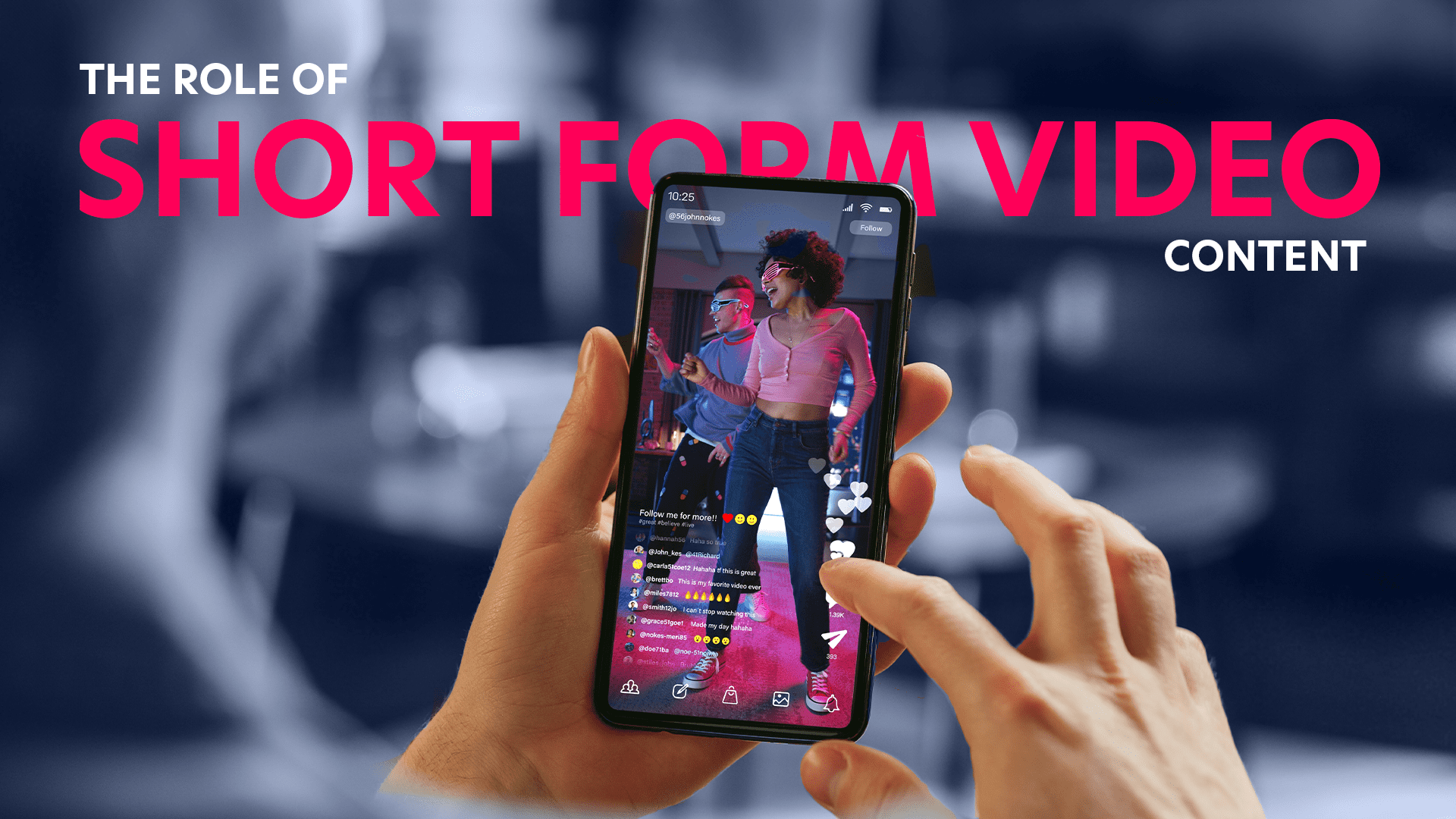
With the internet flooded by AI-written blog posts, marketers are getting more value from personal, emotional content such as video. This is especially true of short-form video.
Short-form video was not only the most used content format in 2025, it also delivered the highest ROI. The number of marketers who rate it as their most effective channel rose by 104% compared with 2024. It is also the channel marketing teams plan to invest in most heavily in 2026.
Share of businesses using each content format
| Overall | Small businesses | Mid-size businesses | Large businesses | |
| Short-form video | 60% | 66% | 57% | 61% |
| Long-form video | 38% | 34% | 40% | 38% |
| Blog posts | 38% | 44% | 35% | 37% |
| Live stream | 37% | 32% | 41% | 34% |
| Images | 36% | 45% | 30% | 37% |
| User-generated content | 35% | 34% | 34% | 36% |
| Infographics | 28% | 26% | 29% | 28% |
| Case studies | 27% | 21% | 27% | 33% |
| eBooks | 24% | 18% | 26% | 27% |
| Interviews | 24% | 28% | 22% | 25% |
| Interactive content (polls, games, etc.) | 23% | 29% | 19% | 22% |
| Industry reports and white papers | 22% | 18% | 20% | 29% |
| Checklists/Templates | 18% | 15% | 18% | 21% |
| NFTs | 3% | 4% | 3% | 2% |
| Podcasts/audio content | 1% | 1% | 1% | 1% |
With an estimated 1.37 billion TikTok users worldwide in 2025 (according to Statista), more than 200 billion daily views on YouTube Shorts, and 3 billion monthly active users on Instagram, where people spend 50% of their time in the app watching Reels, it is clear that short-form video dominates people’s attention online.
Even LinkedIn, a platform that has traditionally favored text, saw video views rise 36% year over year (according to LinkedIn, February 2025).
As brands invest more heavily in organic social media content, paid social advertising and social commerce, video is becoming a format no modern marketing strategy can do without.
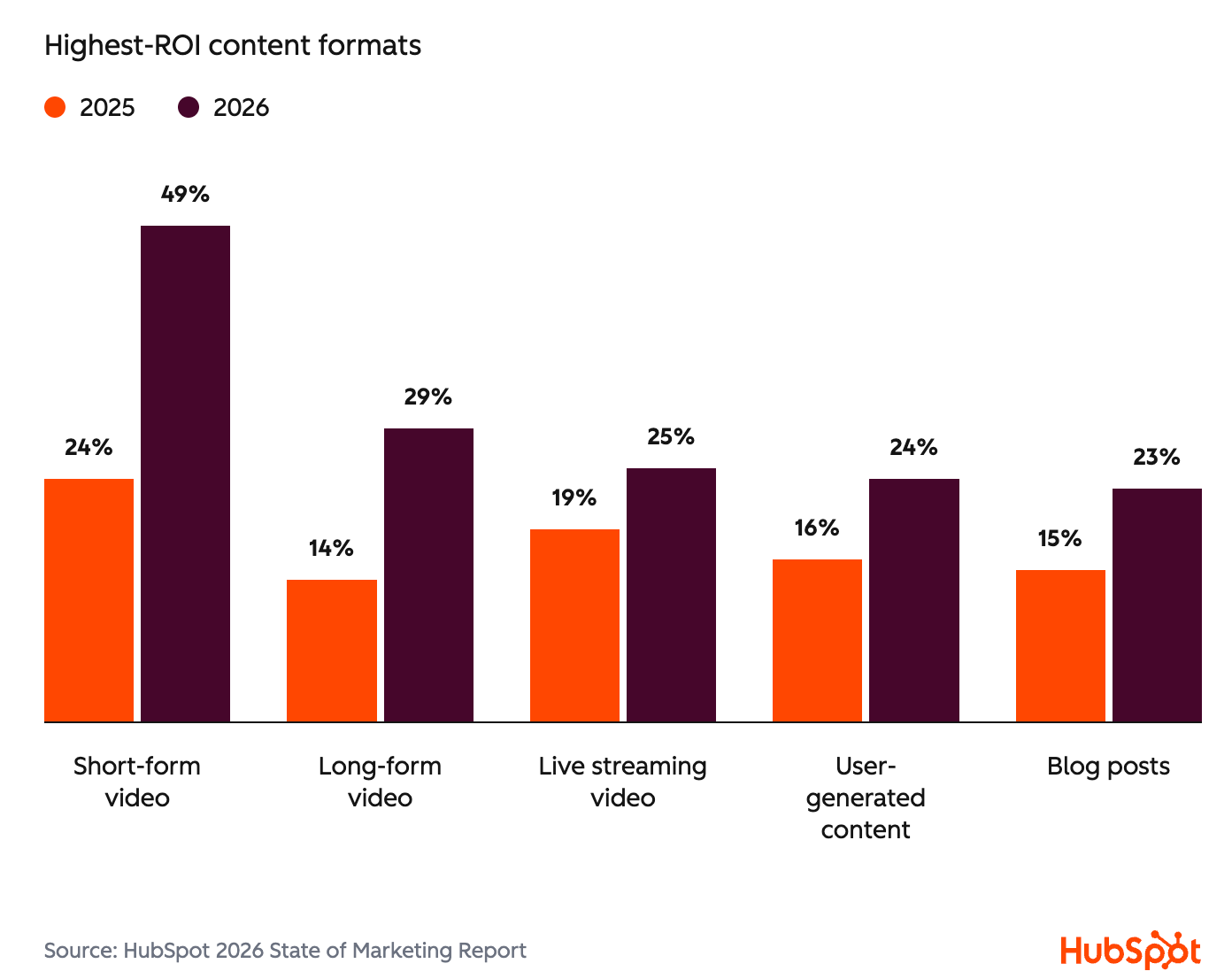
Written content has not “disappeared”, though. Small businesses are 23% more likely than average to get ROI from blogs. On the other hand, they are 35% less likely to see results from ebooks. Large businesses (enterprises), meanwhile, are 24% more likely to get ROI from ebooks.
These numbers are a useful benchmark for reference. In practice, though, the right content format still depends entirely on your target customer persona and how those customers consume content.
The content formats businesses plan to prioritize in 2026
| Overall | Small businesses | Mid-size businesses | Large businesses | |
| Short-form video | 30% | 34% | 27% | 31% |
| Live stream | 13% | Not in top 3 | 16% | 11% |
| Long-form video | 12% | 11% | 14% | Not in top 3 |
| User-generated content (UGC) | Not in top 3 | 8% | Not in top 3 | 11% |
HubSpot only published the top 3 formats for each business size. Both small and large businesses put user-generated content in their top 3 (8% and 11% respectively).
Social media growth now revolves around short-form video. Instagram, Facebook and YouTube are still the most popular social media platforms. But as short-form video has taken off, more and more marketers are shifting to TikTok.
TikTok is the fastest-growing platform among social media marketing channels: the number of marketing teams using TikTok this year rose 62% compared with the year before.
Other fast-growing platforms include LinkedIn (+53%) and Twitter/X (+43%). What these platforms have in common is that they are all prioritizing and heavily developing short-form video.
Social media platforms businesses use for marketing
| Overall | Small businesses | Mid-size businesses | Large businesses | |
| 70% | 78% | 66% | 71% | |
| 70% | 77% | 67% | 66% | |
| Youtube | 69% | 62% | 71% | 71% |
| TikTok | 57% | 58% | 57% | 54% |
| Twitter/X | 56% | 45% | 61% | 57% |
| 42% | 49% | 40% | 42% | |
| Snapchat | 25% | 22% | 28% | 23% |
| 22% | 25% | 22% | 20% | |
| 15% | 12% | 17% | 16% | |
| Threads | 10% | 9% | 12% | 9% |
| Discord | 7% | 9% | 7% | 6% |
Heading into 2026, the 5 social media platforms where marketers plan to increase investment the most are all platforms with strong support for short-form video:
- TikTok (19%)
- Instagram (19%)
- Facebook (18%)
- YouTube (18%)
- Twitter/X (11%)
Small businesses tend to increase their budgets for Instagram and TikTok more than average. Large businesses (enterprises) put more weight on YouTube.
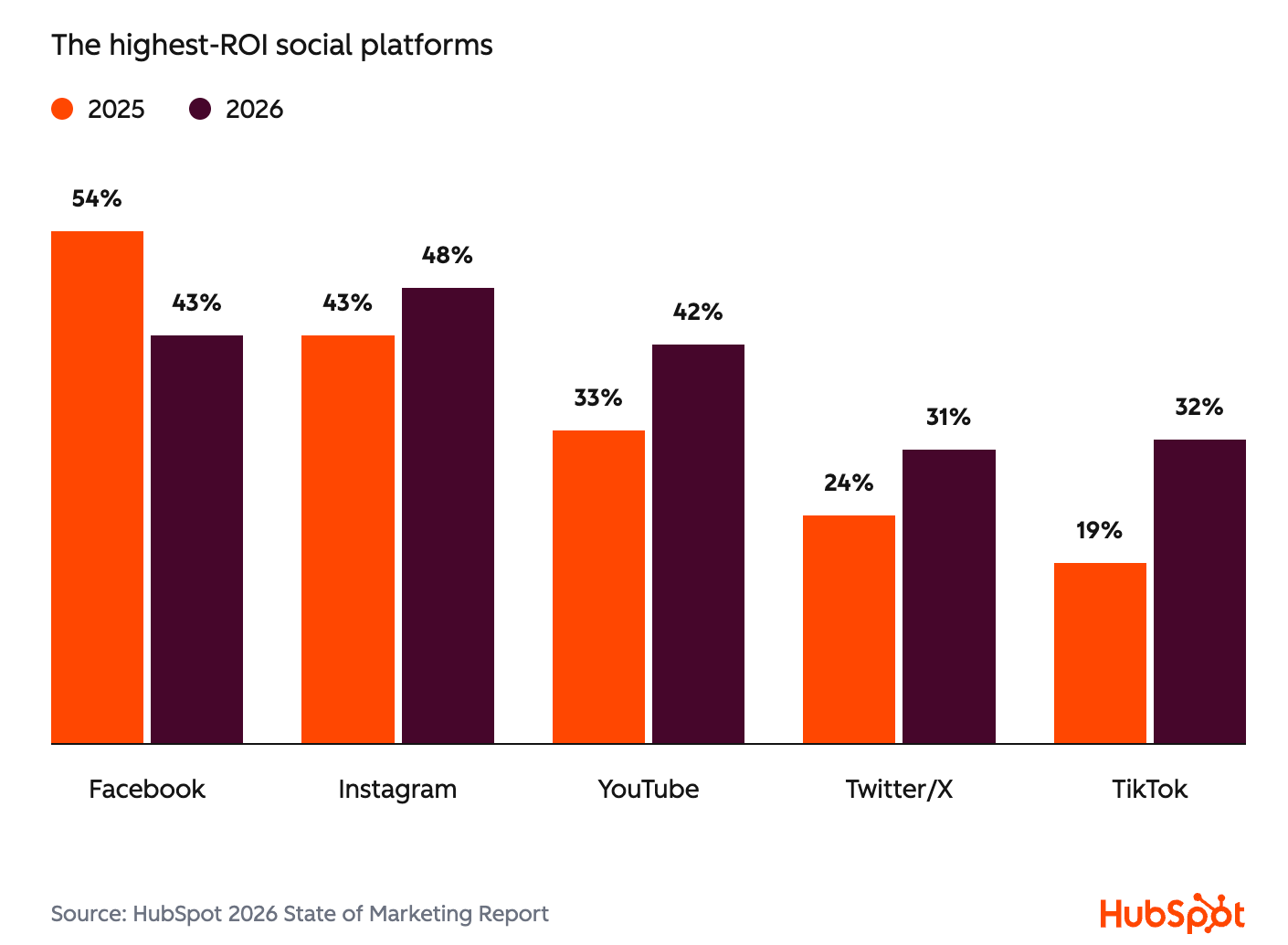
TikTok is also leading in marketing value: the share of marketing teams that rate TikTok as a high-ROI channel rose 62% compared with 2025. Beyond TikTok, related channels also grew, with YouTube up 32% and Twitter/X up 29%. Meanwhile, the share of marketers who say Facebook delivers high ROI fell 21%.
Small businesses are 40% less likely than average to see Twitter/X as a high-ROI channel, and 35% less likely to say so of YouTube.
Keeping up with social media is the biggest challenge
Speed matters on every platform, but it is especially unforgiving on social media, where trends change constantly and algorithms get updated almost every week. People’s attention is spread across more and more platforms, and “keeping up with social media trends and changes” has become the biggest challenge for marketing teams at businesses of every size.
Social media marketing challenges
| Overall | Small businesses | Mid-size businesses | Large businesses | |
| Keeping up with new trends | 32% | 36% | 32% | 30% |
| Keeping up with changes to platform features and algorithms | 30% | 28% | 31% | 30% |
| Reaching the right target audience | 27% | 29% | 27% | 26% |
| Growing and keeping a brand following | 24% | 32% | Not in top 5 | 22% |
| Choosing the right platforms to grow on | 23% | Not in top 5 | 25% | 25% |
The fifth item for small businesses is creating engaging content (20%), and for mid-size businesses it is measuring ROI (22%).
Influencer marketing is becoming a game of community and connection
77% of businesses plan to increase their investment in influencer marketing in 2026. In a market flooded with generic content that lacks emotion, brands are looking for deeper connections with customers through influencers’ communities.
In 2025, 89% of businesses worked with content creators or influencers, a sharp jump from 50% in 2024.
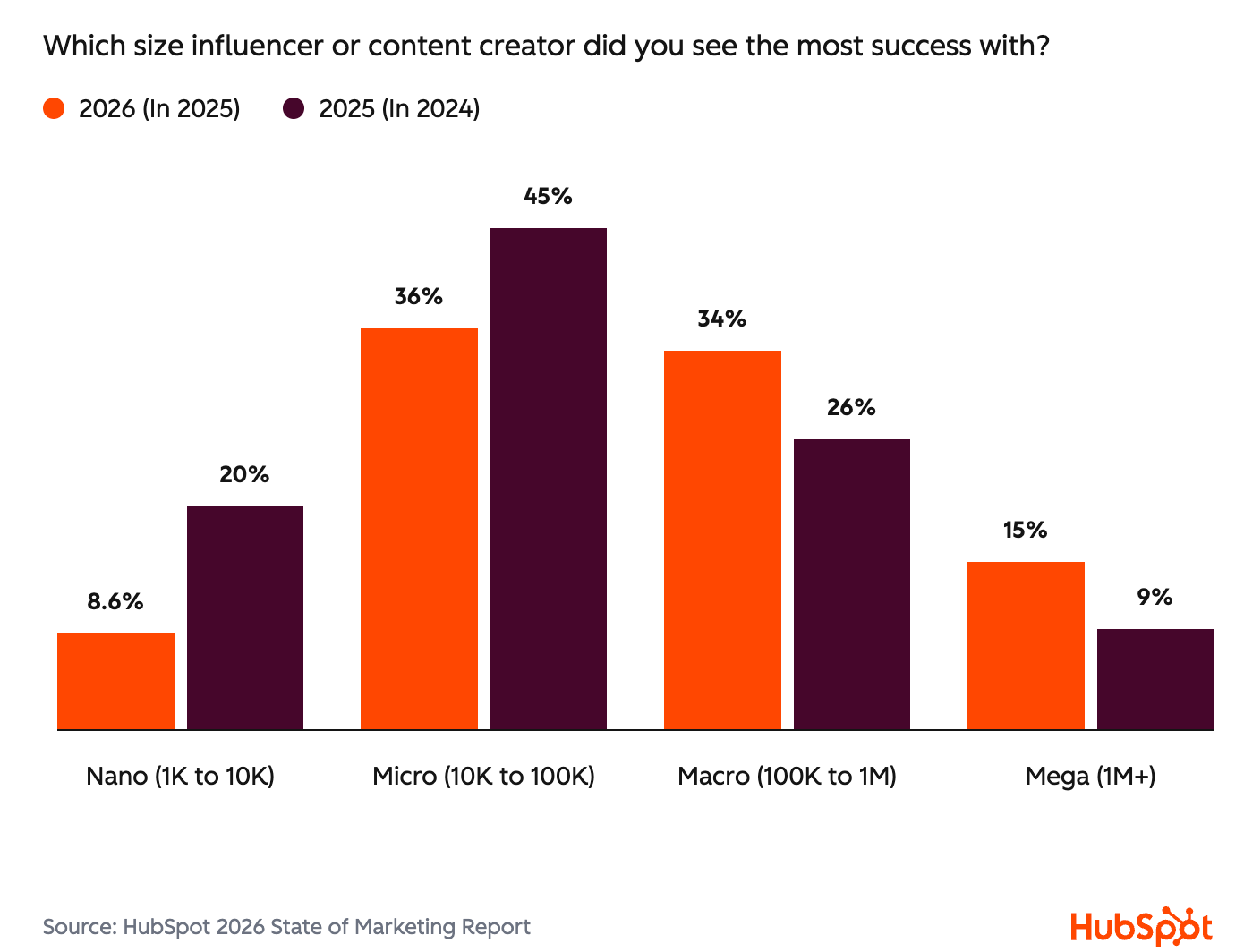
Marketing teams say they get the best results working with micro influencers (10,000 to 100,000 followers). Nano influencers (1,000 to 10,000 followers), on the other hand, were the least effective group.
This suggests that while niche audiences with very specific interests are still very valuable, brands in 2026 will lean toward partnering with influencers who have larger communities and stronger influence.
How Helsinki Partners measures influencer marketing with HubSpot
Helsinki Partners is an organization that drives economic growth for the city of Helsinki by attracting businesses and tourists. It works with influencers across many channels, including social media, articles and blogs, and it uses HubSpot to measure the ROI of its campaigns.
As Sirpa Salmi, Senior Manager of Digital Business, puts it: “We can calculate the value of each post or article based on the reach and exposure it generates.”
At HubSpot, creator partnerships are not just about reach or impressions. They focus on building long-term relationships. At a time when people increasingly distrust marketing campaigns that feel “too obviously like ads”, brands that know how to build real connections with creators can keep those creators for longer and get better results.
Personalization clearly works, but it is still hard to do at scale
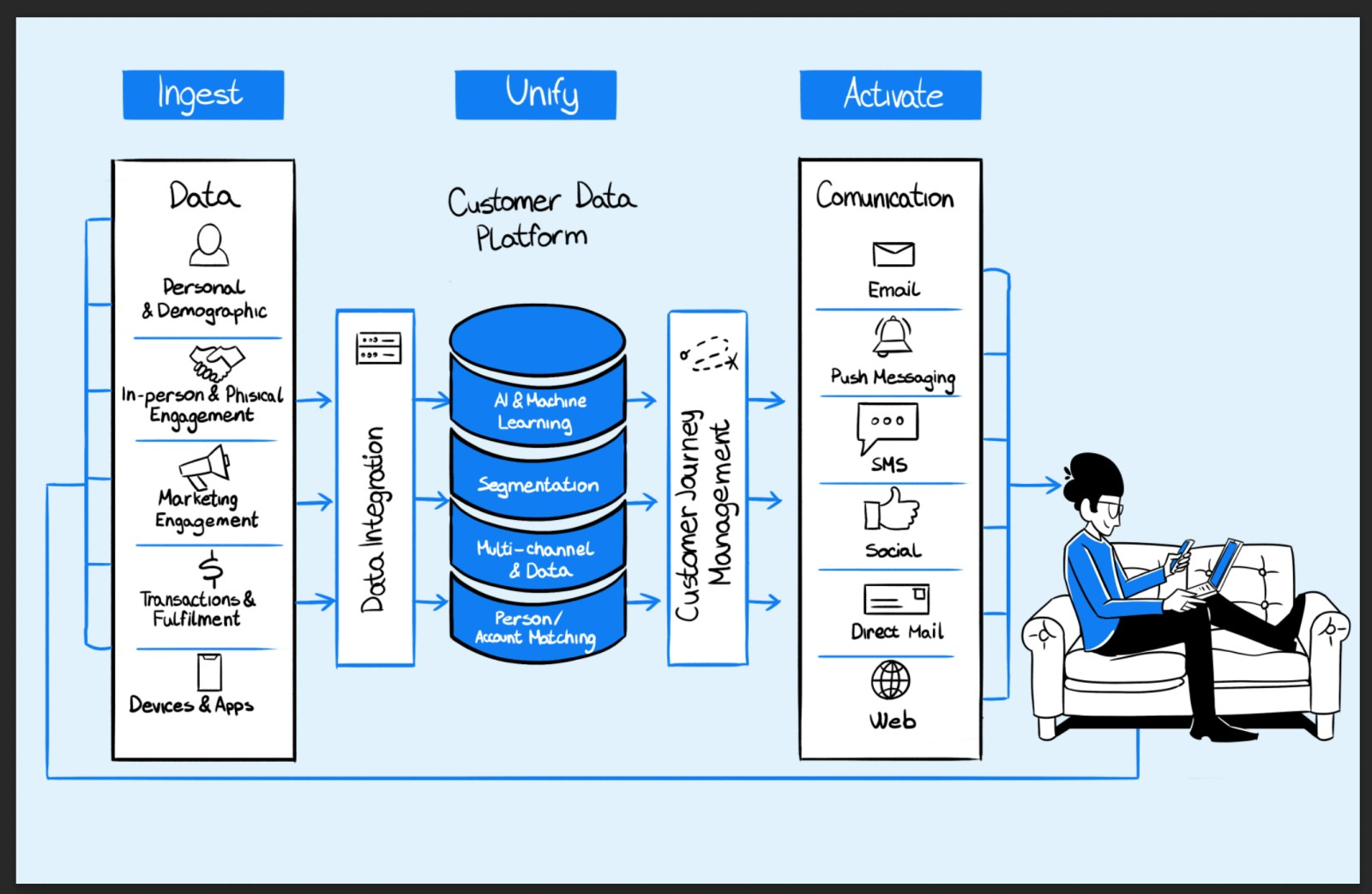
As many as 93% of marketers say personalization improves lead volume or increases purchases. In practice, though, advanced personalization techniques are still not widely used: only 13% of marketing teams do data-driven hyper-personalization or use lookalike audiences.
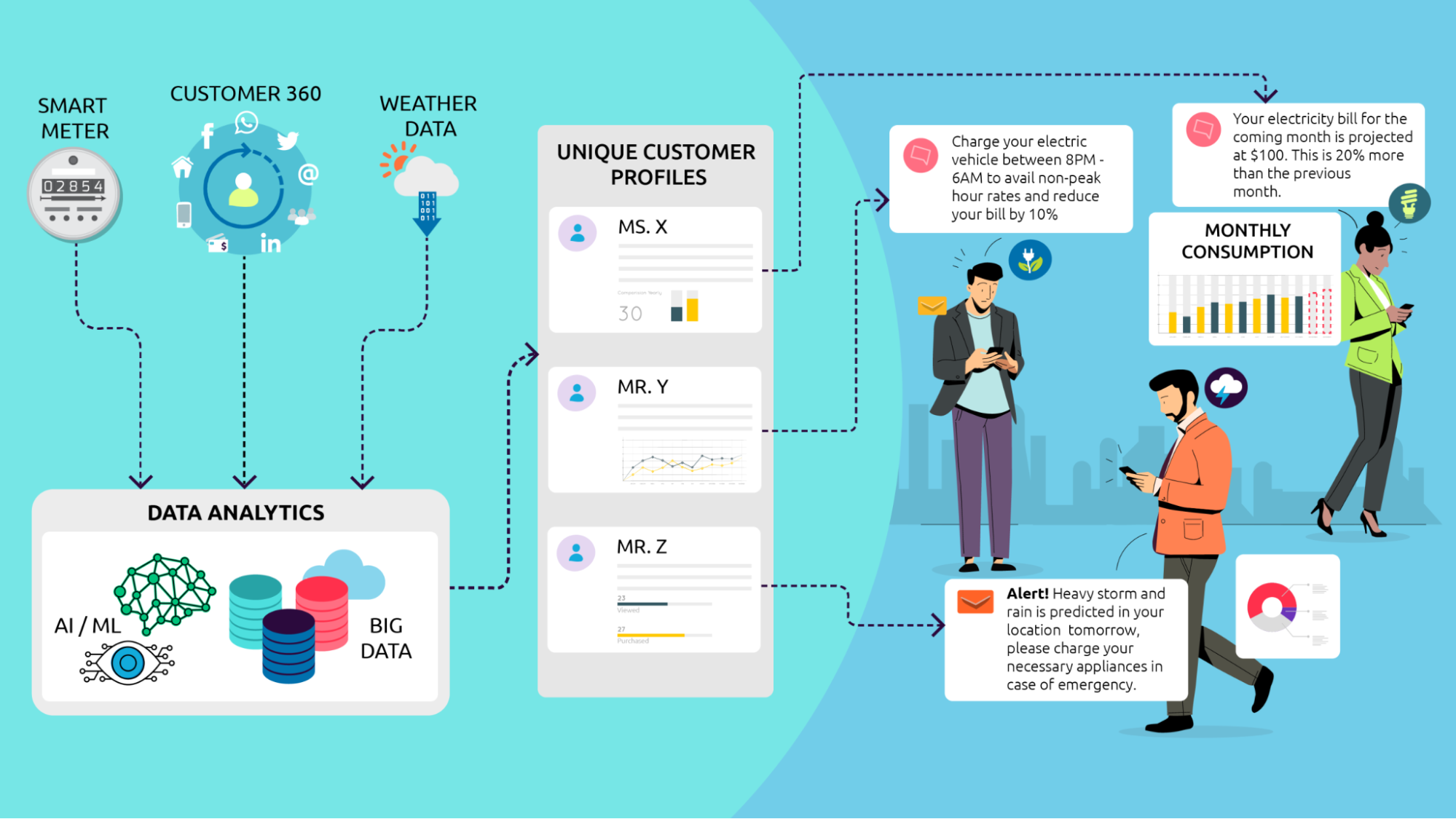
The level of personalization in marketing today is uneven. 53% of marketers stop at basic personalization, such as inserting the customer’s name into an email, and 47% use audience segmentation.
The types of data marketers consider most valuable for personalization are:
- Purchase behavior (42%)
- Personal interests and preferences (36%)
- Basic demographic information (33%)
One of the biggest barriers is that many businesses still don’t have enough customer data to run an in-depth personalization strategy. Yet even small improvements in data collection can make a clear difference to marketing performance.
Investing in advanced techniques such as targeting by customer persona or by behavioral data is becoming a major competitive advantage. With only 14% of marketing teams personalizing at least half of their content, personalization is a real opportunity for brands to stand out and earn a top spot in customers’ minds.
Fewer than half of marketers have access to key customer data
- 44% of marketers understand their customers’ shopping habits
- 39% of marketers have access to basic demographic data such as name, gender and location
- 31% of marketers have data on customers’ purchase history with the business
- 27% of marketers know which products customers are interested in or intend to buy
- 17% of marketers understand customers’ experiences, expectations and preferences
- 16% of marketers have a clear understanding of the pain points and difficulties customers face
This may be the most striking insight of the year: when channels are ranked by ROI, the result almost exactly matches the ranking of how well personalization works on those channels.
The pattern is very clear. The better a channel supports personalization, the better the marketing results it delivers.
The channels leading on ROI and personalization performance
| Highest ROI this year | Most effective personalization/segmentation | |
| Website/blog/SEO | 27% | 28% |
| Paid social media content | 26% | 26% |
| Organic social media content | 24% | 25% |
| Social media shopping tools | 23% | 29% |
| Email marketing | 22% | 26% |
| Brand awareness | 19% | 19% |
| Content marketing | 17% | 19% |
| In-person events and trade shows | 16% | 17% |
| Search/display ads | 12% | 14% |
| Mobile messaging (SMS, WhatsApp, Messenger, etc.) | 11% | 14% |
Keep up with the trends using the Loop Marketing Framework
1. Express a clear brand identity
Strategy
Set clear content quality standards so your content stands apart from generic AI-generated material, and put editorial guidelines in place to keep the brand voice consistent when content is produced with AI.
AI prompts/agents
Use Breeze Brand Assistant Agent to check whether your content follows the brand guidelines.
2. Personalize your approach
Strategy
Make use of data on purchase behavior, interests and demographics, the types of data rated most valuable, to build content that fits each target customer group.
AI prompts/agents
Use Breeze Data Agent to automatically fill in missing customer data and add research insights to your automation workflows.
3. Extend your brand’s reach
Strategy
Diversify content formats strategically: combine video, user-generated content (UGC) and blogs to reach customers on many different platforms, and partner with micro influencers to add authenticity and spread.
AI prompts/agents
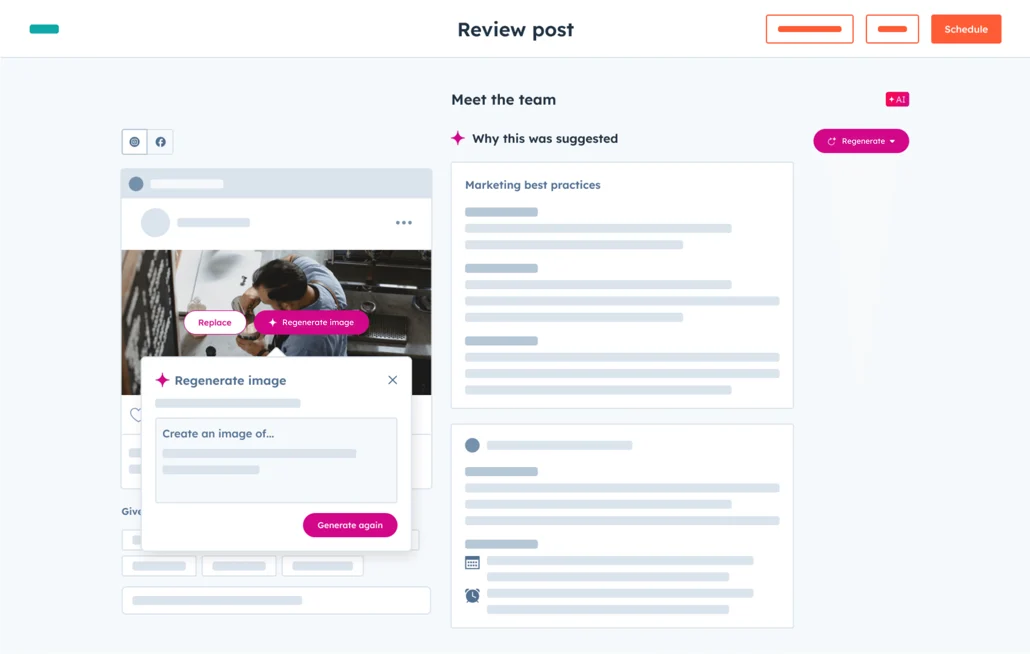
Use Breeze Social Post Agent to generate optimized content suggestions for Instagram, Facebook and other social media platforms.
4. Keep adapting in real time
Strategy
Stay on top of platform changes and build a process for reacting quickly to new trends. At the same time, track content performance across channels so you can concentrate investment on the formats that perform best.
AI prompts/agents
Research and summarize the latest algorithm and platform updates. Include changes to algorithms, user behavior, policies or content distribution mechanics that could affect visibility and performance. Then give practical recommendations for the SEO, content and social media teams, with verified sources.
Provide: the time period (weeks/days), the platforms, and the region or target market to monitor.
High-intent buyers from AI search are changing the game online
Traffic from LLMs is smaller, but its quality is much higher. Nearly half of marketers (49%) say traffic from traditional search engines is falling because people increasingly get answers directly from AI. Yet 58% find that traffic from AI is more “high-intent” than traffic from regular search.
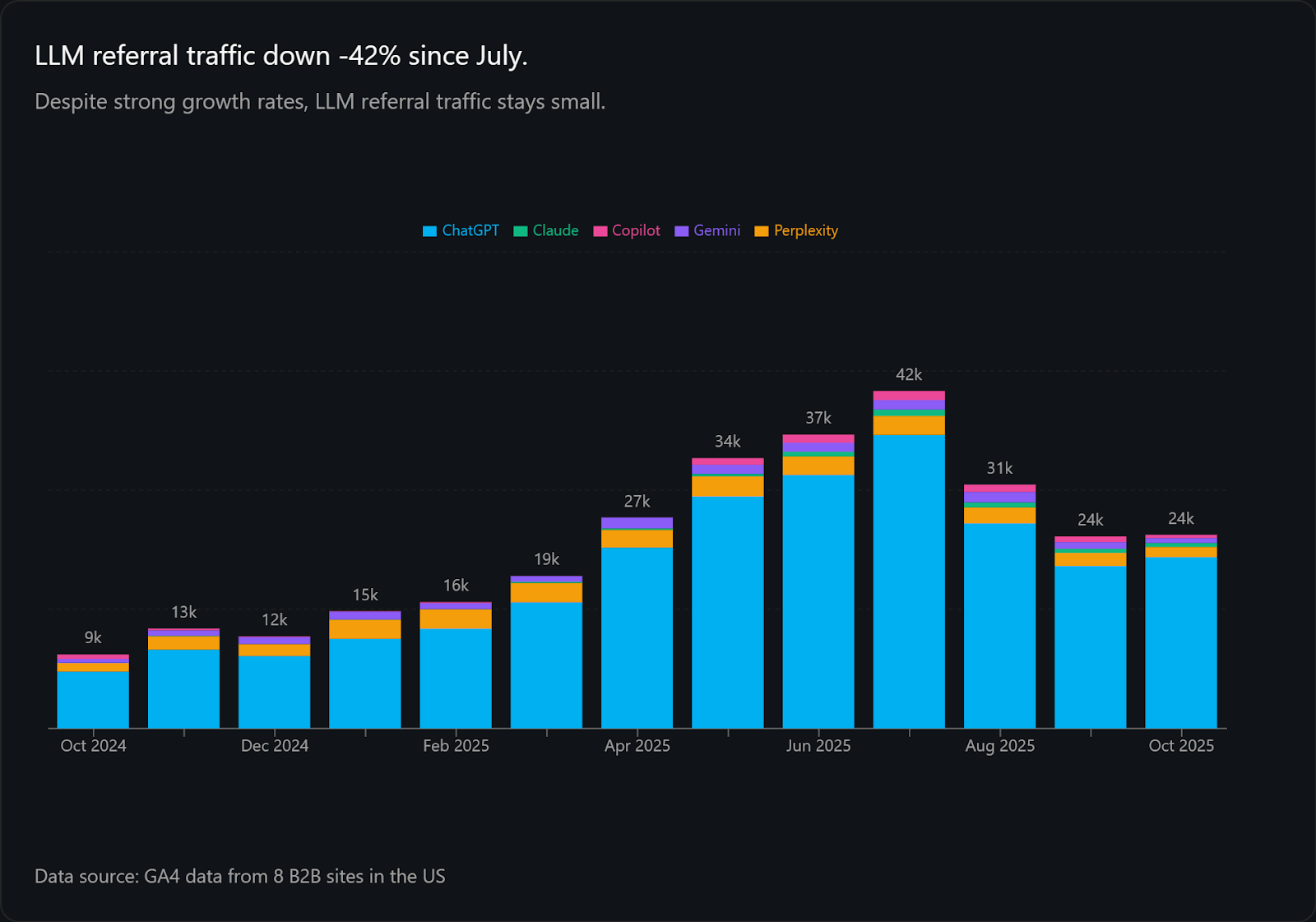
This means people who reach a website through LLM platforms such as ChatGPT are usually already very close to the purchase decision stage of the customer journey.
HubSpot has seen the same trend: although its blog traffic fell, the number of leads HubSpot gets from LLMs grew 1,850%.
Once people land on the website, the conversion experience needs to be as “smooth” as the AI tools that brought them there. As many as 60% of marketers say businesses need to offer a seamless buying experience, such as an AI chatbot or a fast, easy consultation process.
This shift has also made the marketing optimization cycle much faster than it used to be. Ten years ago, a marketing campaign appeared on only a few platforms and distribution channels. Today, content can show up in:
- AI-integrated search results
- Answers from ChatGPT or other LLMs
- AI-generated summaries
A brand’s content may even be:
- Quoted word for word by AI
- Summarized by AI
- Or left out of the AI answer entirely
That is why marketers need to optimize content for many display contexts and many different AI platforms.
As many as 62% of marketers say their campaigns now run as an “interactive cycle”, meaning content is updated and optimized continuously to stay visible on the internet and within the AI search ecosystem.
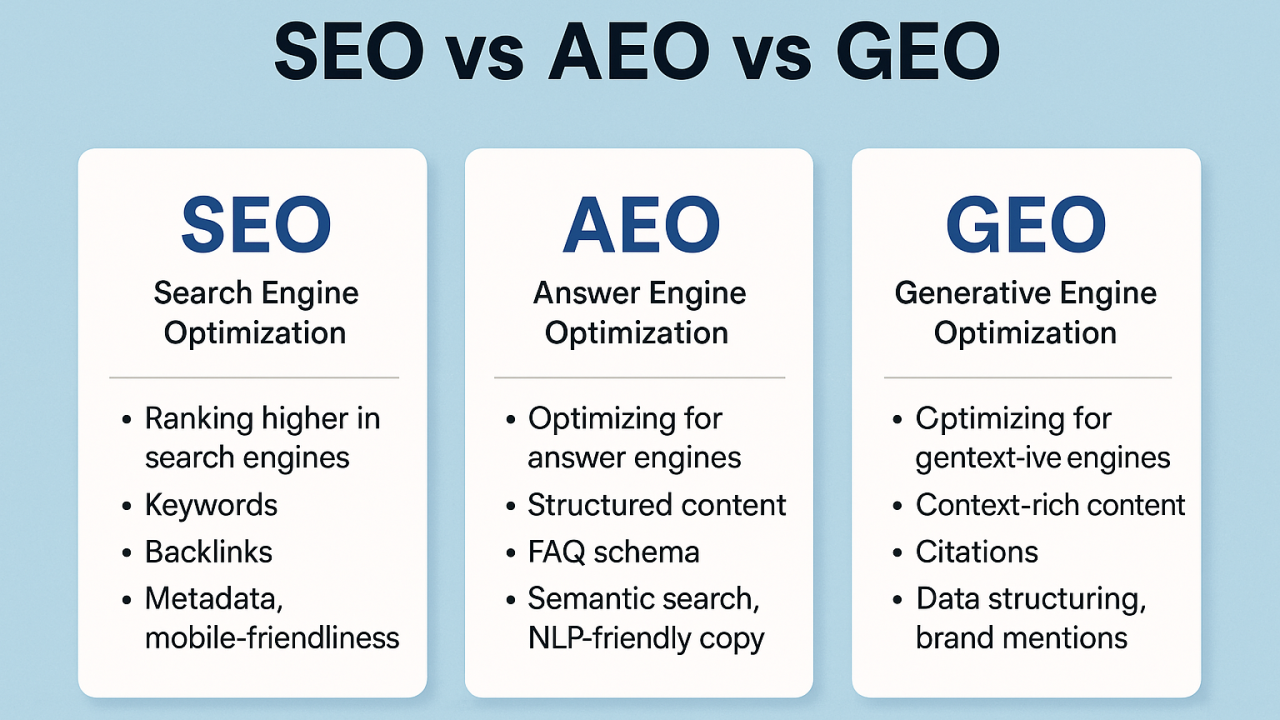
3 big differences between traditional SEO and AEO (answer engine optimization)
This is the view of Aja Frost, HubSpot’s Senior Director of Global Growth.
First, AEO requires much broader content coverage. If you want to influence tools like ChatGPT, your brand needs to capture as much “mind share” as possible. Mind share is the level of awareness, attention and popularity that a product, brand or idea has in consumers’ minds compared with its competitors.
Second, AEO turns the marketing funnel upside down. Instead of focusing on the top of the funnel as before, middle-funnel and bottom-funnel content has now become far more important.
Third, AEO calls for a “content splitting” strategy. Businesses need to create a version of their content optimized for AI and machine readers (for example, tables, semantic triples and JSON-LD), and then pair it with a version optimized for people through storytelling, brand perspective and a clear brand voice.
The future of search has already begun. In a world that runs at the speed of AI, the brands that test faster will have the bigger advantage.
Today’s marketing optimization benchmarks
Speed has always mattered in marketing. In the AI era, though, reacting quickly is no longer an advantage that sets a few teams apart. It is a basic requirement for everyone.
59% of marketing teams analyze campaign data at least weekly, and 73% can update or optimize a running campaign within a few hours or a few days.
How often marketing teams analyze campaign performance
| Overall | Small businesses | Mid-size businesses | Large businesses | |
| Weekly | 44% | 42% | 44% | 46% |
| Monthly | 27% | 25% | 30% | 25% |
| Daily | 15% | 17% | 14% | 16% |
| Quarterly | 8% | 8% | 8% | 9% |
| After the campaign ends | 3% | 5% | 3% | 3% |
| Don’t analyze | 2% | 3% | 1% | 2% |
The most widely used marketing optimization techniques today are:
- Audience segmentation refinement: 51%
- Conversion rate optimization (CRO): 50%
- Message timing optimization: 40%
When deciding where to optimize first, marketing teams usually focus on:
- The areas with the biggest performance gaps: 32%
- The stages with the highest customer drop-off: 24%
- Analyzing the potential impact before optimizing: 18%
The KPIs that matter most to marketers
| Overall | Small businesses | Mid-size businesses | Large businesses | |
| Lead quality and MQLs | 39% | 36% | 40% | 40% |
| Lead-to-customer conversion rate | 34% | 36% | 33% | 34% |
| ROI | 31% | 33% | 30% | 30% |
| Customer acquisition cost (CAC) | 30% | Not in top 5 | 32% | 33% |
| Lead volume | 29% | 31% | 29% | Not in top 5 |
Beyond these metrics, small businesses also prioritize website traffic and visitor numbers (36%), while large businesses prioritize customer lifetime value (29%).
According to Emmy Jonassen, VP of Demand Generation at HubSpot, the balance between disciplined operations and fast reactions is reaching a tipping point, and in the AI era the speed of adaptation will win.
Today, customers have often researched and evaluated a product through AI before they ever visit a business’s website. They also look at content on platforms such as YouTube and Reddit to make their purchase decisions.
That means brands need to build influence well before customers reach the website. Once they arrive, the business has to offer an experience good enough to turn them into actual customers.
Keep up with the trends using the Loop Marketing Framework
1. Express your brand value clearly
Strategy
Build in-depth content with real expertise and high credibility to improve your chances of appearing on AI search platforms, and communicate clearly what sets your brand apart so you can convert the high-intent customers who arrive through AI referral traffic.
AI prompts/agents
Use Breeze Blog Research Agent to suggest smart content topics based on AI analysis and on data from your existing blog posts.
2. Personalize the customer experience
Strategy
Build a smooth, low-friction buying experience for “high-intent” visitors, such as an AI chatbot that answers questions and steers people to the right content.
AI prompts/agents
Use Breeze Customer Agent to answer visitors’ questions and lead them to the right content or product.
3. Extend your reach with AEO
Strategy
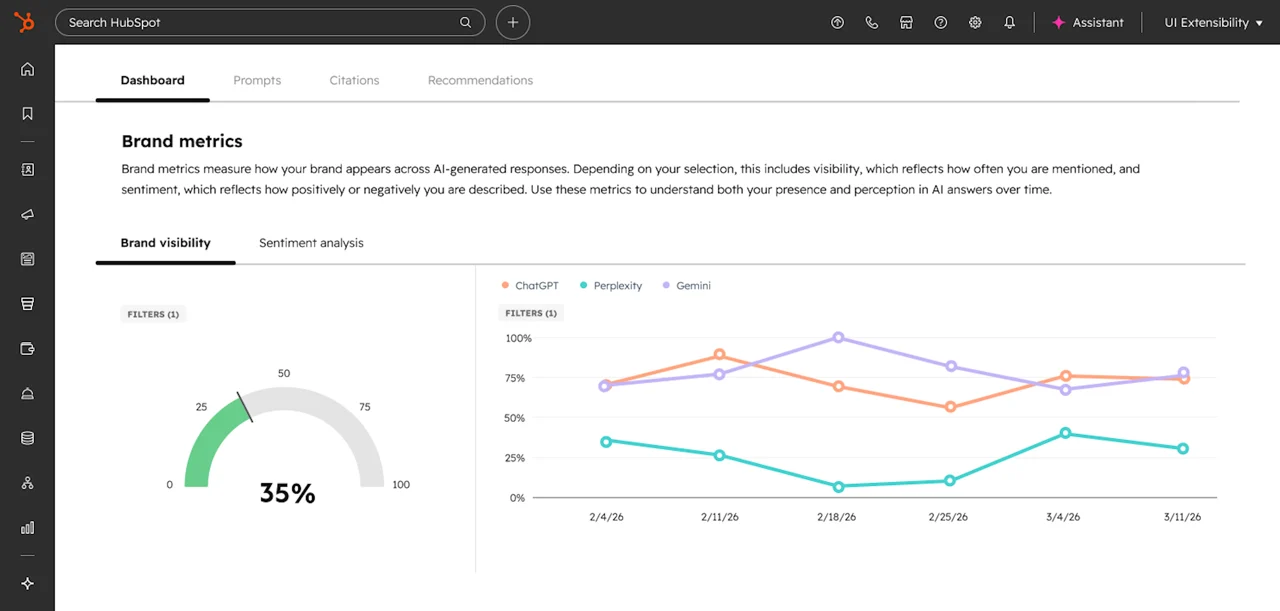
Optimize content for AEO (answer engine optimization) so you stay visible as AI changes search behavior.
AI prompts/agents
Analyze this content and give specific recommendations to improve its visibility, accuracy and credibility on AI search platforms and AI summary tools. Do not rewrite the content. Provide a specific list and an optimization framework that covers both content quality and AI indexing.
Provide: the content source (URL or uploaded file) and the target AI platforms.
4. Optimize in real time
Strategy
Keep analyzing performance daily or weekly so you can evaluate results quickly and benchmark growth with AI-powered analytics.
AI prompts/agents
Analyze the campaign performance data, compare it against the goals and KPIs that were set, and give specific short-term recommendations for each platform. Do not make up data. Every insight must be based on the data provided and on verified sources.
Provide: the analysis period, campaign name, performance data, campaign KPIs, the platforms used, and the preferred report format (text or visuals).
Marketing is moving at the speed of AI
This year, marketing is no longer a game of technology alone or creativity alone. It is the combination of AI’s speed and efficiency with human creativity, strategic thinking and “taste”.
When people and AI work together in the marketing process, every campaign becomes a loop of continuous optimization. Each launch makes the brand smarter, helps it understand customers better and improves results for the campaigns that follow.
Marketing is changing faster than ever. AI is changing not only how we do marketing but also where customers make their purchase decisions. With AI completely changing search behavior, the answer is no longer a series of one-off campaigns. It is a continuous growth loop designed for the AI era.
This article was compiled by Adtek based on the original HubSpot State of Marketing 2026 report (2026), updated on October 18, 2026.


 Categories
 Recent Posts