ENG
 VIE
 +84 9323 494 34


Ecommerce app user acquisition in Vietnam: app advertising, first-order CPA and web to app
 October 22, 2026
 Tin Le
Updated in October 2026.
User acquisition (UA) for an ecommerce app means paying for app advertising to get installs, then moving those people to a first order and a second one. The install is only a middle step. The numbers that decide profit or loss are the cost per first-order buyer (first-order CPA) and the repeat purchase rate.
This article is for brands doing ecommerce marketing in Vietnam through their own app, or thinking about building one. Advertising inside the marketplaces is covered in our article on marketplace advertising, and the general concept of user acquisition is in the Adtek glossary.
Should you build your own ecommerce mobile app when you already sell on marketplaces?
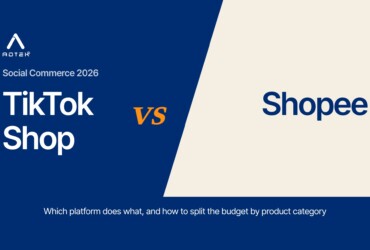
Yes and no. According to Q&Me, from May 2025 to April 2026 Shopee held 53% and TikTok Shop 44% of the GMV of the four largest marketplaces in Vietnam ecommerce (The Investor, June 2026). Pulling buyers over to your own app costs both ad money and voucher money.
In return, on a marketplace you keep almost none of the buyer data: Shopee hides customer names, phone numbers and addresses from sellers (see our article on CRM on Shopee). In your own shopping app, every order is your first-party data, which you can use for push notifications, email and retargeting ads.
I only recommend building an app when at least 3 of these 4 conditions are true:
- Customers buy again roughly every 1 to 2 months: cosmetics, mother and baby, food, pet supplies.
- You have a few hundred SKUs or more, enough new products to give customers a reason to come back.
- You already have a customer base from stores, the website or Zalo (Vietnam’s most used messaging app) that you can invite to install the app at low cost.
- You have the budget to support the app for at least 12 months: development, measurement, advertising, vouchers.
If you sell a few dozen SKUs and customers buy once a year, a website plus marketplace stores is usually enough. What is D2C? D2C (direct to consumer) means a brand sells straight to consumers without going through distributors. Your own app is one D2C channel, and how to weigh it is covered in our article on D2C strategy.
On the legal side, an app that sells your own goods with an ordering function counts as a “direct business e-commerce platform” under the 2025 E-commerce Law (No. 122/2025/QH15, passed by the National Assembly on December 10, 2025), which took effect on July 1, 2026. The app owner must notify the competent authority before operating it (Article 14). The app must publish its pricing, delivery and return policies (Article 11) and keep contract data for at least 3 years (Article 16) (Official Gazette). Ecommerce websites and apps whose notification was confirmed before July 1, 2026 can keep using their existing filing until June 30, 2027 (Article 41). Decree 248/2026/ND-CP of June 30, 2026 sets out the details of the law (Ministry of Industry and Trade, July 2026, in Vietnamese).
Metrics for measuring ecommerce app advertising
Getting more app downloads is not the goal yet. A shopping app is measured by orders, not installs. Seven metrics to check every week:
- CPI (cost per install) = Spend / installs. Spend VND 20 million, get 1,000 installs, and CPI is VND 20,000.
- CPR (cost per registration) = Spend / new account registrations. 1,000 installs with 400 registrations is a 40% install-to-registration rate, and CPR is VND 20 million / 400 = VND 50,000. A cheap CPI with a high CPR means many people install and then drop off at the sign-up screen.
- Install-to-first-order rate = First-order buyers within 7 days / installs. 1,000 installs with 80 buyers is 8%.
- First-order CPA = CPI / install-to-first-order rate. 20,000 / 8% = VND 250,000. What is CPA? CPA (cost per action) is the cost of each action you choose to pay for; for a shopping app, that action is the first order.
- CAC (customer acquisition cost) = Total cost of winning first-order buyers / the number of those buyers. Unlike CPA, CAC includes new-user vouchers and costs outside advertising. If 80 buyers each use a VND 30,000 voucher, that adds VND 2.4 million, so CAC is (VND 20 million + VND 2.4 million) / 80 = VND 280,000.
- Repeat purchase rate = Buyers with a second order within 90 days / first-order buyers.
- Payback period = The number of days it takes for gross profit from one buyer to cover that buyer’s CAC.
DAU (A1) and MAU (A30)
DAU (daily active users), which many marketplaces call A1 internally, is the number of users active in a single day. MAU (monthly active users), or A30, is the number active over 30 days. The DAU/MAU ratio shows how often people come back: with A1 at 50,000 and A30 at 400,000, DAU/MAU is 12.5%, meaning the average user opens the app close to 4 days a month.
Agree on what “active” means before comparing numbers. When I worked at Shopee, A1 only counted users with a registered account, not people who had installed and opened the app without signing up. That definition gives a lower A1 than the number of app opens, but it matches the audience that can actually receive vouchers, place orders and get push notifications. If your MMP counts app opens while your CRM team counts logged-in accounts, the two sides will report two different A1 numbers.
Do not stop at first-order ROAS. A VND 350,000 order with a CPA of VND 250,000 gives a ROAS of 1.4, which looks profitable. Subtract the cost of goods and the voucher and the first order loses money (see the table below). Profit comes from the second order, so retention rate and LTV tell you more than CPI does. Other general metrics are in our article on app marketing KPIs.
In Vietnam, iOS accounted for 33% of app installs in 2025, up from 22% in 2017 (AppsFlyer, Vietnam 2025). When users decline tracking through ATT, first orders come back through SKAdNetwork, aggregated and delayed. You need an MMP such as AppsFlyer or Adjust to pull the Meta, Google and TikTok numbers into one place and reconcile them with real orders.
In the first half of 2026, ecommerce app installs in Vietnam grew 42% year on year. The global median CPI was USD 1.08 (Adjust, August 2026). The release does not give a CPI for Vietnam specifically, so treat this figure as a reference only.
A first-order CPA and payback sheet
Hypothetical example: a cosmetics app with an average order value (AOV) of VND 350,000, a 45% gross margin, and a new user voucher of VND 50,000 plus VND 20,000 of shipping support.
| Row | Metric | Calculation | Result |
|---|---|---|---|
| 1 | CPI | Assumption | VND 20,000 |
| 2 | Install-to-first-order rate (7 days) | Assumption | 8% |
| 3 | First-order CPA | 20,000 / 8% | VND 250,000 |
| 4 | Gross profit per order | 350,000 × 45% | VND 157,500 |
| 5 | First-order profit after voucher and shipping | 157,500 – 70,000 | VND 87,500 |
| 6 | Loss per buyer after the first order | 250,000 – 87,500 | VND 162,500 |
| 7 | Profit per repeat order | 157,500 – 15,000 retargeting cost | VND 142,500 |
| 8 | Repeat orders in 6 months | Assumption | 2.0 |
| 9 | Net profit per buyer over 6 months | 2.0 × 142,500 – 162,500 | VND 122,500 |
| 10 | Maximum first-order CPA to break even in 6 months | 87,500 + 2.0 × 142,500 | VND 372,500 |
The buyer in this example breaks even on the second repeat order (162,500 / 142,500 = 1.14 orders). If the install-to-first-order rate drops from 8% to 5%, first-order CPA becomes VND 400,000, above the ceiling. That channel loses money even though CPI has not changed.
Put your own numbers into rows 1, 2, 4, 5, 7 and 8. Row 10 is the ceiling for each channel. On Google App campaigns, this is the ceiling when you set a Target CPA for the purchase event; once the event is sent with revenue through Firebase, you can switch to Target ROAS (Google Ads Help). Set the target 15% to 20% below the ceiling to leave room for measurement error.
What not to do with the sheet
- Fill in row 8 with the repeat rate of loyal in-store customers. New users who installed from an ad are not like them.
- Calculate CPA from the orders that Meta, Google and TikTok report themselves. Each platform claims orders for itself, and the sum is usually larger than the real number of orders.
- Include organic install numbers in the denominator. CPI looks cheap while the paid channel is losing money.
- Keep cancelled and returned orders in row 2.
Web to app: deep links and deferred deep links
Web to app means taking people who are on your website, or who just clicked a web ad, to the right page inside your app. The main tool is the deep link.
What is a deep link? It is a link that opens a specific screen in the app. Someone who already has the app taps an ad for lipstick shade 05 and lands directly on the shade 05 page. A deferred deep link handles the case where the app is not installed yet: the link sends the user to the App Store or Google Play, remembers the destination, and opens that exact page the first time the app is opened (AppsFlyer).
Skipping this step is like a customer asking for shade 05 and the seller leaving them standing in the store to find it on their own.
- Google Ads: use App Links (Android) and Universal Links (iOS), deep links that use your website’s own URLs. The App Connect feature sends people who click Search and Performance Max ads into the app if it is already installed on the device; Google reports conversion rates 2.8 times higher on average than mobile web (Google data, April 2025). App Connect does not accept third-party redirect links (Google Ads Help).
- TikTok: TikTok’s documentation writes it as one word, deeplink, so if your team looks up “what is a deeplink” in their help center, it is the same concept. Deferred deeplinks are still in beta, need approval from your account team, and cannot be used in campaigns that target only iOS 14.5 and later (TikTok Ads Help, July 2025). Retargeting people who already installed the app is set up through the MMP (TikTok Ads Help, February 2025).
A hypothetical example for the 11.11 season, in the order I would do it:
- Pick the 20 products you advertise most, and give each one a deep link to its product page in the app.
- Add the new user voucher code to the link parameters so the app applies it automatically at checkout.
- Test every link on iOS and Android, with the app installed and not installed (Google has a Deep link validator).
- Put each link on an ad whose image shows the same product as the landing page.
- Compare the install-to-first-order rate between the group with deep links and the group sent to the home screen.
New user vouchers and fraud
A new user voucher brings in first orders fast and is easy to exploit. One person uses many phone numbers and devices to create dozens of “new user” accounts and collect vouchers. An ad source pushes fake installs from phone farms.
The install fraud rate in Vietnam in 2025 was 14% to 16% (AppsFlyer, the Vietnam report above). For shopping apps worldwide, fraud in agency traffic reached 41.2% during the year-end shopping season (AppsFlyer, June 2026).
The rules I set for new user vouchers, to keep promo abuse down:
- One voucher per device, phone number and delivery address, rather than per account.
- A minimum order value, for example VND 50,000 off orders from VND 250,000.
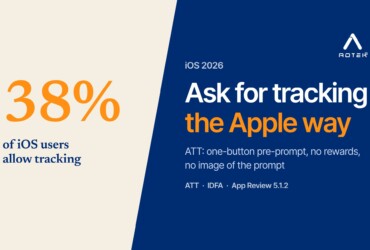
- No vouchers in exchange for turning on notifications or location, or for allowing tracking. Apple bans this condition, even when the reward is a discount code (App Review Guidelines 5.1.2).
- No vouchers in exchange for 5-star ratings. Google Play bans rewards for ratings (Play Console Help).
- Discounts may not exceed 50% of the price right before the promotion, except during centralized promotion programs (Circular 39/2025/TT-BCT, Tạp chí Công Thương, the Industry and Trade Magazine, June 2025, in Vietnamese).
- A daily report by source: first-order cancellation rate, orders shipped to the same address, and CTIT that is too short or too long.
A refer-a-friend program that pays commission needs a check with your legal team. The E-commerce Law treats promoting goods through links and referral codes as affiliate marketing, and providers of that service must verify the identity of referrers (Article 3, Article 25).
Back to the sheet: if 20% of first-order buyers are duplicate accounts, the real first-order CPA is 250,000 / 80% = VND 312,500, close to the VND 372,500 ceiling.
The 11.11 sale and 12.12 sale: separate UA from retargeting
According to Adjust, shopping app sessions in November 2025 were 9% above the yearly average, the strongest month. I split the budget into two phases:
- 3 to 4 weeks before the sale (mid-August for 9.9, mid-October for the 11.11 sale, mid-November for the 12.12 sale): run UA optimized for the first order, with a new user voucher.
- During sale week: move the budget to ads aimed at people who already installed (re-engagement), such as Google’s App campaigns for engagement, retargeting through the MMP on TikTok, and deep links to the flash sale page.
What is retargeting? It means showing ads again to people who have installed the app or visited the website; AppsFlyer calls it remarketing. In March 2026, shopping apps in AppsFlyer’s data put 92% of their iOS ad spend into remarketing, up from 77% a year earlier. Remarketing lifted the install-to-purchase rate by 177% on Android and 118% on iOS (AppsFlyer, June 2026). The data covers 1,800 apps worldwide, excluding marketplaces and grocery apps (Advanced Television, May 2026).
That number does not mean you should drop UA: without installs before the sale, there is nobody to retarget during sale week. How Meta picks its audience based on creative is covered in our article on Meta Andromeda, and the week-by-week preparation schedule is in our 11.11 plan.
Uploading customer phone numbers and emails to Meta, Google or TikTok to build ad audiences is processing personal data. Vietnam’s Personal Data Protection Law No. 91/2025/QH15 took effect on January 1, 2026; advertising is not among the 5 cases in Article 19, clause 1 where data can be processed without consent (Tạp chí Luật sư Việt Nam, the Vietnam Lawyers Journal, in Vietnamese). Put a separate checkbox for consent to receive ads on the sign-up screen.
Mobile app marketing checklist before you raise the budget
- The app has been notified under the E-commerce Law and publishes its pricing, delivery, return and privacy policies.
- The MMP is installed, purchase events are sent with revenue, and the order count differs from the sales system by less than 10%.
- Deep links work correctly on iOS and Android, with the app installed and not installed.
- Each channel has a first-order CPA ceiling from the sheet.
- New user vouchers are limited by device, phone number and address, with a daily fraud report.
- The store page has been optimized with ASO following the steps for launching an app on the App Store.
- The consent box for receiving ads is separate on the sign-up screen.
- The mobile app advertising budget is clearly split: UA before the sale, retargeting during sale week. Channels beyond paid ads are covered in our article on app marketing strategy.
Adtek runs app install ads and retargeting and sets up MMP measurement for ecommerce apps; we do not operate marketplace stores. The scope of the work is on our App User Acquisition page. If you need a team for mobile app user acquisition, contact Adtek. How UA works in other categories is covered in our articles on mobile game advertising and bank advertising.


 Categories
 Recent Posts